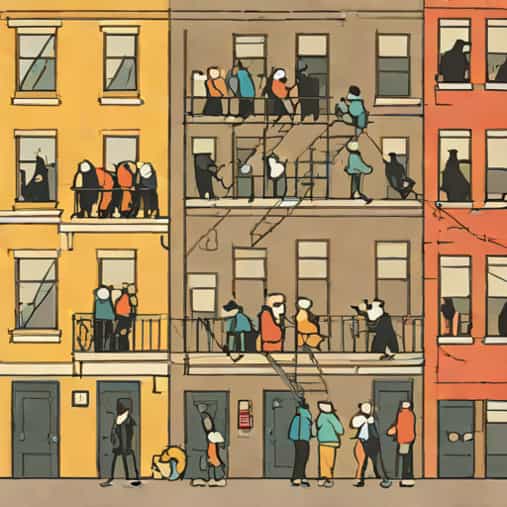
Life in late nineteenth and early twentieth century New York City was shaped by rapid immigration, industrial labor, and severe overcrowding. One of the most striking examples of this urban reality can be found in accounts of lodgers in a crowded Bayard Street tenement. Bayard Street, located in Lower Manhattan near what is now Chinatown and Little Italy, became a dense residential area where immigrant families, single workers, and temporary lodgers shared extremely limited living space. Their daily lives reveal much about poverty, resilience, and the social structure of the growing city.
Bayard Street and Its Historical Context
Bayard Street was part of a neighborhood that absorbed waves of immigrants arriving in New York City. People from Italy, Eastern Europe, and China settled in this area because housing was cheap and close to factory jobs, docks, and workshops. Tenement buildings rose quickly to meet demand, often constructed with little concern for safety, sanitation, or comfort.
These tenements were usually narrow, multi-story buildings divided into small apartments. Many families could not afford the rent on their own, which led to the widespread practice of taking in lodgers.
Who Were the Lodgers?
Lodgers were individuals who rented a bed or a small space within an already occupied apartment. They were often single men, newly arrived immigrants, or workers with unstable income. In some cases, entire families became lodgers, sharing space with other families.
For many, lodging was a temporary solution while they searched for better work or saved money to bring relatives to America.
Reasons for Becoming a Lodger
- Lack of affordable housing
- Recent arrival with no established support
- Seasonal or low-paying jobs
- Desire to live near workplaces
Inside a Crowded Tenement Apartment
A typical Bayard Street tenement apartment consisted of two or three small rooms, often without windows or proper ventilation. Families used every available space for sleeping, cooking, and storage. When lodgers were added, conditions became even more cramped.
Beds were shared in shifts, especially among workers with different schedules. Some lodgers slept on floors, benches, or makeshift cots. Privacy was almost nonexistent.
Daily Living Conditions
Overcrowding made daily life difficult. Cooking smells lingered, noise was constant, and diseases spread easily. Shared toilets were often located in hallways or courtyards and served dozens of people.
Despite these hardships, many residents tried to maintain routines and dignity within their limited space.
Economic Importance of Lodgers
For families living on Bayard Street, taking in lodgers was often essential for survival. Rent consumed a large portion of income, and wages from factory or garment work were low.
Money from lodgers helped families pay rent, buy food, and cover basic expenses. In this way, lodgers became part of the household economy.
Women’s Role in Managing Lodgers
Women often managed the household and dealt directly with lodgers. They cooked meals, cleaned shared spaces, and collected rent. This unpaid labor was critical to keeping the household functioning.
In some cases, women also took in boarders, providing meals as part of the lodging arrangement.
Social Relationships and Tensions
Living in such close quarters created complex social dynamics. Lodgers were not just tenants; they became part of the household’s daily life. Friendships sometimes formed, especially among people from the same homeland.
However, overcrowding also led to tension, conflict, and stress. Disagreements over noise, cleanliness, and personal space were common.
Community Support
Despite conflicts, tenement communities often developed strong support networks. Neighbors shared food, childcare, and information about jobs. These informal systems helped residents survive difficult conditions.
Health and Sanitation Challenges
One of the most serious consequences of overcrowded tenements on Bayard Street was poor health. Limited ventilation and unsanitary conditions made diseases such as tuberculosis and influenza common.
Lodgers, constantly moving between households, could unknowingly spread illness. Children were especially vulnerable due to malnutrition and lack of clean air.
Public Health Concerns
Reformers and journalists documented these conditions to raise awareness. Their reports highlighted how overcrowding endangered not only residents but the wider city.
Reform Efforts and Public Awareness
By the late nineteenth century, social reformers began pushing for better housing laws. Photographs and written accounts of crowded Bayard Street tenements shocked the public.
New regulations slowly improved building standards, requiring better ventilation, fire safety, and sanitation.
Limits of Reform
Although reforms helped, change was slow. Many families continued to rely on lodgers because wages remained low and housing scarce.
Cultural Identity and Adaptation
Tenement life on Bayard Street was also a place of cultural exchange. Immigrants preserved traditions through language, food, and religion, even in crowded spaces.
Lodgers often came from the same regions as host families, reinforcing cultural identity while adapting to American urban life.
The Psychological Impact of Overcrowding
Living with constant noise and lack of privacy took an emotional toll. Stress, fatigue, and anxiety were common among both families and lodgers.
Yet many residents displayed resilience, maintaining hope for a better future through hard work and savings.
Bayard Street as a Symbol
The story of lodgers in a crowded Bayard Street tenement represents a broader pattern in American urban history. It reflects the challenges faced by immigrants and the systems that shaped their lives.
These experiences played a role in shaping labor movements, housing reforms, and social policies.
Lessons from Tenement Life
Studying life in Bayard Street tenements helps modern readers understand the human cost of rapid urbanization. It reminds us that cities are built not only from buildings but from the lives lived inside them.
The presence of lodgers illustrates how families adapted creatively to survive under extreme conditions.
The lives of lodgers in a crowded Bayard Street tenement reveal a powerful story of struggle, adaptation, and community. Overcrowded apartments, shared beds, and constant hardship defined daily existence, yet these conditions also fostered resilience and mutual support. By examining this chapter of urban history, we gain a deeper understanding of immigration, poverty, and the foundations of modern city life. Bayard Street stands as a reminder of how ordinary people endured extraordinary challenges in pursuit of opportunity and stability.