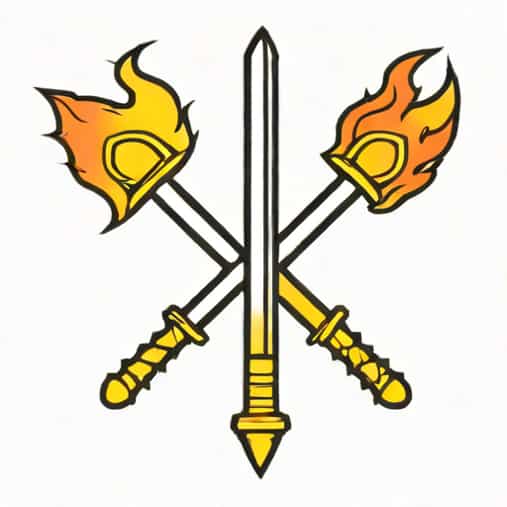
The idea of a symbolic battle between sword and torches evokes images of contrasting forces, where violence meets illumination, strength confronts knowledge, and aggression encounters enlightenment. Throughout history, literature, and cultural narratives, swords often represent power, conquest, and physical might, while torches symbolize wisdom, guidance, and moral clarity. The metaphor of this battle can be applied to many contexts, from historical struggles to philosophical conflicts, highlighting the tension between brute force and the illuminating power of ideas.
The Sword as a Symbol
The sword has long been a symbol of authority, courage, and martial skill. In literature and historical accounts, swords represent the ability to enforce power, protect territory, and engage in combat. They are associated with warriors, knights, and leaders who wield force to achieve objectives. The sharpness and durability of a sword often metaphorically convey decisiveness, discipline, and the willingness to confront challenges directly. In the symbolic battle, the sword embodies physical strength and the traditional notion that control is gained through dominance and might.
Historical and Cultural Significance
- In medieval Europe, the sword was a central emblem of knighthood and honor.
- In Asian cultures, such as Japan, the katana represented both martial skill and personal discipline.
- Swords often feature in mythology as instruments of heroism, justice, and vengeance.
- The sword can symbolize war, aggression, and the enforcement of authority in society.
Through these examples, the sword is more than a weapon; it is a representation of human capacity to exert control and influence through decisive action.
The Torch as a Symbol
In contrast, the torch is a symbol of knowledge, enlightenment, and guidance. It illuminates darkness and represents the search for truth, moral clarity, and intellectual courage. Torches are often associated with education, wisdom, and revolutionary ideas that challenge oppressive power. In the symbolic battle with the sword, the torch conveys the concept that ideas, knowledge, and moral authority can counteract brute strength and ignorance.
Cultural and Literary Examples
- The Statue of Liberty holds a torch, symbolizing freedom and enlightenment for all.
- In Greek mythology, Prometheus stole fire, often depicted as a torch, to bring knowledge and progress to humanity.
- Torches are used in religious and ceremonial contexts to signify guidance, purification, and hope.
- In literature, characters carrying torches often reveal truth, expose corruption, or lead others out of darkness.
The torch, therefore, is not merely a light source; it represents the transformative power of ideas, knowledge, and moral strength.
The Conflict Between Sword and Torch
The symbolic battle between sword and torches can be interpreted as the tension between force and reason, violence and enlightenment, or oppression and liberation. Throughout history, societies have faced these battles in various forms, from wars fought with weapons to movements led by ideas and moral conviction. The sword represents immediate control and the ability to impose will, whereas the torch represents long-term influence, shaping minds and values rather than bodies alone.
Philosophical Interpretations
Philosophers often describe the sword as the tool of the physical world and the torch as the tool of the intellectual or spiritual world. This duality raises questions about what truly shapes societies is it the immediate impact of power, or the enduring influence of knowledge and moral guidance? The battle between the two suggests that while force can dominate temporarily, the illuminating power of the torch often prevails in creating lasting change. Examples include civil rights movements, revolutions driven by ideas, and literary works where truth triumphs over tyranny.
Examples in Literature and Mythology
Many stories illustrate the symbolic battle between swords and torches, showing the tension between brute force and enlightenment. In epic tales, heroes may wield swords to confront enemies, but their success often depends on insight, strategy, or moral guidance-elements represented by torches. Mythology frequently pairs warriors with seekers of truth, emphasizing that courage alone is insufficient without knowledge and ethical direction.
Classic Examples
- In the story of Prometheus, fire (torch) brings knowledge to humanity despite the power of the gods (sword-like authority).
- In medieval literature, knights wield swords to fight injustice, but their moral compass guides their actions, representing torches of wisdom.
- Many revolutionary novels depict oppressed societies confronting armed rulers, where enlightenment and ideas act as the torch against the sword of oppression.
Modern Interpretations
In contemporary contexts, the sword can symbolize military power, authoritarian governance, or coercion, while the torch represents freedom, civil rights, education, and innovation. Modern battles between these symbols can be seen in social movements, legal reforms, and political struggles, where knowledge, moral courage, and ethical leadership challenge oppressive or violent forces. The metaphor continues to resonate, reminding us that the fight between physical force and intellectual or moral authority is ongoing.
Examples in Society
- Educational reform movements act as torches against outdated or oppressive systems symbolized by swords.
- Human rights activists illuminate injustice, countering violence and authoritarian control.
- Journalism serves as a torch that exposes corruption, confronting the sword of abuse or exploitation.
Symbolic Lessons
The symbolic battle between swords and torches teaches important lessons about human society. It suggests that true strength is not merely physical or immediate, but involves wisdom, foresight, and moral courage. While swords can enforce compliance, torches inspire understanding, change, and progress. This metaphor encourages reflection on the balance between power and responsibility, and the importance of ethical action alongside skill and bravery.
Key Takeaways
- Physical force (sword) can dominate temporarily but may fail to achieve lasting change.
- Knowledge, morality, and enlightenment (torch) often have enduring influence.
- The interplay between swords and torches reflects the tension between action and insight, courage and ethics.
- Societies benefit when both elements are balanced, using force responsibly and guided by wisdom.
The symbolic battle between sword and torches remains a powerful metaphor for the ongoing conflict between physical power and intellectual or moral illumination. The sword represents strength, decisiveness, and the ability to enforce control, while the torch embodies knowledge, guidance, and the transformative power of ideas. Whether in literature, history, or modern social movements, this symbolic battle reminds us that while brute force can dominate in the short term, the enduring light of wisdom, ethical courage, and truth often prevails. Understanding this metaphor encourages reflection on how societies navigate conflicts, balancing power with enlightenment to achieve justice, progress, and lasting change.