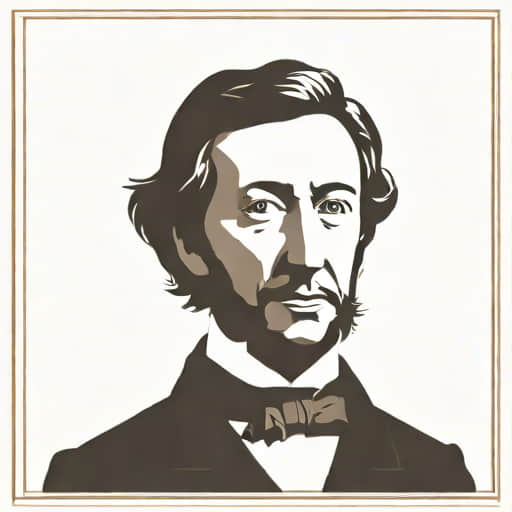
Understanding the contribution of Alexis de Tocqueville to sociology requires looking closely at how his observations, ideas, and writings laid groundwork for some of the discipline’s most essential concepts. Although Tocqueville was not formally trained as a sociologist, his reflections on democracy, social structures, civic life, and the nature of equality continue to shape modern sociological thinking. His insights-rooted in a careful study of American society in the 19th century-reveal patterns that still resonate today. Through his influential works, he explored how political systems affect culture, how social classes shift, and how individuals interact within democratic settings.
The Background of Alexis de Tocqueville
Born in 1805, Alexis de Tocqueville grew up during a period of sweeping change in French society. This environment of political turmoil and shifting social identities influenced his approach to studying societies. Although he is best known for his landmark bookDemocracy in America, Tocqueville also wrote deeply about prisons, revolutions, and the dynamics of freedom. His curiosity about the forces shaping human behavior positioned him as one of the earliest thinkers whose ideas would later be recognized as foundational to sociology.
Influence of His Travels in America
Tocqueville’s journey to the United States in 1831 was originally meant to study the American prison system, but he quickly broadened his focus. Fascinated by the nation’s culture, social mobility, and political structure, he observed how democracy shaped everyday life. His detailed accounts highlight trends that sociologists still study today, such as the effects of equality, the role of religion, and the importance of civic participation. These observations helped him craft a framework for understanding societies undergoing political and social transformation.
Key Sociological Contributions
Although Tocqueville lived before sociology became a formal academic discipline, many of his concepts anticipate core sociological theories. His work is frequently referenced for its analysis of democracy, social stratification, and civil society. These contributions show why he is considered one of the major intellectual precursors to modern sociology.
1. The Concept of Social Equality
Tocqueville’s observations on equality are among his most important contributions. He noted that the move toward equality of conditions was the defining trend of modern societies. By analyzing how equality impacts social relationships, ambitions, and conflicts, he provided early insight into what sociologists later called social leveling. His recognition that equality can bring both freedom and pressure shaped later sociological debates about modernity and individualism.
2. The Role of Civil Society
Another major contribution is Tocqueville’s understanding of civil society as a buffer between individuals and the state. He emphasized that voluntary associations-local groups, clubs, religious organizations-play a crucial role in supporting democratic stability. Sociologists today still highlight the importance of such associations in building social capital and strengthening community bonds.
- Promoting cooperative behavior
- Limiting centralized power
- Encouraging civic responsibility
This focus on civil society remains a central theme in discussions of social cohesion and community life.
3. Insights Into Democracy and Social Behavior
Tocqueville viewed democracy not only as a political system but as a social condition shaping values, expectations, and relationships. His reflections laid the foundation for political sociology, especially the study of how governments influence societal norms. He examined how democratic life encourages individualism, competition, and a desire for material success. At the same time, he warned that democracy could lead to conformity or a tyranny of the majority, a concept still discussed in sociological and political theory today.
4. Early Use of Comparative Methods
Tocqueville’s method of comparing France and the United States resembles what modern sociologists call comparative sociology. He analyzed differences in class structure, governance, social attitudes, and political participation. This method of contrasting societies to reveal underlying forces later became a standard approach in sociological research.
Tocqueville’s Approach to Understanding Society
Tocqueville used a blend of empirical observation and philosophical reflection. He immersed himself in different communities, interviewed diverse groups of people, and took detailed notes on daily interactions. His approach demonstrates the value of qualitative research long before it became formalized. Understanding people’s lifestyles, rituals, and motivations allowed him to create a layered portrait of American life.
Attention to Social Change
He was particularly concerned with how societies change over time. Tocqueville believed that democracy was not just a temporary political phase but a long-term social transformation. His ability to identify trends-such as the decline of aristocratic privileges and the rise of mass participation-foreshadowed modern sociological analyses of social evolution.
Impact on Modern Sociology
Tocqueville’s contributions ripple through many branches of sociology. His observations about equality and individualism are central to understanding contemporary societies. Scholars studying political participation, social mobility, or the tension between freedom and conformity often draw on his insights.
Influence on Major Sociological Thinkers
Many influential sociologists, such as Max Weber, Émile Durkheim, and Robert Putnam, built upon Tocqueville’s work. Weber appreciated his analysis of authority and rationalization. Durkheim admired his attention to social solidarity. Putnam revisited Tocqueville’s ideas about community associations in his work on social capital. Even today, sociologists continue to explore how democratic societies maintain cohesion, echoing Tocqueville’s original questions.
Relevance in the 21st Century
The world Tocqueville described may no longer exist in its original form, yet his ideas remain strikingly applicable. Issues like declining civic engagement, polarization, and struggles over equality reflect the same tensions he analyzed. Understanding his contributions helps readers grasp the complexities of social life in modern democracies and appreciate the enduring relevance of classical sociological thought.
Alexis de Tocqueville’s contribution to sociology lies in his ability to observe society with depth, clarity, and foresight. His works bridge political theory, social philosophy, and early sociological analysis, offering a rich understanding of how democracy shapes human behavior and community structures. By exploring equality, civil society, social change, and the dynamics of democratic life, Tocqueville provided insights that continue to influence sociological research and theory. His legacy reminds us that understanding society requires both careful observation and thoughtful reflection-skills that remain essential for anyone interested in the forces that shape human communities.