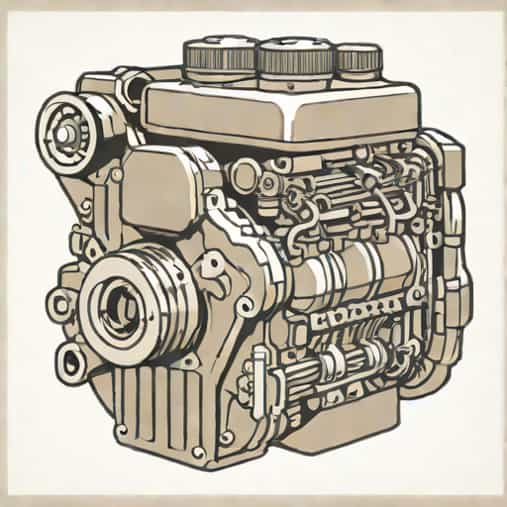
The Wankel engine, often called the rotary engine, is one of the most fascinating and unconventional designs in automotive history. Known for its smooth operation, compact size, and unique triangular rotor, it once represented the future of high-performance engineering. However, over time, questions began to arise about its efficiency, emissions, and practicality. This leads many car enthusiasts and engineers to wonder-are Wankel engines still used today, or have they become a relic of the past?
What Is a Wankel Engine?
A Wankel engine operates on the same basic principles as a traditional internal combustion engine but with a completely different design. Instead of pistons moving up and down, it uses a triangular rotor that spins inside an oval-shaped housing. This rotation creates the four stages of combustion-intake, compression, power, and exhaust-in a continuous, smooth motion.
Developed by German engineer Felix Wankel in the 1950s, this engine offered several advantages, such as fewer moving parts, high RPM capability, and a very compact size compared to piston engines of similar power output. These qualities made it especially appealing to performance-oriented automakers like Mazda, who became the most famous adopter of the technology.
The Rise and Fall of the Wankel Engine
In the 1960s and 1970s, the Wankel engine enjoyed significant attention. Companies like NSU and Mazda saw it as an innovation that could revolutionize transportation. Mazda, in particular, became synonymous with rotary engines, using them in sports cars like the RX-3, RX-7, and later the RX-8. The smoothness and high-revving nature of the engine created a distinctive driving experience that piston engines struggled to match.
However, the Wankel engine also had drawbacks. Its design made it difficult to seal properly, leading to higher fuel consumption and oil burning. It also struggled to meet tightening global emission regulations, which favored more efficient piston engines. Maintenance could be complex, and the durability of early designs was sometimes questioned. By the early 2000s, the rotary engine’s future was uncertain as automakers shifted toward more sustainable technologies.
Are Wankel Engines Still Used Today?
While Wankel engines are no longer common in mainstream automotive production, they have not disappeared entirely. Mazda remains the most prominent company still associated with this unique design. Although the brand stopped producing the RX-8 in 2012, it never gave up on rotary technology completely.
In recent years, Mazda has explored new applications for Wankel engines-particularly as range extenders for electric vehicles (EVs). In this setup, the rotary engine does not directly power the wheels but instead generates electricity to recharge the battery. This allows Mazda to take advantage of the engine’s compact size and smooth operation while avoiding its traditional weaknesses in fuel efficiency and emissions.
Mazda’s Revival of the Rotary Engine
In 2023, Mazda officially reintroduced the rotary engine in theMazda MX-30 R-EV, a plug-in hybrid electric vehicle. In this model, the Wankel engine serves as a small generator, extending the car’s range when the battery runs low. This marks the return of rotary technology after a decade-long hiatus and showcases how it can still play a role in the modern automotive landscape.
By using the Wankel engine in a secondary role instead of as the main power source, Mazda effectively solves many of its previous issues. It no longer needs to meet the same performance or emissions standards required of a primary engine, allowing the company to highlight its compactness and mechanical simplicity. This innovative use proves that while Wankel engines may not dominate sports cars anymore, they can still find relevance in the age of electrification.
Other Applications of Wankel Engines
Beyond passenger vehicles, Wankel engines are still used in several specialized fields. Their light weight and compact design make them ideal for applications where space and vibration control are critical.
- AircraftSome small unmanned aerial vehicles (UAVs) and drones use rotary engines because of their high power-to-weight ratio and smooth operation.
- MotorcyclesA few niche motorcycle manufacturers, such as Norton and Suzuki, have experimented with rotary engines, though production numbers are limited.
- Industrial and Marine EquipmentCompact rotary engines are sometimes used in generators, pumps, and small marine vessels where efficiency is secondary to size and simplicity.
These specialized uses show that while Wankel engines may not be mainstream, they continue to serve valuable roles in fields where their unique characteristics shine.
Why the Wankel Engine Still Fascinates Enthusiasts
Even though the Wankel engine is not widely produced, it maintains a loyal following among car enthusiasts and engineers. Its distinct sound, high-revving performance, and unconventional design create a level of mechanical curiosity unmatched by most piston engines.
For fans of classic sports cars, models like the Mazda RX-7 and RX-8 remain icons. Their lightweight bodies and rotary powertrains deliver a driving feel that many describe as pure and exhilarating. Some mechanics and tuners even continue to rebuild and modify these engines, keeping the spirit of rotary performance alive in modern times.
Additionally, engineering students and researchers study the Wankel engine as a unique case of alternative combustion technology. Its design challenges-such as apex seal wear and combustion inefficiency-offer valuable lessons in thermodynamics, materials science, and engine innovation.
Advantages and Disadvantages of Wankel Engines
To understand why Wankel engines are still discussed today, it’s useful to consider their main strengths and weaknesses.
Advantages
- Compact and lightweight design, ideal for space-limited applications.
- Smooth operation with minimal vibration.
- High power output for size, offering strong performance characteristics.
- Fewer moving parts, which reduces mechanical complexity.
Disadvantages
- Poor fuel efficiency compared to piston engines.
- Higher oil consumption and maintenance requirements.
- Difficulties meeting modern emission standards.
- Limited torque at low RPM, affecting drivability in daily use.
These pros and cons explain why the Wankel engine has found a second life in specific applications rather than disappearing completely. It continues to inspire innovation while reminding the automotive world of the challenges in balancing performance, efficiency, and sustainability.
The Future of Wankel Engines
The future of Wankel engines likely lies in hybrid and electric systems rather than traditional gasoline-powered vehicles. With global trends pushing toward electrification, compact engines like the rotary could serve as efficient generators or auxiliary power units. Companies such as Mazda may continue refining the technology to reduce emissions and improve thermal efficiency.
Moreover, advances in materials, coatings, and fuel injection technology could solve some of the issues that plagued earlier designs. As hydrogen and synthetic fuels become more common, it’s possible that Wankel engines could see a resurgence in experimental or specialized vehicles.
So, are Wankel engines still used? The answer is yes-but in a very different way than before. While they no longer power mainstream sports cars as they once did, their legacy continues in niche applications, research, and hybrid vehicle technology. The Wankel engine remains a symbol of creativity and innovation in automotive engineering. It stands as proof that even unconventional ideas can endure, adapt, and find new life in a changing technological landscape. Whether in drones, generators, or electric hybrids, the rotary engine still spins quietly-reminding us that engineering innovation never truly disappears.