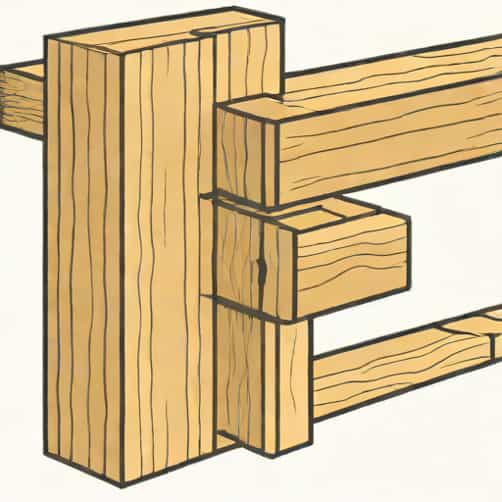
In woodworking, one of the most traditional and reliable methods of joining two pieces of wood is the mortise and tenon joint. Among its various types, the blind mortise and tenon joint stands out for its combination of strength and clean appearance. This type of joint is hidden from view once assembled, making it ideal for projects where aesthetics and durability are equally important, such as in fine furniture, cabinetry, and architectural joinery. Understanding how the blind mortise and tenon joint works, how it is made, and where it is best used can help woodworkers improve their craftsmanship and project quality.
What Is a Blind Mortise and Tenon Joint?
A blind mortise and tenon joint is a variation of the standard mortise and tenon joint where the tenon does not pass completely through the mortised piece. In other words, the end of the tenon is enclosed inside the mortise and does not show on the outside surface. This design gives the joint a clean, professional look while still providing a solid mechanical connection between the two wooden components.
In this joint, one piece of wood has a cavity or slot (the mortise), and the other has a projecting tongue (the tenon) that fits snugly into it. Adhesive, such as wood glue, is usually applied to strengthen the bond. The depth of the mortise is typically about two-thirds of the thickness of the receiving piece, ensuring enough strength without compromising the outer surface.
How the Blind Mortise and Tenon Joint Works
The key to the effectiveness of the blind mortise and tenon joint lies in its mechanical interlock. The tenon fits tightly within the mortise, providing a large gluing surface and a high level of resistance to shear and twisting forces. Because the tenon is hidden, it allows the outer face of the joint to remain smooth and unbroken, which is particularly important in visible or decorative applications.
The precision of the fit between the mortise and tenon determines the overall strength and durability of the joint. A joint that is too tight may cause the wood to split during assembly, while one that is too loose will not hold securely. Careful measurement, marking, and cutting are essential when crafting this joint by hand or with the help of machines such as mortisers or routers.
Different Types of Blind Mortise and Tenon Joints
While the blind mortise and tenon joint generally refers to any non-through variation, there are a few distinct types depending on how the tenon is concealed and shaped. Some of the most common include
- Stub Tenon JointA short tenon that fits into a shallow mortise, often used for lightweight frames or panels where full strength is not required.
- Haunched Tenon JointThis includes a small extension or haunch at the top of the tenon to fill the groove of a frame and prevent twisting or misalignment.
- Secret or Hidden Tenon JointDesigned so that the mortise does not break through any visible edge of the piece, making the joint completely invisible from the outside.
Each type offers unique advantages depending on the design requirements, the wood species used, and the stresses the joint must withstand.
Applications of the Blind Mortise and Tenon Joint
The blind mortise and tenon joint is widely used in fine woodworking, particularly where appearance matters. Furniture makers often rely on it for creating chair frames, tables, and cabinets where visible joinery would disrupt the overall design. It’s also used in window and door construction, where structural integrity must be combined with visual refinement.
Because of its concealed nature, this joint is also popular in antique reproductions and restoration work, where historical accuracy and craftsmanship are essential. Even modern woodworkers use the blind mortise and tenon joint in minimalist furniture and architectural woodwork where smooth, uninterrupted surfaces are preferred.
Advantages of Using a Blind Mortise and Tenon Joint
The blind mortise and tenon joint has stood the test of time due to several key benefits. Among its most notable advantages are
- Strong and durableThe joint provides excellent mechanical strength and can handle both compression and tension forces effectively.
- Clean appearanceBecause the tenon does not pass through, the joint is invisible on the outer surface, preserving a seamless look.
- VersatilityIt can be adapted to various woodworking projects, from heavy furniture to delicate frames.
- Resistance to twistingThe snug fit between the mortise and tenon prevents rotational movement under stress.
- Improved aestheticsThe hidden joint allows for a smooth finish, ideal for high-quality, visible workpieces.
Challenges in Making a Blind Mortise and Tenon Joint
Despite its advantages, this joint requires precision and skill to execute correctly. Unlike a through tenon, a blind mortise limits visibility during assembly, which makes alignment more challenging. Additionally, cutting the mortise to the correct depth without going too deep demands careful control.
Woodworkers must also consider wood movement caused by humidity changes. If the tenon is too tight, it may lead to cracks as the wood expands and contracts. Using accurate measuring tools and taking time to test the fit before applying glue can help prevent these problems.
Steps to Create a Blind Mortise and Tenon Joint
1. Marking and Measuring
Begin by marking the outline of both the mortise and tenon using a marking gauge and square. Accurate marking ensures that the two parts fit perfectly once assembled. The mortise should be centered on the thickness of the wood for even strength distribution.
2. Cutting the Mortise
Drill a series of holes along the marked area to remove most of the waste material. Then, use a chisel to clean and square the sides of the mortise. The depth should be consistent and about two-thirds the width of the wood piece.
3. Shaping the Tenon
Cut the tenon slightly oversized and then trim it down carefully with a saw or chisel until it fits snugly into the mortise. The shoulders should be clean and tight against the face of the mortised piece for a seamless joint.
4. Test Fitting
Before applying glue, insert the tenon into the mortise to ensure proper alignment. It should fit firmly but not so tight that it requires excessive force. Small adjustments can be made with fine sanding or paring.
5. Gluing and Assembly
Apply wood glue to the tenon and the walls of the mortise. Insert the tenon carefully, clamp the joint, and allow it to dry according to the glue manufacturer’s recommendations. Once dry, the joint should be solid and nearly invisible from the outside.
Modern Tools for Mortise and Tenon Joinery
While traditional methods rely on hand tools such as chisels, saws, and marking gauges, modern technology has made the process faster and more precise. Power mortisers, routers, and tenoning jigs allow woodworkers to create consistent joints with minimal effort. Some even use CNC machines to produce perfectly matched mortises and tenons, ideal for high-volume production or complex designs.
However, even with modern equipment, the principles remain the same. Accuracy, fit, and understanding wood behavior are still essential to achieving a strong blind mortise and tenon joint.
The blind mortise and tenon joint is one of the finest examples of woodworking craftsmanship. Its combination of hidden strength and refined appearance makes it a favorite among furniture makers and builders who value both function and form. Although it demands patience and precision, mastering this joint allows woodworkers to create pieces that are not only strong but also beautifully seamless. Whether crafted by hand or machine, the blind mortise and tenon joint continues to represent the perfect balance of tradition, skill, and design in modern woodworking.