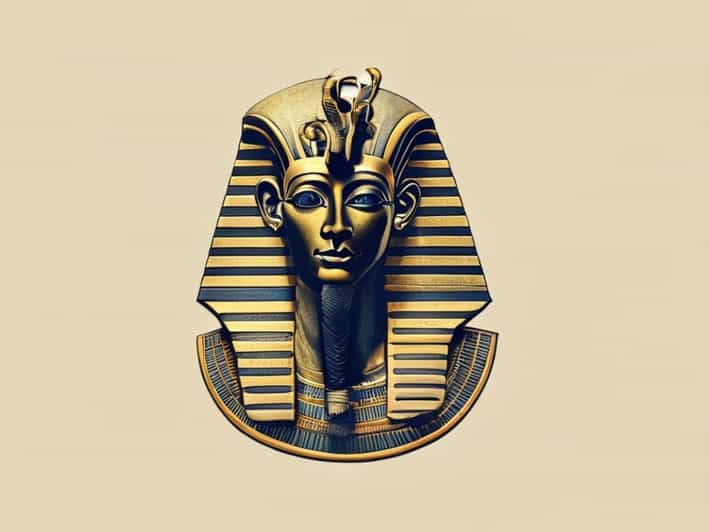
Ramesses II, often called Ramesses the Great, is one of the most famous pharaohs of ancient Egypt, not only because of his long reign and military achievements, but also because of the way he presented himself as a divine figure. The deification of Ramesses II was not a sudden act, but a carefully constructed process that blended religion, politics, art, and public memory. Through monuments, inscriptions, rituals, and myths, Ramesses II was portrayed as more than a human ruler. These features of the deification of Ramesses II helped reinforce his authority, unify the kingdom, and secure his legacy for generations.
The Concept of Divine Kingship in Ancient Egypt
To understand the deification of Ramesses II, it is important to recognize that Egyptian pharaohs were traditionally seen as divine or semi-divine beings. The pharaoh was believed to be the earthly representative of the gods, particularly Horus during life and Osiris after death.
Ramesses II built upon this tradition by amplifying divine imagery and symbolism. While earlier pharaohs emphasized their sacred role, Ramesses II elevated this concept to an unprecedented level through scale, repetition, and personal association with major deities.
Association with Major Egyptian Gods
One of the key features of the deification of Ramesses II was his close association with powerful gods such as Amun, Ra, and Ptah. In inscriptions and temple reliefs, he is frequently shown receiving blessings directly from these deities.
Identification with Ra and Amun
Ramesses II often presented himself as the son of Ra, the sun god, emphasizing his role as a bringer of order and light. In Thebes, he aligned himself strongly with Amun, the chief god of the state religion.
By highlighting these connections, Ramesses II reinforced the idea that his rule was divinely sanctioned and essential to cosmic balance.
Monumental Architecture as Divine Expression
Architecture played a central role in the deification of Ramesses II. He commissioned more monuments than almost any other pharaoh, ensuring his image dominated the landscape of Egypt and Nubia.
Colossal Statues
The colossal statues of Ramesses II, such as those at Abu Simbel, present him as larger than life. These statues blur the line between human ruler and god, using scale to communicate divine power.
- Oversized proportions symbolizing supernatural strength
- God-like calm and idealized facial features
- Placement at sacred or strategic locations
The visual impact of these statues reinforced public perception of Ramesses II as a god-like figure.
Abu Simbel and Self-Deification
The temples at Abu Simbel are among the most striking examples of the deification of Ramesses II. At the Great Temple, Ramesses is worshiped alongside traditional gods.
Inside the sanctuary, statues of Ra-Horakhty, Amun, Ptah, and Ramesses II sit together, symbolizing his equal status with the gods. This direct inclusion in divine worship is a clear feature of his deification.
Military Victory and Divine Favor
Ramesses II frequently linked his military achievements to divine support. Battles were portrayed not simply as human conflicts, but as events guided by the gods.
The Battle of Kadesh
The Battle of Kadesh is one of the most documented military engagements of the ancient world. In reliefs and inscriptions, Ramesses II depicts himself as single-handedly defeating enemies with the help of Amun.
This narrative elevates him beyond a mortal king, portraying him as a heroic, god-protected warrior chosen to preserve order.
Use of Inscriptions and Titles
Another important feature of the deification of Ramesses II is the language used in royal inscriptions. His titles emphasized divine qualities and eternal authority.
Divine Epithets
Ramesses II adopted titles that associated him with gods and cosmic order. These titles were repeated across temples, statues, and official records.
- Son of Ra
- Beloved of Amun
- Lord of the Two Lands
Through constant repetition, these titles shaped how subjects perceived his identity.
Religious Rituals and State Cult
Ramesses II did not rely solely on imagery; religious practice also played a role in his deification. Temples dedicated to his cult ensured that he was honored in ritual contexts.
Priests performed ceremonies in his name, and offerings were made to his statues. This integration into religious life normalized the idea of worshiping the pharaoh.
Idealized Artistic Representation
Artistic depictions of Ramesses II consistently present him as eternally youthful, strong, and composed. Even in old age, he is shown with idealized features.
This artistic convention reinforced the perception that he existed beyond normal human limitations, a key feature of deification.
Family and Divine Lineage
Ramesses II also extended divine associations to his family. His queens and children were often depicted in sacred contexts, strengthening the idea of a divine royal lineage.
This approach helped legitimize succession and ensured continuity of divine kingship beyond his reign.
Longevity and Eternal Presence
Ramesses II ruled for over sixty years, an extraordinary length of time in the ancient world. His long reign itself became a feature of deification.
By surviving multiple generations, he appeared timeless, reinforcing the belief that he was favored by the gods and destined to rule.
Posthumous Worship and Memory
Even after his death, Ramesses II continued to be honored. Later rulers restored his monuments and preserved his name, recognizing his divine status.
His memory endured not only as a great king, but as a god-like figure whose influence transcended mortality.
Political Purpose of Deification
The deification of Ramesses II also served clear political goals. Presenting the king as divine discouraged rebellion and reinforced loyalty.
If opposing the pharaoh meant opposing the gods, obedience became a religious duty as well as a political one.
Cultural Impact of Ramesses II’s Deification
The features of the deification of Ramesses II influenced later Egyptian rulers, who sought to emulate his divine image. His reign set a standard for royal propaganda and monumental self-presentation.
Through architecture, art, ritual, and myth, Ramesses II reshaped how kingship was understood.
The deification of Ramesses II was a complex and carefully constructed process that blended religion, politics, and culture. By associating himself with powerful gods, commissioning monumental architecture, promoting divine narratives of military success, and embedding his image into religious life, Ramesses II presented himself as both king and god. These features of the deification of Ramesses II strengthened his authority during his lifetime and ensured his legacy endured long after his death. His reign remains one of the most powerful examples of how divine kingship shaped ancient Egyptian civilization.