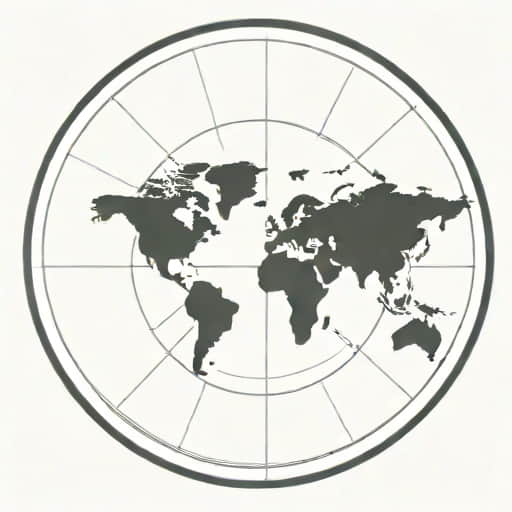
Circumnavigating the globe is a fascinating concept that has captured human imagination for centuries. The idea of traveling around the Earth involves covering immense distances, crossing oceans, continents, and various time zones. People often wonder how many kilometers it takes to circumnavigate the globe and what factors influence the total distance. Understanding this requires a combination of geography, mathematics, and consideration of the Earth’s shape and size. Exploring these details helps travelers, adventurers, and enthusiasts appreciate the scale of global travel and the incredible feat of moving around our planet.
The Earth’s Circumference
To determine how many kilometers it takes to circumnavigate the globe, it is essential to understand the Earth’s circumference. The Earth is not a perfect sphere; it is slightly flattened at the poles and bulging at the equator, giving it an oblate spheroid shape. This means that the circumference varies depending on the route chosen for circumnavigation.
Equatorial Circumference
The equatorial circumference is the distance around the Earth along the equator, the imaginary line that divides the planet into the Northern and Southern Hemispheres. The equatorial circumference is approximately 40,075 kilometers (24,901 miles). This measurement represents the longest possible route around the Earth.
Meridional Circumference
The meridional circumference is the distance around the Earth passing through the poles, following a line of longitude. Because the Earth is slightly flattened at the poles, the meridional circumference is slightly shorter, measuring about 40,008 kilometers (24,860 miles). This difference of roughly 67 kilometers may seem small, but it highlights the Earth’s non-spherical shape.
Factors Affecting Circumnavigation Distance
Although the Earth’s circumference provides a general measurement, the actual distance traveled during circumnavigation can vary greatly depending on the chosen route, mode of travel, and obstacles encountered along the way.
Mode of Travel
The distance covered depends on whether one is traveling by sea, air, or land. For example
- Air travel typically follows a great-circle route, which is the shortest path between two points on a sphere. This route minimizes distance but may include detours for air traffic regulations or refueling stops.
- Sea voyages often take longer routes to navigate around landmasses, avoid dangerous waters, or follow trade winds, increasing the total distance compared to the equatorial circumference.
- Land routes must account for terrain, borders, and infrastructure, which can further extend the distance traveled.
Route Selection
Choosing a circumnavigation route significantly impacts the total kilometers traveled. Popular routes may include
- Equatorial route following the equator as closely as possible
- Transcontinental route crossing multiple continents and oceans
- Great-circle route using the shortest paths between key waypoints, often preferred for air travel
Each route presents unique challenges and variations in total distance.
Obstacles and Detours
Practical circumnavigation involves avoiding natural and political obstacles, such as
- Mountain ranges, deserts, or inaccessible regions
- Political borders and restricted areas that require detours
- Weather conditions, ocean currents, and seasonal changes that affect travel paths
These factors can increase the total distance traveled, making actual circumnavigation longer than the theoretical circumference.
Historical Circumnavigations
Throughout history, explorers have circumnavigated the globe using various routes, providing insight into the distances covered and challenges faced.
Ferdinand Magellan
Ferdinand Magellan’s expedition from 1519 to 1522 is considered the first successful circumnavigation. The journey, completed by Juan Sebastián Elcano after Magellan’s death, covered an estimated 42,000 kilometers (26,097 miles) over three years. This distance exceeded the theoretical circumference due to detours, stops at ports, and navigation around uncharted territories.
Modern Air Travel
Today, commercial and private aircraft can circumnavigate the globe much faster and more efficiently. A nonstop flight along the equator is technically possible, though logistical constraints usually require multiple legs. Modern circumnavigation distances by air often range from 40,000 to 42,000 kilometers, depending on the route and stops.
Calculating Circumnavigation Distance
Mathematically, circumnavigation distance can be estimated using the Earth’s circumference. However, practical calculations involve additional considerations.
Using the Great-Circle Distance
The great-circle distance is the shortest path between two points on a sphere. For circumnavigation, plotting great-circle routes between multiple waypoints provides a realistic estimate of distance while minimizing travel. This method is commonly used in aviation and long-distance navigation.
Accounting for Deviations
Travelers often add distance to account for detours, ports, refueling stops, or land-based obstacles. For example, sea voyages may follow curved paths around continents or avoid dangerous waters, while air routes may require deviations due to no-fly zones or weather conditions.
Example Calculation
For a simplified example, consider traveling along the equator. The equatorial circumference is 40,075 kilometers. Adding minor detours or stops could increase the total distance to approximately 41,000 kilometers. Land-based or mixed-route circumnavigation may exceed 42,000 kilometers, depending on the specific path chosen.
Factors That Influence Individual Circumnavigation
The actual number of kilometers required to circumnavigate the globe varies for each traveler based on personal preferences, mode of transport, and specific routes.
Purpose of Travel
Adventure travelers, commercial flights, and scientific expeditions all approach circumnavigation differently. Adventure travelers may choose scenic or challenging paths, increasing distance, while commercial airlines prioritize efficiency and shortest distances.
Timing and Seasons
Weather patterns and seasonal variations affect navigation and distance. For instance, avoiding hurricanes, storms, or extreme winter conditions may require longer detours.
Geopolitical Factors
Political boundaries and international regulations can influence routes, requiring detours or alternative pathways. Access to certain regions may be restricted, increasing travel distance.
circumnavigating the globe involves covering a minimum of approximately 40,075 kilometers along the equator or about 40,008 kilometers following a meridional path. However, practical considerations such as route selection, mode of travel, obstacles, and detours usually increase this distance, with most actual journeys ranging from 41,000 to over 42,000 kilometers. Historical and modern circumnavigations illustrate how the theoretical distance can expand due to practical challenges. Whether undertaken by sea, air, or land, circumnavigation is a remarkable achievement that demonstrates human ambition and navigational skill. Understanding the factors that influence distance allows travelers and enthusiasts to better plan and appreciate the scale of traveling around our planet.