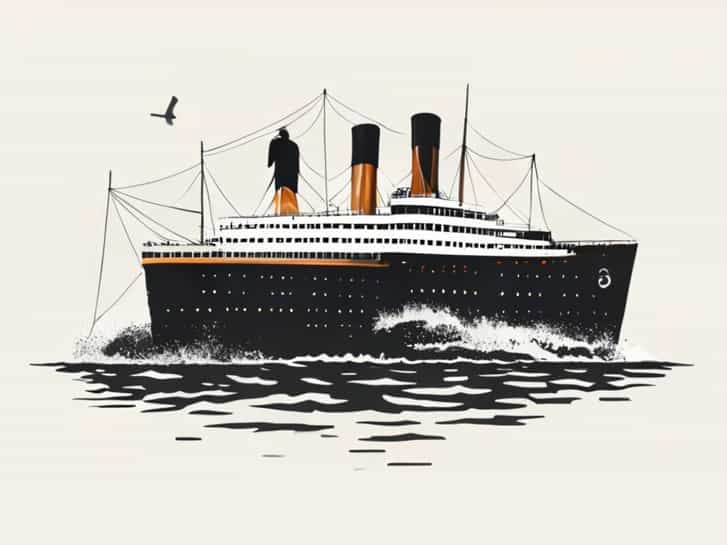
The sinking of the RMS Titanic on April 15, 1912, is remembered not only for the scale of the maritime disaster but also for the immense human loss that followed. One of the most frequently asked questions about this tragedy is how many people died when the Titanic sank. The answer involves careful examination of passenger lists, crew records, and survivor accounts. Beyond the numbers, the deaths reflect social structures, safety failures, and human decisions made during one of the darkest nights in maritime history.
Total Death Toll of the Titanic Disaster
When the Titanic sank, an estimated 1,500 people lost their lives. Most historians place the number of deaths between 1,496 and 1,517, depending on how records are interpreted. The ship carried approximately 2,224 passengers and crew on its maiden voyage from Southampton to New York.
Only about 710 people survived. This means that more than two-thirds of those on board died, making the Titanic sinking one of the deadliest peacetime maritime disasters in modern history.
Why the Exact Number Is Uncertain
The exact number of people who died when the Titanic sank is difficult to determine because passenger and crew lists were not perfectly accurate. Some passengers canceled at the last minute, while others boarded under assumed names.
Crew records also varied, and not all individuals were officially registered. These inconsistencies explain why historians still debate the precise death toll.
Passenger and Crew Breakdown
Understanding how many people died on the Titanic requires separating passengers from crew members. Both groups faced different challenges and survival rates during the disaster.
Estimated Numbers
- Total people on board approximately 2,224
- Total survivors about 710
- Total deaths approximately 1,500
Deaths by Passenger Class
One of the most striking aspects of the Titanic tragedy is how survival rates differed by passenger class. Social and economic status played a major role in determining who lived and who died.
First-Class Passengers
First-class passengers had the highest survival rate. Many cabins were closer to the boat deck, and these passengers received earlier access to lifeboats.
Out of approximately 325 first-class passengers, about 200 survived, meaning roughly 125 died.
Second-Class Passengers
Second-class passengers experienced mixed outcomes. While they had better access to lifeboats than third-class passengers, they still faced delays and confusion.
Out of around 285 second-class passengers, approximately 167 survived and about 118 died.
Third-Class Passengers
Third-class passengers suffered the highest death toll. Many were housed deep within the ship and faced physical barriers, language difficulties, and delayed evacuation.
Of approximately 706 third-class passengers, only about 174 survived, meaning more than 530 died.
Crew Members and Mortality
The Titanic’s crew numbered around 885 people. Their duties included operating the ship, assisting passengers, and managing lifeboats.
Sadly, crew members had a very low survival rate. Only about 214 crew members survived, while more than 670 died.
Men, Women, and Children
The policy of women and children first significantly affected survival outcomes. This rule was not applied evenly across all areas of the ship, but it still influenced who lived and who died.
Survival by Gender and Age
- Women majority survived
- Children many survived, especially in first and second class
- Men majority died
Men made up the largest portion of the death toll, especially adult men traveling in third class and crew members.
Causes of Death
Most people who died when the Titanic sank did not drown immediately. Instead, they died from hypothermia after entering the freezing waters of the North Atlantic.
The water temperature was around minus two degrees Celsius, which caused rapid loss of body heat. Many victims lost consciousness within minutes.
Lifeboat Shortage and Its Impact
A major factor in the Titanic death toll was the lack of lifeboats. The ship carried only 20 lifeboats, enough for about 1,178 people.
Even worse, many lifeboats were launched partially empty due to confusion, fear, and poor communication.
Why So Many Lives Were Lost
Several factors contributed to the high number of deaths when the Titanic sank. These included overconfidence in the ship’s design, inadequate safety regulations, and delayed emergency response.
Key Contributing Factors
- Insufficient lifeboats
- Lack of lifeboat drills
- Poor communication during evacuation
- Physical barriers for third-class passengers
Recovery of Bodies
In the weeks following the disaster, recovery ships were sent to search for bodies. Approximately 337 bodies were recovered from the ocean.
Many were buried at sea, while others were identified and returned to families. Hundreds of victims were never found.
Public Reaction to the Death Toll
The news that around 1,500 people died when the Titanic sank shocked the world. Newspapers covered the tragedy extensively, and public outrage focused on safety failures.
The disaster led to major changes in maritime laws and ship safety standards.
Changes After the Titanic Disaster
As a direct result of the Titanic death toll, international regulations were introduced to prevent similar tragedies.
Ships were required to carry enough lifeboats for everyone on board, conduct regular drills, and maintain constant radio communication.
Why the Numbers Still Matter Today
The question of how many people died when the Titanic sank remains important because it represents more than a statistic. Each number reflects an individual life, a family affected, and a lesson learned.
The tragedy continues to be studied as a reminder of the consequences of neglecting safety and equality.
Approximately 1,500 people died when the Titanic sank, making it one of the deadliest maritime disasters in history. The high death toll was shaped by class divisions, insufficient lifeboats, and the extreme cold of the Atlantic Ocean.
More than a century later, the Titanic disaster remains a powerful lesson in human vulnerability, technological limits, and the importance of preparedness. The memory of those who died continues to shape maritime safety and public awareness around the world.