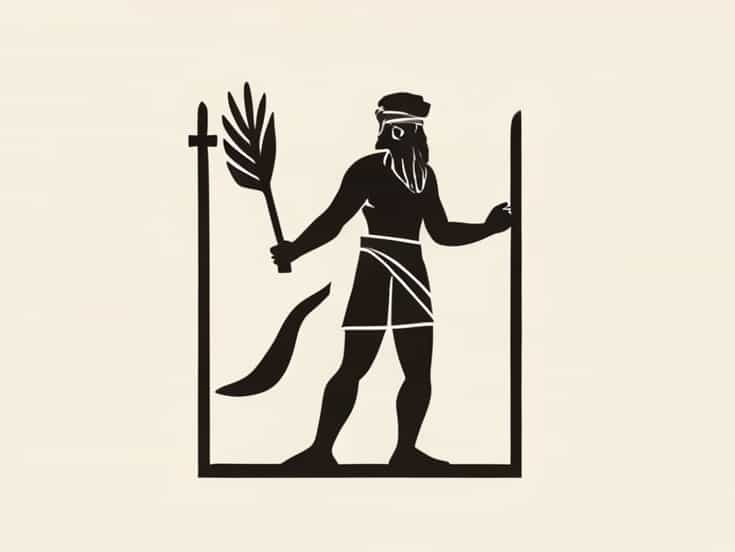
The Epic of Gilgamesh is one of the oldest surviving works of literature, offering insight into ancient Mesopotamian culture, religion, and mythology. Central to this epic is the story of Enkidu, a wild man created to balance the power and arrogance of Gilgamesh, the king of Uruk. Understanding who created Enkidu, why he was created, and how he influenced the events of the epic provides important context for the narrative and reveals key themes about friendship, civilization, and human destiny. Enkidu’s creation is a turning point in the epic, as it sets the stage for the bond between Gilgamesh and Enkidu, which drives much of the story’s action and emotional depth. Exploring the role of the gods and their intentions behind Enkidu’s creation helps readers appreciate the spiritual and moral framework of the epic.
Who Created Enkidu?
In the Epic of Gilgamesh, Enkidu was created by the gods in response to the complaints of the people of Uruk. Gilgamesh, though a powerful and heroic king, ruled with excessive force and arrogance, oppressing his citizens and causing widespread suffering. The people prayed to the gods for relief, asking for someone who could challenge Gilgamesh and restore balance to the city. It is through this divine intervention that the gods decided to create Enkidu, a being who would match Gilgamesh in strength and spirit, but who initially existed outside of civilization, living in harmony with nature and the wild animals of the steppe.
The Role of Aruru, the Goddess of Creation
According to the epic, it was Aruru, the goddess of creation, who fashioned Enkidu from clay. Aruru is often associated with fertility, birth, and the creation of life. She molded Enkidu as a counterpart to Gilgamesh, giving him immense physical strength and a natural connection to the wild. This act of creation demonstrates the gods’ ability to intervene in human affairs, shaping events according to divine plans. By creating Enkidu, Aruru introduced a new character who would not only challenge Gilgamesh but also help him grow emotionally and morally, highlighting the gods’ influence in guiding human destiny.
The Purpose Behind Enkidu’s Creation
Enkidu was not created merely as a companion for Gilgamesh, but with a specific purpose to counterbalance the king’s tyranny and to teach him humility. The people of Uruk, distressed by Gilgamesh’s harsh rule, appealed to the gods, who responded by crafting Enkidu to serve as a moral and physical check on the king’s power. This divine plan reflects the themes of justice and balance in the epic, showing that even the strongest humans are subject to higher powers and that harmony requires both personal growth and external checks.
Enkidu as a Mirror of Civilization
Enkidu’s creation also introduces the theme of civilization versus nature. Initially, Enkidu lives among animals, unaware of human customs, social rules, or morality. He represents the untamed world, a natural force unconstrained by human constructs. His encounter with civilization, beginning with the temple prostitute Shamhat, symbolizes the process of learning and transformation. By being brought into human society, Enkidu gains knowledge and awareness, which allows him to fulfill his role as Gilgamesh’s equal and companion. This journey from wildness to civilization underscores the moral and educational purposes of his creation.
The Impact of Enkidu’s Creation on Gilgamesh
The creation of Enkidu significantly affects Gilgamesh’s character development. At first, Gilgamesh is a tyrannical ruler, feared by his people. Enkidu’s arrival challenges him physically and emotionally, leading to a confrontation that evolves into a deep friendship. This bond is transformative Gilgamesh learns humility, loyalty, and compassion through his relationship with Enkidu. The gods’ creation of Enkidu, therefore, is not only about justice for the people of Uruk but also about providing Gilgamesh with the experiences necessary for personal growth and understanding of mortality.
Friendship and Mortality
Enkidu’s companionship allows the epic to explore themes of friendship and mortality. Their adventures, including the slaying of Humbaba and the Bull of Heaven, demonstrate courage, teamwork, and human ingenuity. However, Enkidu’s eventual death introduces Gilgamesh to the harsh realities of human mortality, driving him on a quest for eternal life. Without Enkidu’s creation and presence, Gilgamesh’s understanding of life, death, and the limits of human power would remain incomplete. The gods’ intervention through Enkidu’s creation thus catalyzes both the plot and the philosophical reflections at the heart of the epic.
Symbolism of Enkidu’s Creation
Enkidu’s creation carries rich symbolic meaning. Molded from clay, he embodies the connection between humans and the earth, reflecting themes of natural origin and divine intervention. His initial wildness signifies the untamed potential within humanity, while his eventual integration into society represents the transformative power of culture, education, and companionship. The gods’ role in his creation underscores the idea that human lives and events are part of a larger cosmic order, emphasizing the interplay between divine will and human action in the narrative.
The Role of Divine Justice
The creation of Enkidu is also a reflection of divine justice. The gods respond to human suffering and moral imbalance by creating a force that can restore harmony. This act demonstrates that divine intervention is often aimed at maintaining equilibrium in the human world. Enkidu’s existence as both a friend and a challenger to Gilgamesh embodies the gods’ approach to justice neither punitive nor passive, but active, shaping human character and guiding moral development.
Enkidu’s Integration into the Human World
Enkidu’s journey from the wilderness to Uruk illustrates the process of becoming human through social and cultural experiences. The temple prostitute Shamhat plays a crucial role in this transformation, introducing him to food, language, and social norms. This interaction highlights the deliberate design behind Enkidu’s creation he is meant to bridge the gap between nature and civilization. Once integrated, Enkidu can interact meaningfully with Gilgamesh, fulfilling his purpose as both a companion and a moral foil.
Lessons from Enkidu’s Creation
- Divine creation can serve practical and moral purposes, influencing human behavior and relationships.
- Balance and justice often require intervention from higher powers to correct human excesses.
- Friendship and companionship can lead to personal growth and ethical development.
- Transition from nature to civilization symbolizes learning, socialization, and the cultivation of wisdom.
- Awareness of mortality and human limits often arises through relationships and shared experiences.
In the Epic of Gilgamesh, Enkidu is created by the goddess Aruru at the request of the people of Uruk and in response to Gilgamesh’s oppressive rule. His creation serves multiple purposes to restore balance, provide a companion and equal for Gilgamesh, and explore themes of civilization, friendship, and mortality. Enkidu’s journey from the wild to human society symbolizes the transformative power of knowledge and culture, while his interactions with Gilgamesh demonstrate the role of companionship in personal growth. The gods’ act of creating Enkidu highlights the influence of divine intervention in human affairs, offering lessons about justice, morality, and the interconnectedness of life. Through Enkidu, the epic addresses enduring questions about human nature, the role of the divine, and the importance of meaningful relationships, making his creation a central and profound element of the story.