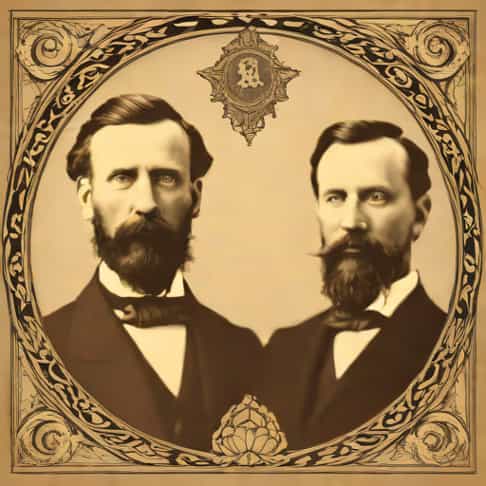
Joseph Pulitzer and William Randolph Hearst are two of the most influential figures in the history of American journalism, whose rivalry and innovations shaped modern media and the concept of mass communication. Pulitzer, an immigrant from Hungary, became renowned for his dedication to investigative journalism and for establishing high standards in reporting, while Hearst, the son of a wealthy mining magnate, used his newspapers to create sensationalized stories that captivated the public. Their contrasting approaches not only fueled a competitive press landscape but also had lasting effects on politics, culture, and public opinion in the United States. By examining their careers, contributions, and rivalry, one can understand the evolution of American journalism and the power of the press in shaping society.
Joseph Pulitzer Life and Legacy
Joseph Pulitzer was born in 1847 in Makó, Hungary, and immigrated to the United States as a young man. He began his career in journalism working for German-language newspapers before acquiring the New York World in 1883. Pulitzer’s newspapers were known for their commitment to investigative reporting, exposing corruption, and advocating for social reforms. He believed in the power of the press to serve the public interest, championing causes such as labor rights, government accountability, and public health initiatives. Pulitzer’s approach combined compelling storytelling with factual reporting, earning him a reputation as one of the most respected editors of his time.
Contributions to Journalism
Pulitzer’s impact on journalism was profound. He pioneered new methods of reporting that emphasized accuracy, clarity, and public service. Some of his notable contributions include
- Expanding investigative journalism to uncover political and corporate corruption.
- Introducing human-interest stories that engaged readers while addressing societal issues.
- Promoting literacy and education through newspaper content and campaigns.
- Establishing the Pulitzer Prizes, which continue to recognize excellence in journalism, literature, and music.
Through these innovations, Pulitzer demonstrated that newspapers could both inform and entertain, setting a standard for responsible and impactful journalism.
William Randolph Hearst Life and Influence
William Randolph Hearst was born in 1863 into a wealthy family, inheriting significant resources that allowed him to enter the newspaper business with ambitious goals. Hearst took control of the San Francisco Examiner and later expanded his media empire to include the New York Journal and other publications. Unlike Pulitzer, Hearst favored sensationalism and dramatic storytelling, a style that came to be known as yellow journalism. He understood the commercial potential of appealing to mass audiences, often emphasizing scandal, crime, and human drama to attract readers. Hearst’s newspapers wielded considerable influence, shaping public opinion and political discourse during his time.
Innovations and Methods
Hearst revolutionized the newspaper industry by focusing on attention-grabbing headlines, illustrations, and serialized stories. Key aspects of his approach included
- Using bold, sensational headlines to capture public interest.
- Employing investigative tactics to uncover scandals, though sometimes prioritizing entertainment over accuracy.
- Expanding newspaper circulation through marketing strategies and promotions.
- Leveraging media influence to support political ambitions, including a successful career in Congress and influence over presidential elections.
Hearst’s methods popularized newspapers as a form of mass entertainment while also demonstrating the power of media in shaping public perception and policy.
The Rivalry Between Pulitzer and Hearst
The rivalry between Joseph Pulitzer and William Randolph Hearst is legendary, particularly in the context of New York City’s newspaper wars during the late 19th and early 20th centuries. Both men competed fiercely for readership, often pushing the boundaries of reporting and sensationalism to attract audiences. This competition led to innovations in layout, reporting style, and marketing techniques, but also contributed to ethical debates about the role of sensationalism and the responsibilities of the press. While Pulitzer emphasized investigative integrity and social reform, Hearst prioritized mass appeal and dramatic storytelling, creating a dynamic tension that shaped American journalism for decades.
Impact on Media and Society
The competition between Pulitzer and Hearst had significant effects on society and politics. Their newspapers helped mobilize public opinion on major issues, including the Spanish-American War, labor disputes, and political corruption. Some critics argue that the sensationalism promoted by Hearst’s publications contributed to public hysteria and manipulated perceptions of events, while supporters claim it increased engagement and awareness of social issues. Pulitzer’s emphasis on responsible journalism provided a counterbalance, demonstrating that newspapers could serve both as a platform for reform and as a source of compelling content.
Legacy and Long-Term Influence
Both Joseph Pulitzer and William Randolph Hearst left enduring legacies that continue to influence journalism today. Pulitzer’s commitment to investigative reporting and public service journalism set the standard for professional ethics and quality reporting. The Pulitzer Prizes, established in his will, remain among the most prestigious awards in journalism and the arts, inspiring generations of journalists and writers to pursue excellence. Hearst’s legacy lies in his understanding of media as a tool for influence and his innovations in circulation, marketing, and mass appeal, which transformed newspapers into powerful instruments of public engagement.
Lessons from Their Careers
The lives and careers of Pulitzer and Hearst offer several lessons for modern media professionals and scholars
- Investigative journalism is essential for holding power accountable and promoting social reform.
- Media has the power to shape public opinion and influence political outcomes.
- Balancing commercial success with ethical reporting is a constant challenge in journalism.
- Innovation in media-whether through design, marketing, or storytelling-can significantly expand audience reach and impact.
These lessons continue to resonate as journalists navigate the challenges of digital media, social networks, and the changing landscape of news consumption.
Joseph Pulitzer and William Randolph Hearst were pioneering figures whose contributions defined the modern newspaper industry and the role of media in society. Pulitzer’s dedication to investigative reporting, ethical standards, and public service set a model for responsible journalism, while Hearst’s focus on sensationalism, mass appeal, and media influence demonstrated the commercial potential and societal power of newspapers. Their rivalry pushed the boundaries of innovation, storytelling, and audience engagement, leaving a legacy that continues to shape journalism and media practices today. Understanding their lives, careers, and contrasting approaches provides valuable insight into the evolution of the press and the enduring tension between ethics, entertainment, and influence in American media.