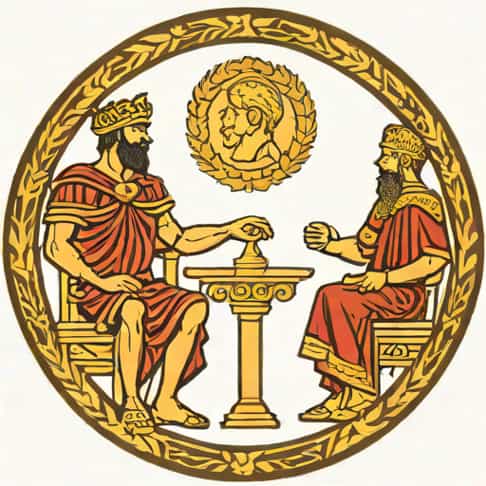
Marcus Antonius, commonly known as Mark Antony, was one of the most influential figures in the late Roman Republic, known for his military skill, political maneuvering, and role as a member of the Second Triumvirate. Born in 83 BCE into a prominent Roman family, Antony rose through the ranks of the Roman military and political system, becoming a trusted ally of Julius Caesar. His life and career were marked by dramatic military campaigns, political alliances, and personal relationships that shaped the course of Roman history. Understanding Marcus Antonius’ life provides insight into the tumultuous period of the late Republic and the transition toward imperial rule.
Early Life and Background
Marcus Antonius was born in Rome in 83 BCE into a family with a long tradition of political involvement. His father, also named Marcus Antonius, was an orator and consul, and his family belonged to the plebeian class but had attained considerable influence. Growing up, Antony received a standard Roman education, which included rhetoric, military training, and an understanding of Roman law and politics. These skills would later serve him in both the military and the political arena.
Initial Military Career
Antony’s early military career began under Julius Caesar during the Gallic Wars, where he quickly distinguished himself for bravery and leadership. He was appointed to key positions within Caesar’s legions, earning recognition for his tactical skill and loyalty. His success in Gaul helped establish his reputation as a competent general and a figure of authority within the Roman military hierarchy.
Rise to Political Power
After his military successes in Gaul, Antony returned to Rome and entered the political sphere. He was elected quaestor in 52 BCE, marking the beginning of his formal political career. Antony’s alliance with Julius Caesar proved pivotal; he supported Caesar’s ambitions and policies, leveraging his military reputation to gain influence in Roman politics.
Alliance with Julius Caesar
Antony’s relationship with Caesar was both professional and personal. He served as Caesar’s loyal lieutenant during the civil war against Pompey and played a critical role in several key battles. Caesar rewarded Antony’s loyalty with important political positions, including consulship in 44 BCE. The assassination of Caesar in 44 BCE would mark a turning point in Antony’s life, thrusting him into the center of Rome’s political turmoil.
Role in the Second Triumvirate
Following Caesar’s assassination, Antony formed the Second Triumvirate with Octavian (later Augustus) and Lepidus. This alliance was officially recognized in 43 BCE, giving the triumvirs extraordinary powers to restore order and punish Caesar’s assassins. Antony’s role in the Triumvirate involved both military leadership and political strategy, consolidating power in Rome and its territories.
Military Campaigns
As a member of the Triumvirate, Antony commanded forces in the East, most notably in campaigns against the assassins of Caesar, including Brutus and Cassius. His strategic decisions during these campaigns, especially at the Battle of Philippi in 42 BCE, were crucial in defeating the conspirators and securing control for the Triumvirs. Antony’s military prowess during these operations further solidified his status as one of Rome’s leading generals.
Relationship with Cleopatra
Antony’s personal and political life became intertwined with Cleopatra VII, the queen of Egypt. Their alliance, beginning in 41 BCE, had both romantic and strategic dimensions. Cleopatra provided financial support and resources for Antony’s military campaigns, while Antony’s connection with her enhanced his influence in the Eastern provinces. However, this relationship also became a point of contention with Rome, particularly with Octavian, who used it to portray Antony as a traitor to Roman values.
Conflict with Octavian
The rivalry between Antony and Octavian eventually led to open conflict, culminating in the famous Battle of Actium in 31 BCE. Antony and Cleopatra’s combined forces were decisively defeated by Octavian’s navy, marking the end of Antony’s power in Rome. This defeat forced Antony and Cleopatra to retreat to Egypt, where they ultimately took their own lives in 30 BCE. Antony’s death marked the conclusion of the Roman Republic’s final civil war and paved the way for Octavian to become Rome’s first emperor.
Legacy and Historical Significance
Marcus Antonius is remembered as one of Rome’s most skilled generals and a key political figure of the late Republic. His military achievements, particularly during Caesar’s campaigns and the battles following Caesar’s death, demonstrated his strategic ability and leadership. Politically, Antony’s actions during the Triumvirate reshaped the Roman world, highlighting the fragility and volatility of Roman political structures during the transition from Republic to Empire.
Cultural Impact
Beyond his political and military legacy, Antony has had a lasting impact on culture and literature. He is a prominent figure in historical accounts by authors such as Plutarch and Suetonius, and his life inspired Shakespeare’s famous play Antony and Cleopatra. His story of ambition, loyalty, and romance continues to captivate historians, writers, and audiences worldwide, emphasizing both the human and political dimensions of his life.
Lessons from Antony’s Life
- Military skill and loyalty can elevate an individual to positions of power, but political alliances are equally crucial.
- Personal relationships can have profound political consequences, as seen in Antony’s alliance with Cleopatra.
- The balance between ambition and strategic caution is essential for survival in volatile political environments.
- Historical legacies are shaped by both achievements and failures, with Antony’s life serving as a complex example of power, influence, and downfall.
Marcus Antonius, Roman general and triumvir, played a central role in one of the most dynamic periods of Roman history. His military prowess, political influence, and personal relationships with figures such as Julius Caesar and Cleopatra defined his life and legacy. While his defeat and eventual death marked the end of his personal ambitions, Antony’s impact on the Roman Republic, its transition to empire, and Western cultural history remains significant. Studying his life offers valuable insights into the complexities of leadership, loyalty, and power in a time of dramatic political change.