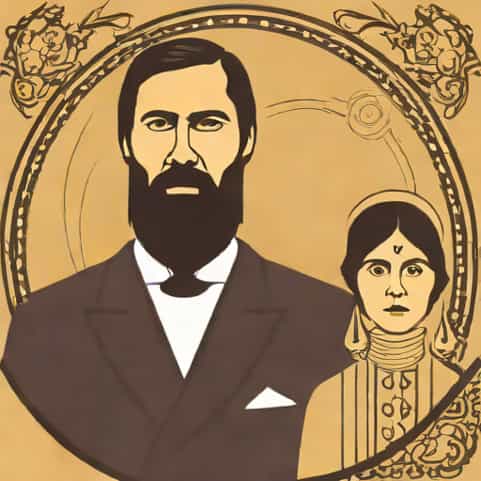
The relationship between Grigori Rasputin and Czarina Alexandra of Russia has fascinated historians and the public for over a century. Known for his mysterious influence over the Russian royal family, Rasputin became closely associated with the Czarina during a time of political turmoil and social unrest. Their connection, often described as enigmatic and controversial, played a significant role in the perception of the Romanov dynasty and contributed to the intrigue surrounding the fall of Imperial Russia. Understanding the nature of Rasputin and the Czarina’s relationship, including key dates and events, provides insight into one of the most captivating chapters of Russian history.
Background of Grigori Rasputin
Grigori Rasputin was a Siberian peasant and self-proclaimed mystic who gained notoriety for his alleged healing abilities and spiritual guidance. Born in 1869 in Pokrovskoye, Rasputin’s early life was marked by religious devotion and claims of mystical experiences. His reputation as a faith healer eventually led him to the Russian capital, where he became involved with the royal family. Rasputin’s influence was particularly strong due to his perceived ability to help the heir to the throne, Alexei, who suffered from hemophilia, a condition that caused excessive bleeding.
The Czarina Alexandra
Czarina Alexandra Feodorovna, born Princess Alix of Hesse, married Tsar Nicholas II in 1894. Alexandra was devoted to her family and deeply religious, often seeking guidance from spiritual advisors. Her son Alexei’s illness made her particularly receptive to Rasputin’s alleged healing powers. Alexandra’s reliance on Rasputin for both spiritual and medical counsel cemented his influence within the royal household, raising suspicions among nobles and government officials who questioned the peasant mystic’s motives and the impact on political decisions.
The Meeting and Initial Influence
Rasputin first came into contact with Czarina Alexandra in 1905. Reports suggest that Alexandra was initially skeptical of his abilities but became convinced of his spiritual insight after observing his apparent calming effect on Alexei’s hemophilia episodes. Rasputin’s reputation as a healer grew, and he became a trusted confidant of the Czarina. Their relationship was marked by private meetings, letters, and discussions about both personal and political matters, fueling rumors and speculation among the Russian aristocracy.
Key Dates in Rasputin and Czarina’s Relationship
- 1905 Rasputin arrives in Saint Petersburg and is introduced to the royal family.
- 1907-1912 Rasputin gains increasing access to the royal household, particularly as Alexandra seeks help for Alexei.
- 1912 Rasputin’s influence over Alexandra is solidified, and he begins to advise on political appointments and decisions.
- 1914-1916 During World War I, Rasputin’s political influence grows as Nicholas II focuses on military leadership, leaving Alexandra more dependent on Rasputin.
- December 1916 Rasputin is assassinated, ending his direct influence but leaving a lasting impact on the royal family’s reputation.
Controversies Surrounding Their Relationship
The relationship between Rasputin and the Czarina has been the subject of intense debate among historians. Critics argue that Rasputin’s influence contributed to political instability by promoting controversial ministers and interfering in government affairs. Allegations of personal intimacy between Rasputin and Alexandra, though largely unproven, fueled scandal and public distrust. The combination of Rasputin’s mysticism, Alexandra’s devotion, and the political turmoil of the time created a perfect storm of rumor and intrigue, which ultimately tarnished the royal family’s image.
Political Implications
Rasputin’s involvement in state affairs, though informal, had tangible consequences. As World War I strained Russia’s resources and morale, Alexandra increasingly relied on Rasputin’s counsel while Nicholas II was away at the front. Rasputin’s recommendations for ministerial appointments and military decisions were often controversial, provoking opposition from nobles and the Duma, Russia’s legislative body. This perceived manipulation weakened public confidence in the monarchy and contributed to the revolutionary sentiments that culminated in the 1917 abdication of Nicholas II.
Legacy of Rasputin and the Czarina
The legacy of Rasputin and Czarina Alexandra’s relationship continues to intrigue scholars, writers, and the public. Rasputin’s assassination in 1916 did little to repair the damage to the royal family’s reputation, as rumors of undue influence persisted. The mystique surrounding their interactions has inspired numerous books, films, and academic studies. While some view Rasputin as a malevolent force, others argue that his influence has been exaggerated and that Alexandra’s devotion was primarily motivated by concern for her son’s health and the stability of the monarchy.
Historical Perspectives
Modern historians tend to view the relationship between Rasputin and the Czarina as complex, emphasizing the interplay of faith, family, and politics. Rasputin’s mystical persona and Alexandra’s reliance on spiritual guidance were shaped by the context of early 20th-century Russia, marked by social change and political uncertainty. Understanding this relationship requires balancing sensational accounts with documented evidence, recognizing both the human and political factors that contributed to their closeness.
The story of Rasputin and Czarina Alexandra remains one of the most compelling narratives in Russian history. Their relationship, beginning in 1905 and intensifying over the next decade, combined elements of faith, personal devotion, and political intrigue. Key dates in their interactions highlight the gradual rise of Rasputin’s influence and its controversial impact on the monarchy. While Rasputin’s assassination ended his direct involvement, the legacy of their association continues to shape perceptions of the Romanov dynasty. Understanding the complexities of Rasputin and the Czarina’s relationship offers insight into the historical forces that contributed to the fall of Imperial Russia and the enduring fascination with one of history’s most enigmatic figures.