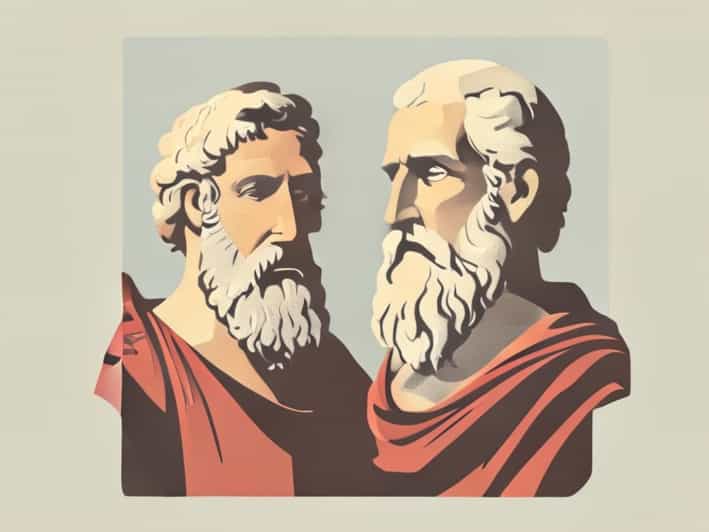
Throughout the history of science and philosophy, many scholars have built upon the foundations laid by earlier thinkers. Among the most influential figures in classical science were Aristotle and Ptolemy. Aristotle, the Greek philosopher, contributed significantly to natural philosophy, logic, and the understanding of the cosmos, while Ptolemy, the Greco-Roman astronomer and mathematician, developed the geocentric model of the universe, which dominated astronomical thought for over a millennium. Over time, various scholars and scientists emerged who supported the views of Ptolemy and Aristotle, reinforcing their ideas in astronomy, physics, and philosophy. Understanding the individuals and movements that upheld these perspectives sheds light on the intellectual history of Europe and the broader development of scientific thought.
The Legacy of Aristotle
Aristotle’s work in philosophy, physics, and natural science had a profound impact on both ancient and medieval thought. His theories about motion, causation, and the structure of the universe formed the basis of the Aristotelian worldview, which emphasized observation, categorization, and rational explanation of natural phenomena. Aristotle believed in a finite universe with the Earth at its center, surrounded by concentric spheres that contained the planets and stars. This framework influenced not only philosophers but also early astronomers and scientists for centuries.
Aristotle’s Influence on Natural Philosophy
Many scholars during the Middle Ages and the Renaissance adopted Aristotle’s explanations of physics and natural laws. His ideas about the four causes-material, formal, efficient, and final-offered a comprehensive way to understand why things happen in nature. Supporters of Aristotle emphasized careful observation and logical reasoning, integrating his philosophy into educational systems, including the universities of medieval Europe. In particular, the concept of natural motion versus violent motion was widely taught, providing a framework for understanding everyday phenomena long before Newtonian physics emerged.
Ptolemy and the Geocentric Model
Claudius Ptolemy, an astronomer and mathematician of the second century CE, built upon earlier Greek ideas to formalize a geocentric model of the universe. In the Ptolemaic system, the Earth occupied the center of the universe, and all celestial bodies, including the Sun, Moon, and planets, revolved around it in complex circular paths known as epicycles. Ptolemy’s work, especially the Almagest, became a cornerstone of astronomy, influencing scholars for over a thousand years and guiding navigation, astrology, and calendrical calculations.
The Adoption of Ptolemaic Astronomy
Scholars in both the Islamic world and Europe embraced the Ptolemaic system, often merging it with Aristotelian cosmology. The Ptolemaic model provided a mathematically precise method to predict planetary positions, which was crucial for agriculture, navigation, and religious calendars. Many medieval universities incorporated these teachings into their curricula, producing generations of astronomers and philosophers who supported the Ptolemaic worldview.
Scholars Who Supported Aristotle and Ptolemy
Numerous thinkers across different regions and periods championed the views of Aristotle and Ptolemy, ensuring that their ideas persisted well into the Renaissance. Their support was not merely passive; they actively defended, expanded, and applied these classical theories to contemporary problems.
Islamic Scholars
During the Islamic Golden Age, scholars such as Al-Farabi, Avicenna (Ibn Sina), and Averroes (Ibn Rushd) preserved and elaborated on Aristotelian philosophy. They translated Aristotle’s works into Arabic, commented extensively on his writings, and integrated his ideas into Islamic theology and science. Similarly, astronomers like Al-Battani and Al-Sufi refined the Ptolemaic system, making precise astronomical observations that aligned with Ptolemy’s geocentric model while correcting minor inaccuracies. These scholars served as a bridge, transmitting classical knowledge to later European thinkers.
Medieval European Thinkers
In Europe, the rediscovery of Aristotle and Ptolemy during the 12th and 13th centuries, facilitated by translations from Arabic, profoundly influenced intellectual life. Thomas Aquinas, for instance, incorporated Aristotelian philosophy into Christian theology, arguing that reason and faith could coexist. Scholars in universities across Europe taught Ptolemaic astronomy as a mathematical and philosophical truth. Figures like Albertus Magnus championed both Aristotle’s natural philosophy and Ptolemy’s astronomical models, emphasizing their importance in understanding the natural world.
Renaissance and Early Modern Supporters
Even as the Renaissance emphasized observation and experimentation, many scientists initially continued to support the views of Aristotle and Ptolemy. Nicolaus Copernicus, although he eventually proposed the heliocentric model, initially studied and critically assessed the Ptolemaic system, demonstrating the lasting influence of Ptolemy. Similarly, Galileo and Kepler, while ultimately challenging aspects of these classical models, engaged deeply with Aristotelian and Ptolemaic ideas before developing new theories.
Reasons for Supporting Aristotle and Ptolemy
The persistence of Aristotelian and Ptolemaic views can be explained by several factors. Their models offered logical, systematic frameworks that were consistent with observations available at the time. Additionally, their ideas were deeply integrated into educational, religious, and philosophical systems, providing intellectual authority and social acceptance. The combination of empirical adequacy, mathematical precision, and philosophical coherence made these classical theories highly influential and widely supported.
- Consistency with ObservationWithin the limits of naked-eye astronomy, Ptolemy’s epicycles accurately predicted planetary positions, making the model reliable for practical purposes.
- Philosophical CoherenceAristotle’s explanations of causality, motion, and the cosmos offered a systematic understanding of nature that aligned with contemporary metaphysical and theological beliefs.
- Institutional SupportUniversities, religious institutions, and scholarly networks reinforced the teachings of Aristotle and Ptolemy, ensuring their transmission across generations.
- Integration of KnowledgeTheir work provided a framework that connected mathematics, astronomy, physics, and philosophy, facilitating interdisciplinary study.
Limitations and Challenges
Although widely supported, the Aristotelian and Ptolemaic views eventually faced challenges. Observations made with telescopes and refined mathematical models revealed inconsistencies in the geocentric system, while Aristotle’s physics could not adequately explain celestial mechanics. These challenges prompted the scientific revolution, leading to the adoption of heliocentric models and Newtonian mechanics. Nonetheless, the initial support for these classical ideas laid the groundwork for systematic scientific inquiry.
Transition to Modern Science
The support for Aristotle and Ptolemy did not merely delay scientific progress; it provided a necessary foundation. By engaging with their theories, scholars learned how to critically analyze models, develop empirical testing methods, and integrate mathematics into natural philosophy. The eventual shift to modern science was built upon the intellectual rigor and observational traditions established by these classical thinkers.
Aristotle and Ptolemy profoundly shaped the course of scientific and philosophical thought for centuries. Their ideas were supported by numerous scholars across Islamic and European intellectual traditions, who translated, commented on, and applied their theories to natural philosophy, astronomy, and theology. The support for these views was rooted in their explanatory power, consistency with observation, and integration into educational and religious institutions. While later discoveries challenged aspects of their models, the legacy of those who supported Aristotle and Ptolemy demonstrates the enduring influence of classical knowledge in shaping the trajectory of human understanding and the development of modern science.