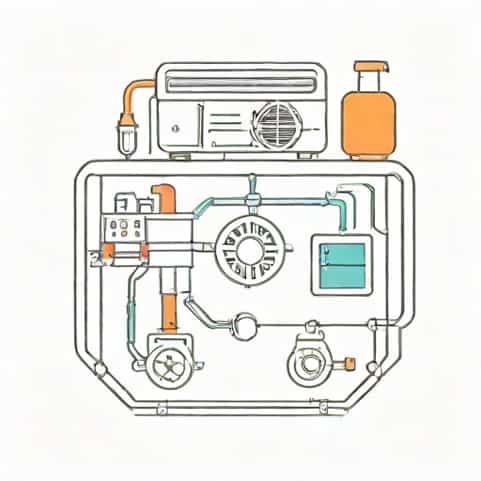
The basic refrigeration cycle is a fundamental concept in thermodynamics and HVAC (heating, ventilation, and air conditioning) systems, used widely to provide cooling in homes, industries, and commercial spaces. This cycle explains how heat is transferred from a cooler space to a warmer environment using a working fluid known as a refrigerant. Understanding the basic refrigeration cycle is essential for engineers, technicians, and anyone interested in cooling technologies because it lays the foundation for more complex refrigeration systems. By exploring the components, principles, and steps involved in this cycle, we can gain a clear understanding of how modern refrigeration and air conditioning systems operate efficiently and sustainably.
Overview of the Refrigeration Cycle
The basic refrigeration cycle works on the principle of removing heat from a low-temperature area and rejecting it to a high-temperature environment. This process allows for the cooling of spaces, liquids, or products. The cycle typically consists of four key components the compressor, condenser, expansion valve (or throttling device), and evaporator. Each component plays a critical role in ensuring the refrigerant flows correctly and performs the desired heat exchange. The cycle can operate using different types of refrigerants, including traditional CFCs, HFCs, or natural refrigerants like ammonia or carbon dioxide, depending on environmental and regulatory requirements.
Main Components
- CompressorThe compressor is responsible for increasing the pressure and temperature of the refrigerant vapor. It takes low-pressure, low-temperature vapor from the evaporator and compresses it into a high-pressure, high-temperature vapor.
- CondenserThe high-pressure vapor enters the condenser, where it releases heat to the surroundings. As it cools, it condenses into a high-pressure liquid.
- Expansion ValveThe expansion valve regulates the flow of the refrigerant into the evaporator. It reduces the pressure of the liquid refrigerant, causing it to expand and partially evaporate, lowering its temperature significantly.
- EvaporatorIn the evaporator, the low-pressure liquid refrigerant absorbs heat from the space or substance to be cooled. It fully vaporizes and returns to the compressor to continue the cycle.
Step-by-Step Process
The basic refrigeration cycle follows a continuous loop of heat absorption and rejection. Each step is carefully coordinated to maintain the desired cooling effect while ensuring energy efficiency.
Compression Stage
The cycle begins at the compressor, where the low-pressure refrigerant vapor from the evaporator is compressed. Compressing the refrigerant raises its pressure and temperature, preparing it for heat rejection in the condenser. This stage is energy-intensive, as the compressor consumes electrical power to perform the compression. The efficiency of the compressor directly affects the overall performance of the refrigeration system.
Condensation Stage
After compression, the high-pressure, high-temperature refrigerant vapor flows into the condenser. Here, the refrigerant releases its absorbed heat to the surrounding environment, usually air or water. As heat is removed, the refrigerant undergoes a phase change from vapor to liquid. Condensers can be air-cooled or water-cooled, and their design influences the effectiveness of heat rejection. Proper maintenance of the condenser is crucial for sustaining the system’s efficiency and longevity.
Expansion Stage
The high-pressure liquid refrigerant passes through the expansion valve, where it experiences a sudden pressure drop. This throttling process reduces the temperature of the refrigerant and allows it to enter the evaporator as a cold, low-pressure mixture of liquid and vapor. The expansion stage is essential for creating the low-temperature conditions needed to absorb heat from the refrigerated space or substance effectively.
Evaporation Stage
In the evaporator, the cold refrigerant absorbs heat from the target space. This causes the refrigerant to evaporate fully, transforming into a low-pressure vapor. The absorbed heat lowers the temperature of the space or product being cooled. The evaporator design ensures maximum heat transfer while minimizing pressure drops. Once fully vaporized, the refrigerant returns to the compressor, completing the cycle and ready to begin again.
Applications of the Basic Refrigeration Cycle
The principles of the basic refrigeration cycle are applied across a wide range of systems and industries. Understanding the cycle allows engineers to design and optimize systems for specific purposes.
Common Applications
- Domestic RefrigeratorsHousehold refrigerators use the basic refrigeration cycle to keep food and beverages cold efficiently.
- Air ConditioningResidential, commercial, and automotive air conditioning systems rely on the cycle to provide comfort cooling.
- Industrial RefrigerationCold storage, food processing, and chemical industries utilize large-scale refrigeration systems based on this cycle to preserve products and control temperatures.
- Heat PumpsHeat pumps use a similar cycle in reverse to provide heating, demonstrating the versatility of the basic refrigeration concept.
Efficiency and Performance Considerations
The efficiency of the basic refrigeration cycle depends on multiple factors, including the type of refrigerant, component design, and operating conditions. Key performance metrics include the coefficient of performance (COP), which measures the ratio of cooling output to energy input, and the system’s overall energy consumption. Engineers often optimize the cycle by selecting appropriate compressors, condensers, and evaporators while ensuring minimal heat losses and pressure drops. Proper insulation, regular maintenance, and advanced control systems also enhance efficiency.
Environmental and Safety Aspects
Modern refrigeration systems must consider environmental impact, particularly the choice of refrigerant. Older refrigerants such as CFCs and HCFCs have been phased out due to ozone depletion potential. Newer alternatives like HFCs, natural refrigerants, and low-global-warming-potential (GWP) fluids are preferred. Safety considerations include proper handling of refrigerants, pressure monitoring, and leak detection systems to prevent hazards and ensure compliance with regulations.
The basic refrigeration cycle forms the foundation for all cooling systems, from household refrigerators to large industrial chillers. By understanding the four key stages-compression, condensation, expansion, and evaporation-technicians, engineers, and enthusiasts can appreciate how heat transfer and phase changes enable efficient cooling. The cycle’s versatility allows its application in diverse industries, including air conditioning, food preservation, and chemical processing. Efficient design, proper maintenance, and environmentally responsible refrigerant selection are critical for achieving optimal performance. Mastery of the basic refrigeration cycle is essential for anyone involved in HVAC and refrigeration systems, as it provides the knowledge necessary to design, operate, and maintain effective cooling solutions while minimizing energy consumption and environmental impact.