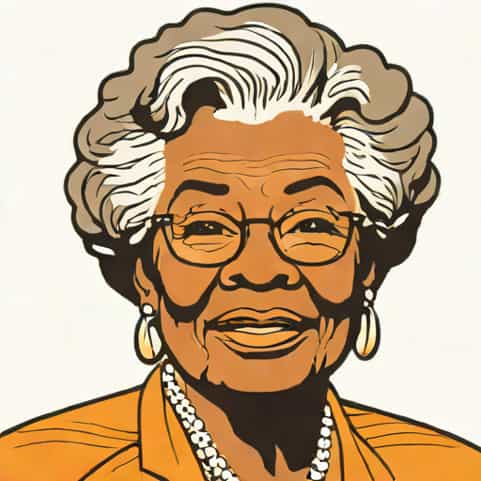
Maya Angelou’s life was a remarkable journey of resilience, creativity, and unshakable determination. Known worldwide as a poet, author, singer, dancer, actress, and civil rights activist, she used her words and art to inspire millions. Her story reflects not only her personal triumphs and struggles but also the broader history of African American culture and the fight for equality. Through her books, performances, and public speeches, Angelou gave a voice to those who were often unheard and left an indelible mark on literature and society. Her biography is a testament to the power of art, courage, and self-expression.
Early Life and Childhood
Maya Angelou was born as Marguerite Annie Johnson on April 4, 1928, in St. Louis, Missouri. Her parents’ troubled marriage led to a difficult childhood marked by separation and hardship. After her parents’ divorce, she and her brother Bailey were sent to live with their grandmother in Stamps, Arkansas. Growing up in the segregated South exposed Angelou to the harsh realities of racism, but it also shaped her understanding of resilience and dignity. Her early experiences would later serve as the foundation for much of her writing, allowing her to tell stories that resonated with truth and authenticity.
A Childhood of Challenges
Angelou’s early years were filled with both trauma and discovery. At the age of eight, she experienced a traumatic event that left her mute for nearly five years. During this period of silence, she immersed herself in reading and memorizing poetry, literature, and African American spirituals. This quiet period became a time of intense intellectual growth, allowing her to absorb the rhythm and beauty of language. The transformative power of words that she discovered during these years later became the hallmark of her career as a poet and storyteller.
Emerging as an Artist
Before gaining fame as a writer, Maya Angelou built an impressive career as a performer. In her teens and early twenties, she worked as a dancer, singer, and actress, performing in clubs, theaters, and international venues. She toured internationally with dance troupes and appeared in productions such as Porgy and Bess, captivating audiences with her commanding stage presence. Angelou also recorded albums of calypso music and appeared in films, showcasing her versatility as an artist. These early artistic pursuits allowed her to explore different cultures and sharpen her ability to communicate powerful emotions through performance.
Life Abroad
In the late 1950s and early 1960s, Angelou lived in several countries, including Ghana and Egypt. Her time in Africa deepened her understanding of African heritage and global struggles for freedom and equality. While living in Ghana, she became close to prominent figures such as Kwame Nkrumah and worked with African American expatriates who were involved in civil rights and Pan-African movements. These international experiences broadened her perspective and strengthened her commitment to social justice, which would later be reflected in her writing and activism.
Literary Breakthrough
Maya Angelou’s literary career took flight in 1969 with the publication of her groundbreaking autobiography,I Know Why the Caged Bird Sings. This book, the first of seven autobiographical volumes, chronicles her early life and explores themes of identity, racism, and overcoming adversity. It received critical acclaim and was nominated for a National Book Award, cementing Angelou’s place in American literature. The book’s frank discussion of topics such as race, trauma, and female empowerment was groundbreaking at the time, opening doors for future writers to share their own stories of struggle and resilience.
Other Major Works
- Gather Together in My Name(1974) – A continuation of her autobiography focusing on her early adulthood.
- Singin’ and Swingin’ and Gettin’ Merry Like Christmas(1976) – Chronicling her career as a performer and her experiences abroad.
- The Heart of a Woman(1981) – Highlighting her role as a mother and activist during the civil rights movement.
- Phenomenal Woman– A celebrated poem that became a symbol of female strength and empowerment.
Through these works, Angelou blended personal history with universal themes, creating literature that continues to inspire readers of all ages and backgrounds.
Civil Rights Activism
Beyond her literary achievements, Maya Angelou was deeply involved in the civil rights movement. She worked alongside prominent leaders such as Martin Luther King Jr. and Malcolm X, using her talents to support efforts for racial equality. Angelou served as the Northern Coordinator for the Southern Christian Leadership Conference, an organization co-founded by King. Her activism was not limited to the United States; her time in Africa allowed her to contribute to anti-colonial movements and global conversations about freedom and human rights. Her activism underscored her belief that art and social justice are inseparable forces for change.
Influence as a Speaker
Angelou’s gift for oratory was as powerful as her written words. She delivered moving speeches and poems at significant national events, including her recitation of On the Pulse of Morning at President Bill Clinton’s inauguration in 1993. Her voice carried messages of hope, unity, and resilience, touching audiences across generations and cultures. Whether through poetry readings, interviews, or lectures, Angelou inspired countless individuals to embrace their own strength and dignity.
Later Career and Honors
Throughout her later years, Maya Angelou continued to write, teach, and inspire. She held academic positions at universities, sharing her knowledge of literature, history, and the human spirit. Her contributions to arts and letters earned her numerous awards, including over 30 honorary degrees and prestigious honors such as the Presidential Medal of Freedom, the highest civilian award in the United States, presented by President Barack Obama in 2011. These accolades reflected not only her talent but also her enduring impact on culture and society.
Legacy of a Literary Icon
Maya Angelou passed away on May 28, 2014, leaving behind a legacy that continues to resonate worldwide. Her writings remain a source of inspiration for readers seeking courage, identity, and understanding. Angelou’s life demonstrates how art can empower individuals and transform societies. From her early days in St. Louis to her final years as a beloved global figure, she proved that words have the power to heal, uplift, and create lasting change.
The biography of Maya Angelou is more than a story of personal success; it is a narrative of triumph over adversity and the transformative power of art. As a poet, performer, activist, and teacher, she dedicated her life to uplifting others and shining a light on issues of race, gender, and equality. Her journey from a troubled childhood to international acclaim serves as a reminder that creativity and perseverance can overcome even the greatest challenges. Through her books, speeches, and performances, Angelou continues to inspire new generations to find their own voice and embrace the beauty of self-expression.
Maya Angelou’s life remains a testament to courage, artistry, and the enduring human spirit. Her story encourages all who read it to rise above hardship, celebrate individuality, and use words as a force for connection and change. The legacy of her poetry and activism ensures that her influence will live on for many years to come.