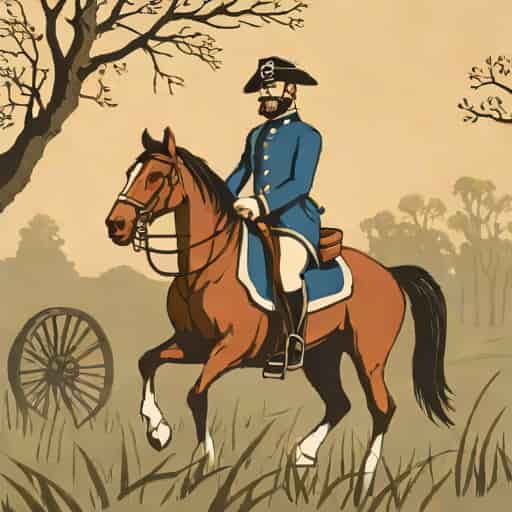
The Battle of Chancellorsville remains one of the most studied engagements of the American Civil War, not only because of its dramatic outcome but also because of the leadership decisions made on both sides. For the Union Army, the campaign was shaped largely by the actions and decisions of its commanding general. Understanding the role of the Union general at the Battle of Chancellorsville helps explain why a numerically superior force failed to achieve victory and how leadership, caution, and missed opportunities influenced the course of the battle.
The Strategic Importance of Chancellorsville
Chancellorsville was located in a dense, wooded region of Virginia known as the Wilderness. This environment limited visibility, disrupted communication, and reduced the effectiveness of artillery and large troop formations. For the Union Army, which relied heavily on superior numbers and firepower, the terrain posed a serious challenge.
The Union leadership believed that a well-coordinated maneuver through this area could outflank the Confederate Army and force a decisive victory. The responsibility for executing this plan fell to the Union general in command, whose decisions would ultimately shape the battle’s outcome.
Joseph Hooker as the Union General
The Union general at the Battle of Chancellorsville was Major General Joseph Hooker. He assumed command of the Army of the Potomac in early 1863 after a series of frustrating defeats and leadership changes. Hooker was known for his confidence, organizational skills, and belief that the Union Army could finally defeat the Confederate forces in Virginia.
Before the battle, Hooker reorganized the army, improved morale, addressed supply issues, and strengthened discipline. These reforms earned him praise and raised expectations among both soldiers and political leaders.
Hooker’s Confidence Before the Battle
Joseph Hooker entered the Chancellorsville campaign with strong confidence in his plan. He believed he had outmaneuvered Confederate General Robert E. Lee by crossing the Rappahannock River and threatening Lee’s rear. At this point, the Union Army significantly outnumbered the Confederate forces.
Hooker reportedly believed that the Confederate Army was on the verge of collapse, which influenced his approach once fighting began.
The Union Battle Plan
The Union general designed a bold strategy involving a double envelopment. One part of the army would hold Lee’s attention near Fredericksburg, while the main force moved west to strike from behind. On paper, the plan was sound and demonstrated Hooker’s willingness to act aggressively.
Initially, the maneuver worked. Union troops crossed the river successfully and took up positions around the Chancellorsville crossroads. At this stage, the Union Army held a strong advantage.
The Shift from Offense to Defense
Despite early success, Joseph Hooker made a critical decision that changed the direction of the battle. Instead of pressing forward and attacking Lee while holding numerical superiority, he ordered his troops to stop advancing and assume defensive positions.
This pause allowed the Confederate Army to regroup and take the initiative. Many historians point to this moment as one of the most significant leadership failures of the Union general at the Battle of Chancellorsville.
Challenges Facing the Union General
Hooker faced several challenges that affected his command decisions. The dense forest made coordination difficult, and communication between corps was slow and unreliable. Conflicting reports from subordinates added confusion to an already complex situation.
Additionally, Hooker struggled with the psychological pressure of commanding such a large army against a highly skilled opponent. As the battle unfolded, his confidence appeared to waver.
The Impact of Confederate Maneuvers
One of the most famous aspects of the Battle of Chancellorsville was the Confederate flanking maneuver led by Thomas Stonewall Jackson. This surprise attack struck the Union right flank and caused chaos among the troops.
Although Hooker was aware of Confederate movement, he underestimated its scale and intent. This misjudgment allowed the Confederate forces to exploit weaknesses in the Union lines.
Hooker’s Leadership During the Battle
As fighting intensified, Joseph Hooker’s leadership style became more cautious. After being briefly incapacitated by an artillery concussion, he delegated more responsibility to subordinates and issued fewer decisive orders.
This lack of clear direction contributed to missed opportunities to counterattack or stabilize vulnerable positions. While individual Union units fought bravely, the overall command structure struggled to respond effectively.
Coordination Issues Within the Union Army
The Union general faced difficulties coordinating his corps commanders. Some units remained idle while others engaged heavily, leading to an uneven distribution of forces across the battlefield.
This lack of coordination weakened the Union Army’s ability to capitalize on its numerical advantage and allowed Confederate forces to fight smaller, more manageable engagements.
The Aftermath of the Battle
The Battle of Chancellorsville ended in a Confederate victory, despite their smaller army and higher risk tactics. For the Union general, the defeat was a serious blow to his reputation and career.
Joseph Hooker accepted responsibility for the loss, but confidence in his leadership declined rapidly. Within weeks, he was replaced as commander of the Army of the Potomac.
Evaluating Hooker’s Performance
Historians continue to debate Joseph Hooker’s performance at Chancellorsville. Some argue that his initial plan was sound and that unexpected circumstances undermined its execution. Others believe his hesitation and loss of nerve were decisive factors.
What remains clear is that the Union general failed to adapt quickly once the battle shifted away from his original expectations.
Lessons Learned from the Union General’s Experience
The role of the Union general at the Battle of Chancellorsville offers valuable lessons about military leadership. Confidence must be balanced with flexibility, and early success does not guarantee victory.
Effective command requires constant assessment of the battlefield, clear communication, and the willingness to act decisively even under pressure.
- The importance of maintaining initiative
- The risks of underestimating the enemy
- The need for strong coordination among commanders
Historical Significance
Although Chancellorsville was a defeat for the Union, it influenced future leadership decisions and strategic thinking. The experience highlighted the need for stronger, more decisive command, which later shaped Union leadership during the remainder of the war.
The Union general at the Battle of Chancellorsville played a central role in one of the Civil War’s most dramatic campaigns, leaving behind a complex legacy of ambition, caution, and missed opportunity.
The story of the Union general at the Battle of Chancellorsville is a reminder that numerical superiority alone does not determine victory. Joseph Hooker entered the campaign with a strong plan and a well-prepared army, but leadership decisions during critical moments shaped the final outcome.
By examining Hooker’s role, modern readers gain insight into the challenges of command, the unpredictability of warfare, and the enduring importance of leadership under pressure. The battle remains a defining moment in Civil War history, offering lessons that continue to resonate today.