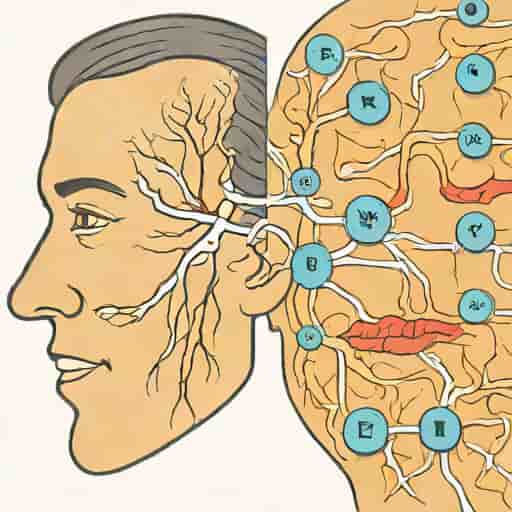
The zygomaticofacial nerve may sound like a complicated anatomical term, but it plays a clear and specific role in facial sensation. When people ask what the zygomaticofacial nerve innervates, they are usually trying to understand which part of the face receives its nerve supply from this branch of the trigeminal nerve. Exploring its pathway, function, and clinical importance helps explain why this small nerve matters in both everyday sensation and medical practice.
Understanding the Zygomaticofacial Nerve
The zygomaticofacial nerve is a branch of the zygomatic nerve, which itself comes from the maxillary division of the trigeminal nerve (cranial nerve V2). This makes it part of the sensory system of the face. Its primary job is not movement but sensation, meaning it helps the brain feel what is happening on the surface of the skin.
What Does the Zygomaticofacial Nerve Innervate?
The main answer to what the zygomaticofacial nerve innervates is the skin over the prominence of the cheek, commonly called the malar region. This includes the area over the zygomatic bone, near the outer lower part of the eye and upper cheek.
- It provides sensory innervation to the skin of the lateral cheek.
- It supplies sensation around the prominence of the zygomatic bone.
- It helps the face detect touch, pain, pressure, and temperature in that region.
Because of this role, the zygomaticofacial nerve is essential for facial sensation rather than movement. It does not control muscles; instead, it helps the brain perceive feelings on the skin.
Anatomical Pathway
To understand more deeply what the zygomaticofacial nerve innervates, it helps to look briefly at its pathway. The nerve travels through the orbit, passes through the zygomaticofacial foramen in the zygomatic bone, and then emerges onto the face. Once it reaches the surface, it spreads to the skin over the cheekbone.
Connections With Other Nerves
The zygomaticofacial nerve may form small connections with surrounding facial nerves. Sometimes it joins with branches of the facial nerve or the lacrimal nerve. These small communicating fibers help coordinate sensation across overlapping regions of the face.
Sensory Role and Function
When discussing what the zygomaticofacial nerve innervates, function is just as important as anatomy. This nerve contributes to sensory perception. It allows the skin of the cheek to detect external stimuli. Everyday sensations like a gentle breeze on the face, pressure from glasses resting on the cheekbone, or a light touch all depend on sensory innervation such as this.
Types of Sensations
Through its sensory fibers, the zygomaticofacial nerve helps transmit sensations including
- Light touch
- Pain
- Temperature
- Pressure
This information travels from the skin to the brain where it is interpreted, helping protect the face and allowing normal interaction with the environment.
Differences From Other Facial Nerves
It is important to distinguish what the zygomaticofacial nerve innervates compared to nearby nerves. The trigeminal nerve has multiple branches, and each has a specific sensory territory. While the zygomaticofacial branch supplies the cheek prominence, other branches supply the upper lip, lower eyelid, nose, jaw, and forehead.
The zygomaticotemporal nerve, another branch of the zygomatic nerve, supplies the temple region, while the infraorbital nerve supplies the midface and upper lip areas. Understanding these differences helps clarify the exact territory of zygomaticofacial nerve innervation.
Clinical Importance
Knowing what the zygomaticofacial nerve innervates is very useful in medicine, dentistry, and surgery. Since it is a sensory nerve, damage or irritation can cause symptoms affecting the cheek region.
Possible Symptoms of Injury
If the zygomaticofacial nerve is damaged due to trauma, swelling, surgery, or nerve disorders, a person may experience
- Numbness in the cheek
- Tingling or burning sensation
- Loss of normal sensation
- Altered sensitivity to touch
These changes occur because the nerve can no longer properly innervate the skin it normally supplies.
Relevance in Surgical and Cosmetic Procedures
Surgeons must understand exactly what the zygomaticofacial nerve innervates to avoid unintentional injury. Procedures involving the cheekbone, orbit, or cosmetic enhancements in the midface region require careful attention to this nerve’s pathway. Plastic surgery, fracture repair, and reconstructive operations often take this nerve into account.
Role in Diagnostic Examinations
Doctors and neurologists often test facial sensation to locate nerve problems. When sensation is reduced specifically over the cheekbone, understanding zygomaticofacial nerve innervation helps narrow down which nerve may be affected. This makes it important for assessments related to nerve injury, facial trauma, or neurological conditions.
Variation in Anatomy
Like many nerves, the zygomaticofacial nerve may show slight anatomical variation. In some people it may be small, or occasionally even absent, with nearby nerves compensating for sensation. These natural variations do not usually cause problems but are important for surgeons and clinicians to recognize.
Everyday Importance
Although small, this nerve plays a noticeable role in daily life. When smiling, applying makeup, shaving, or feeling facial expressions, the cheek area needs proper sensory feedback. The zygomaticofacial nerve innervates part of the face that contributes to emotional expression, communication, and appearance, making it more significant than its size suggests.
Summary of What the Zygomaticofacial Nerve Innervates
In simple terms, the zygomaticofacial nerve innervates the skin over the prominence of the cheek, providing sensory information to the brain. It comes from the maxillary division of the trigeminal nerve, carries sensory fibers, and plays a key role in facial sensation. Its location, function, and clinical relevance make it an important structure in anatomy and healthcare.
Understanding what the zygomaticofacial nerve innervates helps clarify how detailed and organized facial nerve supply truly is. This nerve specifically supplies sensation to the cheekbone region, allowing the skin there to detect touch, pain, and temperature. Though small, it has meaningful importance in daily sensory experience, medical evaluation, and surgical procedures. Knowledge of its function highlights how even the smallest nerves contribute to comfort, protection, and normal facial function.