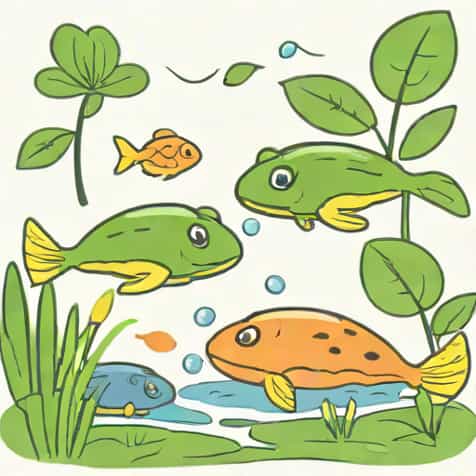
If you have ever spent time near a pond, creek, or wetland, you may have noticed small, wriggling creatures swimming just below the surface. Some people call them tadpoles, while others refer to them as polliwogs. This often leads to confusion, especially for parents, students, and nature lovers who wonder whether these are two different animals or simply two names for the same thing. Understanding what a polliwog vs tadpole really means requires looking at language, biology, and how frogs develop over time.
Basic Definition of Tadpole
A tadpole is the larval stage of a frog or toad. It hatches from an egg and lives entirely in water during the early part of its life. Tadpoles breathe through gills, swim using a long tail, and usually feed on algae or plant matter. This stage is a crucial part of amphibian development and can last anywhere from a few weeks to several months, depending on the species and environmental conditions.
Scientifically speaking, the term tadpole is widely used in biology, textbooks, and educational materials. It describes a specific developmental phase rather than a separate species.
Basic Definition of Polliwog
A polliwog is another word for a tadpole. In most cases, there is no biological difference between a polliwog and a tadpole. The two terms refer to the same young amphibian in its aquatic, larval form. The difference lies mainly in language and regional usage rather than in science.
The word polliwog has older roots and is more commonly used in informal conversation, especially in certain regions. Some people grow up using polliwog almost exclusively, while others may never hear the term at all.
Polliwog vs Tadpole Is There Any Real Difference?
When asking what is a polliwog vs tadpole, the simplest answer is that there is no actual biological difference. Both words describe the same stage in a frog’s life cycle. However, some people use the terms slightly differently in casual conversation, which can add to the confusion.
In some communities, polliwog is used to describe very young tadpoles, while tadpole is reserved for those that have begun to grow legs. This distinction is not scientifically accurate, but it persists in everyday language.
The Frog Life Cycle Explained
To fully understand the polliwog vs tadpole discussion, it helps to look at the frog life cycle. Frogs go through a process called metamorphosis, which involves dramatic physical changes.
Egg Stage
The life cycle begins when a frog lays eggs in water. These eggs are often grouped together in clusters or long strings, depending on the species. Inside each egg, an embryo develops until it is ready to hatch.
Larval Stage (Tadpole or Polliwog)
Once hatched, the young amphibian enters the larval stage. At this point, it is commonly called a tadpole or polliwog. It has
- A long tail for swimming
- Gills for breathing underwater
- No legs at first
During this stage, the tadpole grows rapidly and begins the process of transformation.
Metamorphosis
As the tadpole matures, it undergoes metamorphosis. Legs begin to grow, lungs develop, and the tail gradually shrinks. The diet may also change as the frog prepares for life on land.
Adult Frog
Eventually, the tail disappears completely, and the young frog leaves the water. At this point, it is no longer called a tadpole or polliwog but is considered a juvenile frog.
Why Two Different Names Exist
The existence of both polliwog and tadpole is largely due to language history. Tadpole comes from an old English word that roughly translates to toad head, describing the animal’s shape. Polliwog has roots in Middle English and may relate to words meaning head or wiggle.
Over time, both terms survived and became part of everyday speech. Regional preferences and family traditions often determine which word someone uses.
Regional and Cultural Usage
In many parts of the United States, especially in the South and Midwest, polliwog is a familiar and commonly used term. In other regions, particularly in educational or scientific settings, tadpole is more common.
Children’s books, folk stories, and local sayings also play a role in keeping the word polliwog alive. These cultural influences help explain why the polliwog vs tadpole question continues to come up.
Scientific Perspective on Terminology
From a scientific standpoint, researchers and biologists almost always use the term tadpole. This ensures clarity and consistency across studies and educational materials. Polliwog is considered a colloquial term rather than a technical one.
That said, using polliwog in casual conversation is not incorrect. It simply reflects a more informal or traditional way of speaking.
Common Misconceptions
There are a few common misconceptions surrounding the polliwog vs tadpole debate. One is the belief that polliwogs and tadpoles are different species. Another is the idea that polliwogs are baby frogs while tadpoles belong to toads. In reality, both frogs and toads have tadpole stages, and the terms are interchangeable.
Understanding these misconceptions can help clear up confusion, especially for students learning about amphibians for the first time.
Why This Distinction Still Matters
Even though polliwog and tadpole mean the same thing biologically, the discussion remains interesting because it highlights how language evolves. It also shows how people connect with nature through words passed down over generations.
For educators, parents, and nature enthusiasts, explaining the difference can be a useful teaching moment about both biology and language.
Using the Right Term in Context
Choosing between polliwog and tadpole often depends on the situation. In a classroom or scientific topic, tadpole is usually the better choice. In a casual conversation, story, or local discussion, polliwog may feel more natural.
Neither term is wrong when used appropriately, as long as the meaning is clear.
So, what is a polliwog vs tadpole? In simple terms, they are two names for the same stage in a frog or toad’s life. The difference lies not in biology but in language, culture, and tradition. Whether you call it a polliwog or a tadpole, this small aquatic creature represents an important and fascinating step in the life cycle of amphibians. Understanding this helps deepen appreciation for both nature and the words we use to describe it.