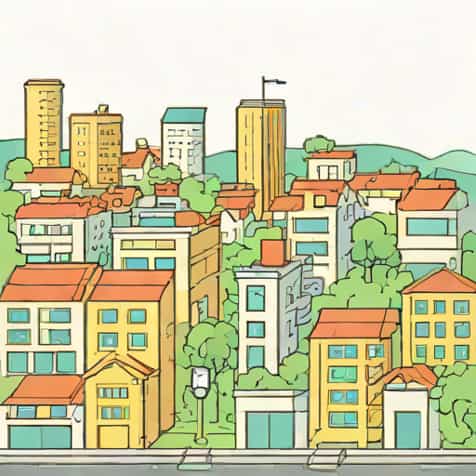
The term outskirt of a city is often used in everyday conversation, urban studies, and geography, yet its meaning can vary depending on context. People may use it to describe areas that feel less crowded, more residential, or closer to nature, while still being connected to the main city. Understanding what an outskirt of a city is helps explain how cities grow, how people choose where to live, and how urban and rural spaces blend together over time. This concept plays an important role in planning, transportation, and social development.
Basic Meaning of the Outskirt of a City
The outskirt of a city generally refers to the outer edge or boundary area that lies between the central urban zone and the surrounding countryside. It is not fully rural, but it is also not part of the dense city center. These areas often serve as transition zones where urban and suburban characteristics overlap.
In everyday language, people use the phrase on the outskirts to describe places that are a bit far from downtown but still connected to the city through roads, public transport, or economic activity.
Common Characteristics of City Outskirts
- Lower population density than city centers
- More open land or green spaces
- Mixed residential and commercial use
- Growing infrastructure development
- Closer connection to suburban or rural areas
How Outskirts Differ From City Centers
The difference between a city center and its outskirts lies mainly in density, activity, and land use. City centers are usually busy, crowded, and filled with offices, shops, cultural institutions, and high-rise buildings. In contrast, outskirts are quieter and more spacious.
Housing in the outskirts often includes single-family homes, low-rise apartments, or newly developed residential zones. This makes these areas attractive to families or individuals seeking more space and affordability.
Key Differences Between City Centers and Outskirts
- Population density is lower on the outskirts
- Traffic congestion is usually lighter
- Land prices are often more affordable
- More natural or undeveloped land is available
The Role of Outskirts in Urban Expansion
The outskirts of a city play a major role in urban growth and expansion. As cities grow in population, the demand for housing, services, and infrastructure increases. This growth often pushes development outward rather than upward, especially in regions where land is available.
Over time, areas that were once considered outskirts may become fully integrated into the urban area. New roads, schools, hospitals, and shopping centers help transform these zones into functional parts of the city.
Urban Sprawl and Outskirts
Urban sprawl is closely linked to the expansion of city outskirts. It refers to the spread of development into previously undeveloped land. While this can create more housing opportunities, it can also lead to challenges such as longer commute times and increased infrastructure costs.
Types of Areas Found on the Outskirts
The outskirts of a city can include a wide variety of land uses. These areas are not uniform and may differ greatly depending on geography, planning policies, and economic factors.
Common Types of Outskirt Areas
- Residential neighborhoods
- Industrial zones or warehouses
- Agricultural land
- New housing developments
- Transportation hubs
- Recreational or green areas
Living on the Outskirts of a City
Many people choose to live on the outskirts because of lifestyle preferences. These areas often offer a balance between access to city jobs and a quieter living environment. Homes may be larger, and neighborhoods may feel less crowded.
However, living on the outskirts can also mean longer travel times to work or limited access to certain services. The quality of life depends largely on transportation systems and urban planning.
Advantages of Living on the Outskirts
- More affordable housing options
- Less noise and congestion
- More green spaces
- Better air quality in some areas
Challenges of Living on the Outskirts
- Longer commuting distances
- Fewer public services nearby
- Limited entertainment or shopping options
- Dependence on private transportation
Economic Activities in City Outskirts
Economic activity in the outskirts of a city is often diverse. Industrial parks, logistics centers, and manufacturing facilities are frequently located there because land is cheaper and more available. This allows businesses to operate on a larger scale.
Retail centers and shopping malls are also commonly developed on city outskirts to serve both suburban residents and people traveling from rural areas.
Common Economic Functions
- Manufacturing and warehouses
- Retail and wholesale markets
- Office parks
- Service industries
Transportation and Connectivity
Transportation plays a crucial role in defining how effective and livable a city’s outskirts are. Roads, highways, railways, and public transit systems connect these outer areas to the urban core.
Well-planned transportation reduces travel time and encourages balanced development. Poor connectivity, on the other hand, can isolate outskirts and limit economic opportunities.
Transportation Features Often Found in Outskirts
- Highways and ring roads
- Bus routes and terminals
- Railway or metro extensions
- Park-and-ride facilities
Outskirts and Urban Planning
Urban planners pay close attention to the development of city outskirts to ensure sustainable growth. Planning decisions determine zoning, infrastructure placement, and environmental protection measures.
Well-managed outskirts can reduce pressure on city centers while improving overall quality of life. Poor planning, however, may result in traffic congestion, pollution, or unequal access to services.
Planning Goals for City Outskirts
- Balanced residential and commercial growth
- Efficient transportation networks
- Preservation of green spaces
- Access to public services
Social and Cultural Aspects of City Outskirts
The outskirts of a city often reflect a mix of urban and rural lifestyles. Communities in these areas may have strong local identities while still being influenced by city culture. Cultural diversity can be high, especially in fast-growing metropolitan regions.
Social life in the outskirts may center around local markets, schools, community centers, and neighborhood events rather than large urban attractions.
Understanding what an outskirt of a city is helps explain how cities grow, function, and adapt to changing populations. The outskirts represent a transition zone between dense urban centers and rural areas, combining elements of both. They play an essential role in housing, economic development, and urban planning. As cities continue to expand, the importance of well-designed and well-connected outskirts will only increase, shaping how people live, work, and interact in modern urban environments.