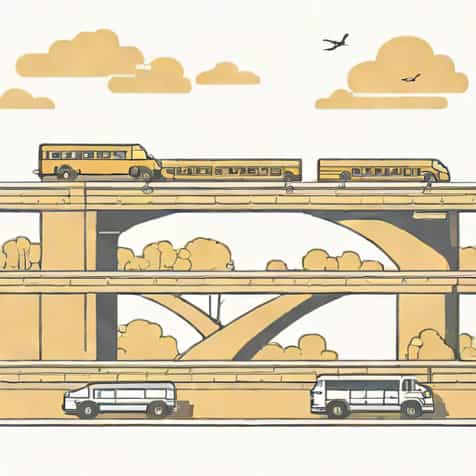
A double-decker flyover is an advanced type of road infrastructure designed to handle high volumes of traffic in congested urban areas. Unlike a conventional flyover, which typically has a single elevated roadway, a double-decker flyover consists of two levels of roadways stacked vertically. This innovative engineering solution allows cities to maximize limited land space while efficiently managing traffic flow, reducing congestion, and improving connectivity between key parts of a metropolitan area. Double-decker flyovers are often seen in busy intersections, near railway crossings, or along arterial highways where traditional flyovers would not be sufficient to accommodate heavy traffic demands.
Understanding the Concept of Double-Decker Flyovers
The concept behind a double-decker flyover is relatively straightforward yet highly effective. By constructing two separate decks, engineers can segregate different streams of traffic, such as local and through traffic, or separate directions of travel, thereby minimizing interference and bottlenecks. The lower deck may serve traffic entering or exiting the city, while the upper deck typically caters to express traffic that needs to pass through the area quickly. This design not only optimizes traffic management but also reduces the environmental footprint compared to building multiple single-level flyovers or widening existing roads.
Key Features of Double-Decker Flyovers
Several features distinguish double-decker flyovers from other types of elevated roadways
- Two Levels of RoadwaysThe most defining feature, providing additional capacity without expanding the ground-level footprint.
- Efficient Use of SpaceIdeal for densely populated cities with limited land availability.
- Traffic SegregationDifferent levels can handle different types of traffic, reducing congestion and accidents.
- Structural ComplexityRequires advanced engineering techniques, stronger materials, and careful planning to ensure safety and durability.
- Urban ConnectivityImproves access to key city areas while minimizing disruption to existing roads and infrastructure.
Engineering and Construction Considerations
Building a double-decker flyover is a complex engineering task that demands meticulous planning and execution. Engineers must consider factors such as the type of soil, load-bearing capacity, traffic patterns, and potential environmental impacts. The structure must be strong enough to support the weight of vehicles on both decks simultaneously, including heavy trucks and buses. Additionally, construction often requires temporary traffic diversions, careful coordination with city authorities, and minimal disruption to surrounding areas.
Materials and Design
Modern double-decker flyovers are typically constructed using reinforced concrete and steel due to their high strength and durability. Pre-stressed concrete beams are often used for the upper deck, while the lower deck may rely on a combination of concrete slabs and steel girders. Engineers also employ vibration-damping techniques and seismic-resistant designs to ensure stability and safety during natural events such as earthquakes or heavy storms. Advanced computer modeling is used to simulate traffic load, structural stress, and potential environmental impacts before construction begins.
Advantages of Double-Decker Flyovers
Double-decker flyovers offer multiple advantages over traditional road designs, particularly in urban settings
- Increased Traffic CapacityTwo levels of roadways effectively double the traffic-handling ability of a single-level flyover.
- Reduced CongestionSegregating traffic streams reduces bottlenecks and ensures smoother movement.
- Space OptimizationSaves ground-level space, allowing for parks, pedestrian pathways, or additional lanes below.
- Environmental BenefitsFewer roads need to be widened, reducing land acquisition and environmental disruption.
- Enhanced Urban MobilityConnects different city zones more efficiently, improving commute times and public transport integration.
Challenges in Implementation
Despite their benefits, double-decker flyovers also present certain challenges. The construction cost is significantly higher than that of single-level flyovers due to the complexity of design, material requirements, and labor. Maintenance can also be more complicated, as both levels need regular inspection, repair, and cleaning. Noise pollution may increase due to traffic on two elevated decks, and aesthetics can be a concern in urban planning. Additionally, emergency response planning must be carefully integrated, as accidents on either deck can disrupt traffic flow on both levels.
Examples of Double-Decker Flyovers Around the World
Several cities globally have successfully implemented double-decker flyovers to address traffic congestion and improve urban mobility
- IndiaCities like Mumbai and Delhi feature double-decker flyovers to manage heavy traffic in busy commercial and residential areas.
- ChinaRapid urbanization in cities like Beijing and Shanghai has led to multiple double-decker highway systems to streamline traffic flow.
- United StatesSome major urban highways, particularly in Los Angeles, incorporate double-decker sections to manage high traffic volumes.
- JapanTokyo has double-decker expressways that integrate with the city’s elevated urban transport networks, efficiently separating local and through traffic.
Future Trends in Double-Decker Flyover Design
As urban areas continue to expand and traffic demands increase, the use of double-decker flyovers is expected to grow. Future trends may include the integration of smart traffic management systems, automated vehicle lanes, and eco-friendly designs incorporating green spaces and solar panels. Engineers are also exploring modular construction techniques to reduce construction time and cost while ensuring structural safety. Additionally, emphasis on aesthetics and urban harmony will influence the design of flyovers, ensuring that these massive structures blend seamlessly with city landscapes.
Double-decker flyovers represent a remarkable achievement in urban infrastructure, providing an effective solution to traffic congestion and space constraints. By stacking two levels of roadways, these structures maximize traffic capacity, reduce congestion, and enhance connectivity in busy cities. While they come with challenges such as higher costs and complex maintenance, the benefits in terms of urban mobility, efficiency, and land optimization make them a valuable investment for growing metropolitan areas. As technology advances, double-decker flyovers are likely to become even more sophisticated, incorporating smart systems and sustainable designs, ensuring they remain a vital component of modern urban planning and transportation management.