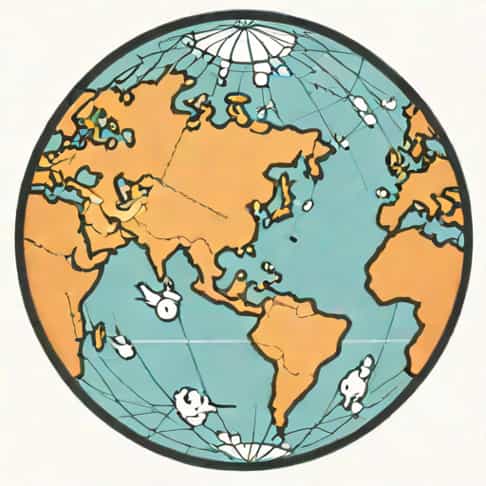
Ferdinand Magellan is widely celebrated as the explorer whose expedition achieved the first circumnavigation of the Earth, forever changing the understanding of our world and its geography. The journey was not just a feat of navigation but also an extraordinary story of endurance, leadership, and human ambition. Many people ask, When did Magellan circumnavigate the globe? To answer this question fully, it is important to explore the timeline of the expedition, the challenges faced by the crew, the discoveries made along the way, and the historical significance of this monumental voyage.
Background of Ferdinand Magellan
Ferdinand Magellan was born in 1480 in Portugal. He was an experienced sailor and navigator who had previously served in various naval campaigns, including those in the Indian Ocean. Magellan was deeply interested in finding a westward route to the Spice Islands, now part of Indonesia, as an alternative to the traditional eastern route controlled by the Portuguese. His ambition was to open new trade routes for Spain, the country he later approached for sponsorship, and to achieve a feat that had never been done before-sailing around the entire globe.
Preparation for the Voyage
In 1519, Magellan received support from King Charles I of Spain (later Emperor Charles V) to lead an expedition. He was granted five ships-the Trinidad, San Antonio, Concepción, Victoria, and Santiago-and a crew of about 270 men. The mission was fraught with uncertainties uncharted waters, potential conflicts with indigenous peoples, harsh weather conditions, and the challenge of navigating across vast oceans without accurate maps. Nevertheless, Magellan’s determination and navigational skill set the stage for a historic journey.
- Five ships with around 270 crew members
- Goal reach the Spice Islands by sailing west
- Sponsored by Spain, despite Magellan being Portuguese
- Expected challenges unknown territories, storms, and scurvy
Departure and Early Challenges
The expedition set sail from Seville, Spain, on September 20, 1519. The initial phase involved crossing the Atlantic Ocean, exploring the coast of South America, and searching for a navigable passage to the Pacific. Magellan and his crew faced numerous hardships, including storms, difficult terrain, and conflicts among the crew members. The journey along the eastern coast of South America was slow and grueling, yet it ultimately led them to the discovery of a strait that would later bear Magellan’s name.
Discovery of the Strait of Magellan
In October 1520, after months of exploration, the expedition found the passage at the southern tip of South America, now known as the Strait of Magellan. This strait allowed them to enter the Pacific Ocean, a vast body of water previously unknown to Europeans in its entirety. This discovery was crucial for completing the circumnavigation, as it provided the only navigable route from the Atlantic to the Pacific at that latitude.
- Strait located at the southern tip of South America
- Enabled access to the Pacific Ocean
- Required navigating treacherous waters and extreme weather
Crossing the Pacific Ocean
After passing through the Strait of Magellan, the expedition entered the Pacific Ocean in November 1520. The crossing was long and perilous, taking approximately three months without sighting land. The crew suffered from hunger, scurvy, and fatigue, with some members dying during the journey. Magellan’s leadership was tested to its limits as he maintained order and direction despite these extreme conditions. The arrival in the Mariana Islands and later the Philippines marked a turning point in the voyage.
Magellan’s Death
Tragically, Ferdinand Magellan did not survive the entire circumnavigation. He was killed in the Philippines on April 27, 1521, during a conflict with local inhabitants on the island of Mactan. Despite his death, the expedition continued under the command of Juan Sebastián Elcano, who led the remaining crew to complete the journey. Magellan’s vision and planning were instrumental, even though he did not live to see the expedition’s ultimate success.
- Pacific crossing lasted about three months
- Many crew members suffered from scurvy and malnutrition
- Magellan killed in the Philippines in April 1521
Completion of Circumnavigation
Under the leadership of Juan Sebastián Elcano, the expedition pressed on toward the Spice Islands and then back to Spain. Only one ship, the Victoria, and 18 of the original 270 crew members completed the full circumnavigation. The Victoria returned to Spain on September 6, 1522, nearly three years after departure. This marked the first successful voyage around the globe, proving that the Earth was round and that it was possible to sail around it entirely.
Significance of the Voyage
- First recorded circumnavigation of the Earth
- Provided valuable maps and navigational knowledge
- Established new trade routes and opportunities
- Demonstrated the vastness of the Earth and the Pacific Ocean
The successful return of the Victoria confirmed Magellan’s strategic planning and navigational genius, despite his personal death during the expedition. The journey had profound implications for global trade, exploration, and European understanding of geography.
Legacy of Magellan’s Circumnavigation
Magellan’s expedition changed the course of history. It demonstrated the feasibility of global navigation, expanded European knowledge of the world, and paved the way for future explorers. Although Magellan himself did not live to see the completion, his vision and leadership were critical in achieving the first circumnavigation of the globe. Today, he is remembered as one of the greatest explorers in history, with his name attached to the strait in South America and his expedition celebrated worldwide.
Key Takeaways
- Expedition departed Spain on September 20, 1519
- Magellan discovered the Strait of Magellan in October 1520
- Magellan died in the Philippines on April 27, 1521
- The circumnavigation was completed by Juan Sebastián Elcano on September 6, 1522
- The journey proved the Earth was round and provided crucial navigational insights
Ferdinand Magellan’s circumnavigation of the globe was a historic achievement that spanned from September 20, 1519, to September 6, 1522. While Magellan himself died in 1521 in the Philippines, his expedition, under the guidance of Juan Sebastián Elcano, successfully completed the first voyage around the Earth. This remarkable journey not only expanded European understanding of geography but also opened new opportunities for trade and exploration. Magellan’s legacy endures as a symbol of human curiosity, courage, and the relentless pursuit of discovery, illustrating how vision and leadership can overcome even the most daunting challenges.