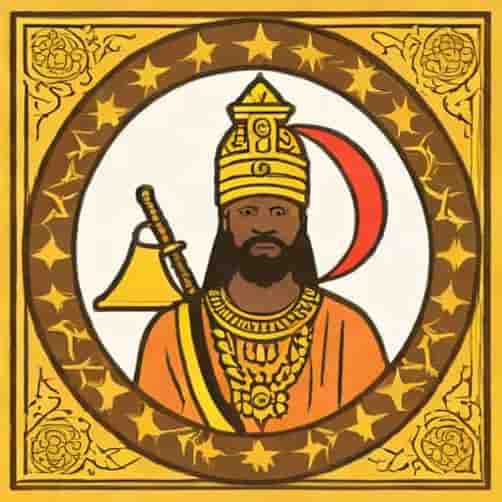
The Almoravid dynasty’s interactions with the ancient Ghana Empire mark one of the most debated and pivotal moments in early West African history. This event, often referred to as the Almoravid conquest of the Ghana Empire, is traditionally dated to the late 11th century and is linked to significant political, religious, and economic changes in the region. The story of when and how the Almoravids impacted Ghana involves a combination of military activity, cultural exchange, and evolving historical interpretations. By examining the timeline, context, and consequences of this encounter, we gain a clearer picture of how the ancient Ghana Empire’s decline aligned with the rise of the Almoravid movement in North Africa and the Sahara.
Background The Ghana Empire and the Almoravids
The Ghana Empire, also known as Wagadu, was one of West Africa’s earliest and most powerful states, flourishing from around the 6th century to the early 13th century. It was strategically located between the Senegal and Niger rivers, allowing it to control and benefit from trans-Saharan trade, especially in gold and salt. The empire grew wealthy as a center of commerce and diplomacy, attracting traders from North Africa and beyond. However, during the 11th century, the rise of the Almoravids – a Berber Islamic reform movement originating in the Sahara – introduced new dynamics to regional politics and religion. The Almoravids sought not only to expand their influence but also to spread orthodox Maliki Islam among neighboring peoples. This ambition brought them into contact with the Ghana Empire, which at the time maintained traditional religious practices despite Islamic influences among its elite.
Who Were the Almoravids?
The Almoravids were a confederation of Berber tribes united under the banner of a strict interpretation of Islam. Emerging in the early 1050s, they quickly expanded their reach from the western Sahara northward into Morocco and, later, into Muslim Spain. Their leaders, driven by religious zeal and economic interests, sought control over key trade routes that crossed the Sahara, including those connected to the rich goldfields of West Africa. The movement’s growing power by the mid-11th century set the stage for confrontation with the Ghana Empire.
The Date of the Almoravid Conquest
According to traditional Arabic sources, the Almoravids conquered the Ghana Empire around 1076 CE. This date is widely cited in historical records and by historians relying on medieval accounts, most notably the writings of Ibn Khaldun, which reference earlier sources describing Almoravid advancement into the Sudan and the weakening of the Ghanaian rulers. These accounts suggest that after a period of conflict and economic pressure, the Almoravids were able to capture the empire’s capital, Koumbi Saleh, effectively ending Ghana’s dominance as a centralized state.
How the Conquest Unfolded
The traditional narrative holds that Almoravid forces, possibly under the leadership of figures like Abu Bakr ibn Umar, fought a series of campaigns against the Ghana Empire throughout the 1060s and 1070s. These campaigns were motivated in part by religious objectives – encouraging conversion to Islam – and strategic goals, such as controlling lucrative trans-Saharan trade routes. The capture of Koumbi Saleh in 1076 is often considered the decisive moment, although some scholars note that the process likely involved gradual political erosion as much as direct military conquest.
Debates and Alternative Interpretations
While the traditional date of 1076 CE is widely cited, the historical record is not without controversy. Some modern historians question the accuracy of the narrative that Ghana was militarily conquered in a single decisive campaign. Critics point out that archaeological evidence does not clearly support widespread destruction in the region at that time, suggesting that the so-called conquest may have been more complex, involving economic pressure, shifting alliances, and gradual sociopolitical changes rather than a dramatic military takeover. These critiques highlight the challenges of relying on medieval sources and the importance of integrating local oral traditions and archaeological data.
Consequences of the Almoravid Expansion
Whether viewed as a formal conquest or a period of intensified influence, the expansion of the Almoravids had significant consequences for the Ghana Empire. The most immediate impact was the disruption of the gold-salt trade that had supported Ghana’s prosperity. As Almoravid control expanded over key Saharan trade routes, the traditional networks that brought wealth into the empire became less stable, weakening the political and economic foundation of Ghanaian power.
Religious and Cultural Change
The Almoravids also played a role in the spread of Islam across West Africa. Although Islam had been present in the region for centuries through trade and cultural exchange, the influence of the Almoravids accelerated its adoption in various areas. Their expansion encouraged conversion among local elites and populations, contributing to Islam’s deeper integration into West African societies. This religious shift had long-term implications, shaping the cultural and political landscape well into the rise of later states such as the Mali and Songhai empires.
The Decline of the Ghana Empire
After 1076, the Ghana Empire did not simply vanish; rather, it experienced a prolonged period of decline. Even after Koumbi Saleh fell under Almoravid influence, the empire continued in a reduced form for some time before breaking into smaller kingdoms and chieftaincies. These successor states would later be absorbed into or overshadowed by emerging powers, most notably the Mali Empire in the 13th century. The fragmentation of Ghana’s political structure reflects broader regional shifts in power and the changing dynamics of trans-Saharan trade.
Legacy and Historical Significance
The Almoravid encounter with the Ghana Empire is often seen as a turning point in West African history. It marks a period when North African Islamic movements became deeply intertwined with the political and economic developments of the Sahel. The traditional date of 1076 serves as a focal point for understanding how external forces influenced the decline of one of West Africa’s earliest great empires. Whether viewed through the lens of conquest or long-term influence, this period shaped the historical trajectory of the region, setting the stage for the rise of succeeding West African states that would continue to benefit from the integration of trade, culture, and religion.
According to traditional accounts, the Almoravids conquered the Ghana Empire around 1076 CE, culminating in the capture of its capital and contributing to the decline of a once-powerful trading state. While archaeological and historiographical debates continue about the nature and extent of this conquest, the period around the late 11th century remains critical for understanding the transformation of West Africa’s political and economic landscape. The Almoravid expansion disrupted trade, encouraged the spread of Islam, and weakened the central authority of Ghana, eventually leading to its fragmentation and the rise of later empires such as Mali. The story of this encounter underscores the complexity of historical change and the lasting impact of trans-Saharan connections on African history.