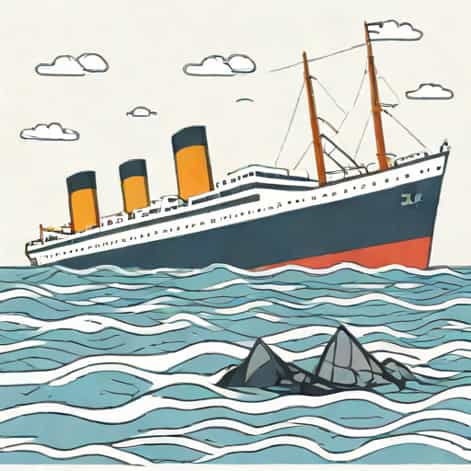
The wreckage of the Titanic remains one of the most fascinating and tragic sites in maritime history. The RMS Titanic, the unsinkable ship, struck an iceberg on its maiden voyage in April 1912, leading to the deaths of over 1,500 passengers and crew. For decades, the exact location of the Titanic wreckage was a mystery, capturing the imagination of explorers, historians, and the public alike. Understanding where the Titanic wreckage lies provides insight into not only the events surrounding its sinking but also the technological advances that allowed humans to locate and study this sunken giant. Today, the site serves as both a memorial and a source of ongoing research in marine archaeology.
Geographical Location
The Titanic wreckage is located in the North Atlantic Ocean, approximately 370 miles (600 kilometers) south-southeast off the coast of Newfoundland, Canada. The wreck lies at a depth of about 12,500 feet (3,800 meters) beneath the ocean surface, making it one of the deepest and most remote shipwrecks ever explored. Its position is roughly 41°43’57N latitude and 49°56’49W longitude. The extreme depth, combined with frigid temperatures and high pressure, presents unique challenges for exploration and preservation of the site. Despite these challenges, the Titanic wreck has been extensively mapped and studied through the use of submersibles, remotely operated vehicles, and sonar imaging.
Discovery of the Wreck
The Titanic wreckage remained undiscovered for 73 years following the sinking. In 1985, a joint American-French expedition led by oceanographer Robert Ballard located the wreck using advanced sonar technology. The discovery was a major milestone in maritime archaeology and brought renewed global attention to the Titanic disaster. Ballard’s team documented the ship’s condition and surrounding debris field, confirming details about the ship’s sinking and its final resting place. The discovery opened the door for further expeditions, allowing researchers and enthusiasts to study the wreck in unprecedented detail.
Layout of the Wreckage
The Titanic wreck is split into two main sections, separated by approximately 1,970 feet (600 meters) on the ocean floor. The bow section remains largely intact, though it has been crushed and eroded over time. The stern section, by contrast, is heavily damaged and scattered due to the force of the ship breaking apart during the sinking. Between these two primary sections lies a debris field that contains thousands of artifacts, ranging from personal items to pieces of the ship’s structure. These remnants provide critical insight into life aboard the Titanic and the nature of the disaster.
Bow Section
The bow of the Titanic is remarkably well-preserved, considering the extreme depth and harsh underwater conditions. It rises about 100 feet (30 meters) from the seabed and features visible sections of the deck, the anchor, and the forward mast. Despite rusting and corrosion, the bow still conveys the original grandeur of the ship. Marine researchers continue to study this section, capturing high-resolution images and videos to understand the processes of underwater decay and the impact of deep-sea pressure on metal structures.
Stern Section
The stern is far more damaged, with much of its structure collapsed or broken apart. It lies twisted and fragmented, revealing the immense pressure and force that occurred as the ship sank. The engine room and other mechanical areas have been extensively explored, revealing machinery, boilers, and structural elements that provide evidence of the ship’s engineering. The stern section’s fragmentation also contributes to the extensive debris field that surrounds the wreck, offering archaeologists opportunities to uncover historical artifacts scattered across the ocean floor.
Exploration and Research
Exploration of the Titanic wreckage has been an ongoing process since its discovery. Submersibles and remotely operated vehicles (ROVs) allow scientists to study the site in detail without risking human life in the extreme conditions. The wreck has been mapped using sonar and photogrammetry, creating detailed three-dimensional models for research and educational purposes. These technologies have revealed both the physical state of the ship and the artifacts scattered around the debris field. Exploration also raises questions about preservation, as human activity can accelerate the decay of fragile materials.
Significant Findings
- ArtifactsThousands of objects, including personal belongings, dishes, and parts of the ship, have been recovered, providing insight into daily life aboard the Titanic.
- Structural AnalysisStudies of the hull, engines, and decks have shed light on the forces involved in the ship’s sinking and the sequence of its breakup.
- Marine BiologyThe wreck has become an artificial reef, supporting unique ecosystems of deep-sea organisms, highlighting the interplay between human history and natural environments.
Challenges of Studying the Wreck
Studying the Titanic wreckage is fraught with challenges. Its extreme depth means that dives are complex, costly, and time-consuming. The cold, high-pressure environment accelerates corrosion and metal fatigue, complicating efforts to preserve the site. Additionally, the wreck is slowly deteriorating due to the presence of iron-eating bacteria that consume the ship’s steel. Legal and ethical issues also arise regarding artifact recovery and site preservation, with international agreements emphasizing that the Titanic wreck should be treated as a memorial and cultural heritage site.
Significance of the Titanic Wreckage
The Titanic wreckage is not just a sunken ship; it is a historical and cultural landmark. It serves as a reminder of human ambition, technological limits, and the consequences of hubris. The site continues to captivate historians, scientists, and the general public, inspiring books, documentaries, and exhibitions. The wreckage also highlights advances in underwater exploration technology and the study of deep-sea environments, contributing to both historical knowledge and marine science. Visiting or studying the site provides a tangible connection to the tragic story of the Titanic, ensuring that the memory of the disaster endures for generations.
Tourism and Legacy
While direct visits to the Titanic wreck are limited to specialized submersible expeditions, the discovery has sparked widespread interest in maritime tourism and educational programs. Museums and exhibitions worldwide display artifacts recovered from the site, allowing the public to engage with the history of the Titanic. The wreck’s story continues to be a compelling subject for filmmakers, writers, and historians, preserving its place in both popular culture and academic study.
The Titanic wreckage lies deep in the North Atlantic Ocean, approximately 370 miles southeast of Newfoundland, Canada, at a depth of about 12,500 feet. Divided into bow and stern sections, surrounded by a vast debris field, it remains an extraordinary site of exploration, research, and historical significance. From its discovery in 1985 to ongoing underwater studies, the wreck has provided invaluable insights into the tragedy of the Titanic and the human stories aboard it. As a memorial, research site, and cultural symbol, the Titanic wreckage continues to captivate the world, serving as a profound reminder of the risks, triumphs, and failures of human endeavor at sea.