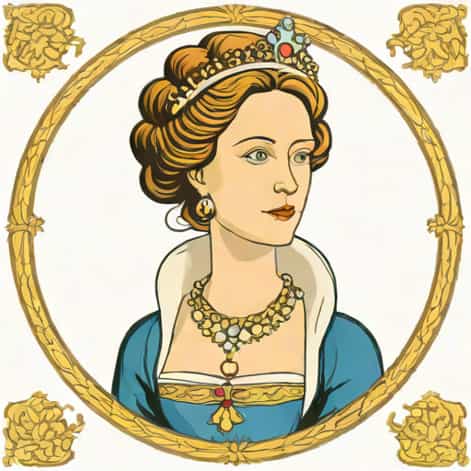
In the complex web of medieval European nobility, certain figures stand out not only for their titles but also for the influence they carried during their lifetime. Yolande II, Countess of Nevers, was one such noblewoman who held significant authority and shaped the destiny of her lands. As a powerful countess in 13th-century France, her life was deeply tied to the intricate political alliances, territorial disputes, and dynastic marriages that defined the age. The story of Yolande II provides insight into the role of women in medieval aristocracy and how titles such as Countess of Nevers, Tonnerre, and Auxerre were more than mere honorifics-they were centers of power and responsibility.
Early Life of Yolande II
Yolande II of Nevers was born in 1247 into the distinguished lineage of French nobility. She was the daughter of Odo of Burgundy and Matilda II, Countess of Nevers, Auxerre, and Tonnerre. From birth, Yolande was connected to some of the most influential families in medieval France, ensuring that her life would be shaped by politics as much as by heritage. Her mother, Matilda II, was a formidable figure in her own right, and Yolande inherited her position through the complex laws of succession that governed aristocratic titles.
As the heir to significant territories in Burgundy, Yolande’s position was a source of both prestige and responsibility. From an early age, she was expected to play a role in securing alliances through marriage, managing estates, and upholding the family’s legacy. In a time when noblewomen often served as key players in territorial politics, Yolande’s destiny was shaped by these expectations.
Becoming Countess of Nevers
Yolande II officially assumed her role as Countess of Nevers after the death of her mother in 1262. At this point, she inherited the counties of Nevers, Tonnerre, and Auxerre. These territories were strategically important, lying within the heart of Burgundy, a region contested by French and Burgundian powers. Being Countess of Nevers meant more than possessing land-it meant overseeing vassals, collecting revenues, maintaining castles, and ensuring loyalty to her family’s cause.
Her role as a female ruler in medieval France highlights the unique position of noblewomen who were often guardians of their family’s legacy. While male rulers engaged directly in warfare and politics, women like Yolande wielded influence through administration, negotiation, and dynastic alliances.
Marriage and Political Alliances
Marriage was one of the most powerful tools in medieval politics, and Yolande’s union was no exception. In 1265, she married John Tristan, Count of Valois, who was the son of King Louis IX of France, also known as Saint Louis. This marriage not only solidified the relationship between her territories and the French crown but also elevated Yolande’s status significantly.
Through this marriage, the counties she ruled were brought closer into the orbit of the French monarchy. This connection strengthened the ties between Burgundy and France, a political alignment that had lasting consequences for the region. Unfortunately, John Tristan’s untimely death in 1270 during the Eighth Crusade left Yolande a widow at a relatively young age. Despite this, her brief marriage to a royal prince reinforced her position as a central figure in the nobility of France.
Inheritance and Territorial Disputes
The issue of inheritance was a common challenge in medieval Europe, and Yolande’s case was no different. After the death of her husband, questions arose about the future of her lands. Some territories were absorbed into the French crown through the influence of her royal marriage, while others remained under her personal control. The counties of Nevers, Auxerre, and Tonnerre were highly valuable, and their succession was of great interest to both the French monarchy and neighboring lords.
Eventually, parts of her inheritance were passed down to her relatives, which reshaped the map of Burgundy. These territorial changes underline the importance of Yolande’s role in maintaining her family’s position in a time when inheritance laws were both complex and politically charged.
Yolande II and the Role of Noblewomen
Yolande II exemplifies the responsibilities placed upon medieval noblewomen. As Countess of Nevers, she managed estates, engaged in negotiations, and ensured her lands remained stable despite political upheavals. Her role demonstrates that noblewomen were not passive figures but active participants in governance and strategy.
Many women of her era were confined to limited roles, but Yolande’s inheritance granted her an unusual degree of authority. By overseeing counties, she had influence in matters of law, economy, and feudal relationships. Her ability to maintain her territories amidst challenges highlights her resilience and leadership in a male-dominated world.
Connection to the French Crown
Yolande’s marriage to John Tristan tied her legacy directly to the royal family of France. This connection meant that her life was part of the larger story of the Capetian dynasty. Although her marriage ended with her husband’s death, the influence of this union remained significant. Through it, her counties were brought closer under the influence of the French monarchy, a shift that played an important role in the consolidation of royal power in Burgundy.
Her story also reflects the delicate balance between independence and loyalty that noble families had to maintain with the crown. While she was a powerful countess in her own right, her ties to royalty meant that her autonomy was often limited by the larger ambitions of the monarchy.
Later Life and Death
After the death of her husband, Yolande II’s role in politics gradually lessened, although her influence as a landholder remained significant. She continued to manage her estates and ensure the stability of her territories. She passed away in 1280, at the age of thirty-three, leaving behind a legacy that was carried forward by her relatives and successors.
Though her life was relatively short, her impact on the political landscape of Burgundy and her role as Countess of Nevers remain noteworthy. She is remembered not only as a noblewoman who held significant titles but also as a figure who embodied the responsibilities of leadership in medieval France.
Legacy of Yolande II, Countess of Nevers
The legacy of Yolande II lies in her role as a bridge between noble families and the French monarchy. Her inheritance of Nevers, Auxerre, and Tonnerre made her a central figure in the shifting alliances of 13th-century France. Her marriage to John Tristan further elevated her standing and tied her story to the broader narrative of French royal history.
Today, Yolande II is remembered as a symbol of the power noblewomen could hold during the medieval period. Her life reflects the challenges of inheritance, the importance of political marriages, and the enduring influence of women in shaping regional politics. As Countess of Nevers, she played a part in the long history of Burgundy’s integration into the French kingdom.
Yolande II, Countess of Nevers, was a noblewoman whose life highlights the complexities of medieval politics, inheritance, and dynastic marriage. Born into a powerful family, she inherited significant territories, became aligned with the French crown through marriage, and managed her responsibilities with resilience. Though her life was cut short, her role in the history of Nevers and Burgundy remains significant. Her story illustrates how women of her rank influenced the direction of European politics, proving that leadership and legacy were not limited to kings and princes but also shaped by countesses like Yolande II.