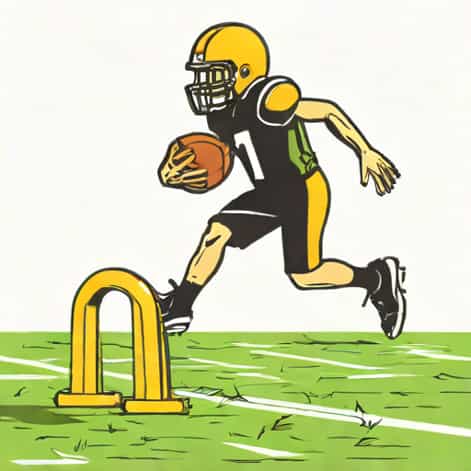
Youth football agility drills are an essential part of developing young athletes’ speed, coordination, and overall athleticism. Agility is a critical component in football, allowing players to change direction quickly, evade defenders, and react effectively during gameplay. Coaches and trainers often incorporate a variety of drills into practice sessions to enhance balance, footwork, and reaction time in young athletes. By starting these exercises early, youth players can build a strong foundation for advanced skills while reducing the risk of injuries. These drills also help improve focus, discipline, and confidence on the field, making them invaluable in youth football development programs.
Importance of Agility in Youth Football
Agility is more than just speed; it is the ability to move efficiently and change direction quickly without losing control or balance. In football, players encounter constant changes in movement patterns, requiring quick reflexes and coordination. For youth athletes, developing agility at an early age sets the stage for advanced skills as they progress in the sport. Proper agility training can enhance performance in running, passing, tackling, and evading opponents. Additionally, it contributes to overall athletic development, including cardiovascular endurance, core strength, and proprioception, which is the body’s ability to sense movement and position.
Benefits of Agility Drills
- Improves change-of-direction speed and responsiveness
- Enhances balance and coordination
- Reduces risk of injury through better body control
- Increases reaction time and decision-making on the field
- Builds confidence and mental focus in young athletes
Types of Youth Football Agility Drills
There are several types of agility drills specifically designed for youth football players. These drills can be categorized into ladder drills, cone drills, shuttle runs, and reaction-based exercises. Each type targets different aspects of agility, including foot speed, lateral movement, acceleration, and deceleration.
Ladder Drills
Ladder drills are designed to improve foot speed, coordination, and rhythm. Players run through an agility ladder on the ground, performing various foot patterns such as two-feet-in-each-box, lateral steps, or in-and-out movements. These exercises enhance quick foot placement and help athletes develop the ability to maintain balance while moving at high speed.
Cone Drills
Cone drills focus on change-of-direction speed and acceleration. Drills like the zig-zag drill, T-drill, and W-drill require players to move around cones in specific patterns, simulating game-like movements. Cone drills help athletes learn how to plant their feet, pivot efficiently, and maintain speed while changing directions, which is essential for evading defenders and creating plays on the field.
Shuttle Runs
Shuttle runs are effective for building explosive acceleration and lateral quickness. In these drills, players sprint back and forth between designated markers, emphasizing quick starts, stops, and changes of direction. Shuttle runs also develop endurance and mental focus, as players must maintain high-intensity effort over repeated intervals, similar to the demands of a football game.
Reaction-Based Drills
Reaction drills train athletes to respond quickly to unpredictable stimuli, such as a coach’s signal, a moving ball, or an opponent’s movement. Examples include mirror drills, where players mimic the movements of a partner, or reaction tag, where athletes change direction instantly based on visual or auditory cues. These exercises improve decision-making speed and on-field awareness, critical for successful gameplay.
Implementing Agility Drills in Practice
Integrating agility drills into youth football practice requires proper planning and structure. Coaches should begin with a dynamic warm-up to prepare muscles and joints, reducing the risk of injury. Drills should be age-appropriate, gradually increasing in complexity and intensity as athletes develop skills and confidence. Practicing in short, focused sessions helps maintain high energy levels and engagement. It is also important to emphasize correct technique and footwork rather than simply speed, ensuring long-term athletic development.
Sample Practice Structure
- Warm-up (5-10 minutes) Dynamic stretches and light jogging
- Footwork drills (10 minutes) Ladder exercises for coordination and rhythm
- Change-of-direction drills (10-15 minutes) Cone and shuttle drills for agility
- Reaction drills (10 minutes) Mirror or signal-based exercises
- Cool down (5 minutes) Stretching and recovery exercises
Tips for Maximizing Results
To get the most out of youth football agility drills, coaches and parents should focus on proper technique, consistency, and motivation. Encouraging players to perform drills at game-like intensity helps translate training into real performance. Providing feedback, setting measurable goals, and tracking progress can increase engagement and improvement. Additionally, combining agility training with strength, speed, and endurance exercises creates a well-rounded athletic development program for youth football players.
Safety Considerations
- Ensure proper footwear and playing surface to prevent injuries
- Emphasize correct form to avoid strain on joints and muscles
- Allow sufficient rest and recovery between drills
- Hydrate adequately before, during, and after practice
- Adapt drills to the age and skill level of athletes
Long-Term Benefits
Consistent agility training in youth football has long-term benefits that extend beyond the field. Improved coordination, balance, and reaction time contribute to overall physical fitness and athleticism. Athletes develop better body awareness, which reduces the likelihood of injuries and improves performance in other sports. Mental benefits, such as focus, discipline, and confidence, also emerge through structured agility drills. These skills form a foundation for future athletic success, whether in football or other physical activities.
Youth football agility drills are a crucial component of developing well-rounded, skilled athletes. By incorporating ladder drills, cone exercises, shuttle runs, and reaction-based training, young players enhance their speed, coordination, and game awareness. Structured practice, proper technique, and safety considerations ensure that these drills are effective and engaging. The benefits of agility training extend beyond football, fostering physical fitness, mental focus, and confidence that will support athletes throughout their sports journey. Coaches, parents, and young athletes alike can benefit from a consistent and well-designed agility program, helping the next generation of football players reach their full potential on and off the field.