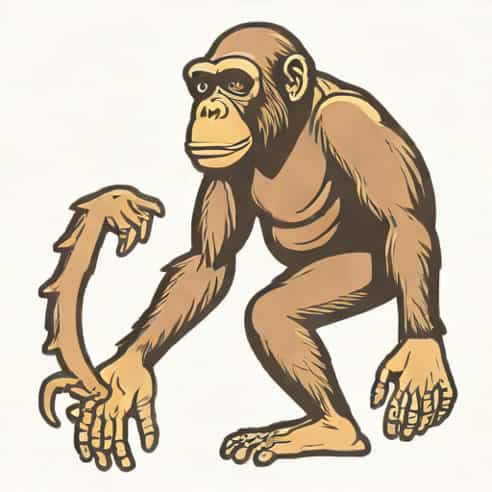
Australopithecus africanus is one of the most important species in the study of human evolution, providing crucial insight into the life and environment of early hominins. Living millions of years ago, this species represents a transitional form between earlier ape-like ancestors and later members of the genus Homo. Fossil discoveries, particularly in South Africa, have helped scientists understand their physical characteristics, behavioral patterns, and the environmental conditions in which they thrived. Studying Australopithecus africanus allows researchers to piece together the evolutionary timeline and better understand the origins of modern humans.
Time Period and Geological Context
Australopithecus africanus lived during the Pliocene and early Pleistocene epochs, roughly between 3.3 and 2.1 million years ago. This time frame was a period of significant climatic change, with fluctuating temperatures and varying vegetation across Africa. Fossil evidence indicates that these hominins inhabited regions that were a mix of open savannas and wooded areas, providing diverse resources for survival. The geological context of the fossil sites, including cave deposits and sediment layers, has helped paleoanthropologists date the remains and understand the environmental conditions of their habitats.
Discovery and Fossil Sites
The first significant discovery of Australopithecus africanus was the famous Taung Child in 1924, found in the Taung region of South Africa. This fossil, consisting of a skull of a young individual, provided the first evidence of an early hominin in Africa and challenged the then-prevailing belief that human ancestors originated in Europe. Subsequent discoveries at sites such as Sterkfontein, Makapansgat, and Gladysvale have yielded additional fossils, including skulls, teeth, and postcranial bones. These finds have allowed scientists to reconstruct the anatomy and lifestyle of Australopithecus africanus with greater accuracy.
Physical Characteristics
Australopithecus africanus exhibited a combination of ape-like and human-like traits. They were bipedal, walking upright on two legs, which is a key adaptation distinguishing early hominins from other primates. However, they retained some arboreal features, such as long arms and curved fingers, suggesting they still spent time in trees for foraging or safety. Adult individuals stood approximately 1.2 to 1.4 meters tall and had an estimated weight between 30 to 45 kilograms, with males generally larger than females.
Cranial and Dental Features
- The cranial capacity ranged from 400 to 500 cubic centimeters, smaller than modern humans but larger than earlier australopithecines.
- The face was relatively prognathous, with a forward-projecting jaw.
- Teeth were adapted for a varied diet, including both hard and soft foods. Molars were relatively large, indicating an ability to process tough vegetation.
- The presence of a slight sagittal crest in some males suggested strong chewing muscles.
Behavior and Diet
The diet of Australopithecus africanus was likely omnivorous, consisting of fruits, leaves, seeds, nuts, and possibly small animals. Evidence from dental wear patterns and isotopic analysis indicates that they were adaptable foragers, capable of exploiting a variety of food resources depending on seasonal availability. Their bipedalism allowed them to travel efficiently across the landscape, while arboreal abilities provided access to tree-based food sources and protection from predators.
Social Structure and Daily Life
Although direct evidence of social behavior is limited, comparisons with modern primates and other early hominins suggest that Australopithecus africanus likely lived in small groups. These groups may have provided protection against predators, facilitated cooperative foraging, and allowed care of offspring. Tool use is not extensively documented for this species, but some fossil sites show possible evidence of basic tool manipulation, suggesting cognitive abilities that would later evolve in the Homo lineage.
Adaptations and Evolutionary Significance
Australopithecus africanus represents a crucial step in human evolution, bridging the gap between earlier australopithecines and later Homo species. Their adaptations to both terrestrial and arboreal environments illustrate the evolutionary flexibility that would eventually lead to more advanced tool use, larger brain sizes, and complex social behaviors. Bipedalism, in particular, was a key adaptation, freeing the hands for carrying objects and eventually manipulating tools. Their dental and cranial features provide insight into the selective pressures of their environment, including diet and predation risks.
Comparison with Other Hominins
- Australopithecus afarensisLived earlier and shared many physical traits, but Australopithecus africanus had a slightly larger brain and more human-like facial structure.
- Paranthropus speciesMore specialized in diet and had robust cranial features, while Australopithecus africanus retained a more generalized morphology.
- Homo habilisLater species with evidence of more advanced tool use and larger brain capacity, showing evolutionary progress from Australopithecus africanus.
Scientific Importance
Fossils of Australopithecus africanus have been pivotal in reshaping our understanding of human evolution. The Taung Child, for instance, provided evidence of bipedalism in an early African hominin, influencing theories about the origins of humans. Ongoing research at South African sites continues to uncover new fossils, offering more data about growth patterns, sexual dimorphism, and environmental adaptations. These studies enhance our understanding of evolutionary processes and the complex path that led to modern humans.
Challenges in Research
Studying Australopithecus africanus presents challenges due to the fragmentary nature of the fossil record and the difficulty in precisely dating some specimens. Fossil preservation varies across sites, and researchers must rely on a combination of stratigraphy, radiometric dating, and comparative anatomy to establish timelines. Despite these challenges, technological advances such as CT scanning and 3D reconstruction have greatly improved the accuracy of analyses, allowing for detailed examinations of skeletal structures and developmental patterns.
Australopithecus africanus lived during a pivotal period in human evolutionary history, adapting to both savanna and woodland environments in Africa. With bipedal locomotion, mixed dietary habits, and social behaviors inferred from fossil evidence, this species provides a vital link between early hominins and the genus Homo. Fossil discoveries in South Africa, such as the Taung Child and other skeletal remains, have illuminated aspects of anatomy, behavior, and environmental adaptation that are critical to understanding our evolutionary past. By studying Australopithecus africanus, scientists continue to uncover the complexities of human evolution, highlighting the remarkable journey from early hominins to modern humans.