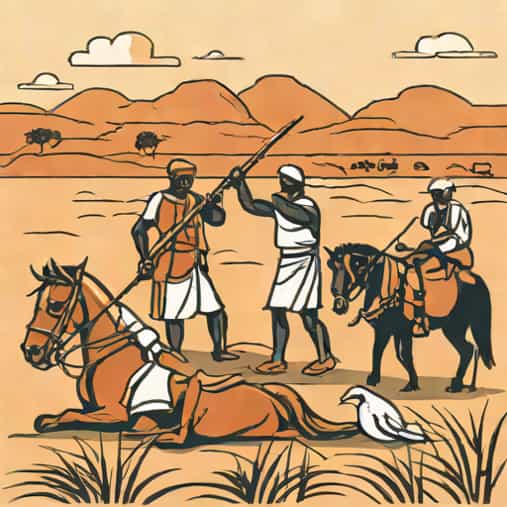
The story of land dispossession and the defeat of the Xhosa people is a deeply significant chapter in South African history, shaped by conflict, colonial expansion, and profound social change. Over more than a century, the Xhosa faced growing pressure from European settlers who sought land, resources, and political control. What began as frontier contact slowly evolved into sustained warfare, economic disruption, and the gradual loss of ancestral territory. Understanding this process helps explain not only the military defeat of the Xhosa, but also the long-term effects of colonialism on indigenous societies.
Who Were the Xhosa People
The Xhosa were one of the largest indigenous groups in southern Africa, living primarily in what is now the Eastern Cape region of South Africa. Their society was based on cattle herding, crop cultivation, and strong kinship networks. Land held immense importance for the Xhosa, not only as a source of food and wealth but also as a foundation of identity, spirituality, and political authority. Chiefs governed territories through customary law, while access to grazing land and water sustained the community.
Before large-scale European settlement, the Xhosa maintained complex relationships with neighboring African groups through trade, alliances, and occasional conflict. Their political systems were flexible and adapted to environmental and social conditions, which allowed them to thrive for generations.
Early Colonial Expansion and Land Pressure
Land dispossession of the Xhosa began gradually in the late 18th century as Dutch settlers, known as trekboers, moved eastward from the Cape Colony. These settlers sought fertile land for farming and grazing, bringing them into direct competition with Xhosa communities. The colonial concept of land ownership differed sharply from Xhosa traditions, leading to misunderstandings and conflict.
As British control replaced Dutch rule in the early 19th century, expansion intensified. Colonial authorities viewed the Xhosa-held lands as underutilized and open for settlement. This belief justified policies that ignored indigenous land rights and encouraged settlers to occupy Xhosa territory.
The Frontier Wars and Military Defeat
The struggle for land resulted in a series of conflicts commonly known as the Cape Frontier Wars or Xhosa Wars. These wars, which occurred intermittently from the late 1700s to the mid-1800s, were among the longest-running colonial conflicts in African history.
Unequal Warfare
Although the Xhosa were skilled warriors familiar with the terrain, they faced major disadvantages. Colonial forces possessed firearms, artillery, and organized military structures. Over time, the British adopted scorched-earth tactics, destroying crops and seizing cattle to weaken Xhosa resistance.
Each war ended with the loss of more land for the Xhosa. Colonial authorities established buffer zones and military outposts, gradually shrinking Xhosa-controlled territory and restricting movement.
The Role of Treaties and Broken Promises
In some cases, colonial officials signed treaties with Xhosa leaders that promised peace and protection. However, these agreements were often temporary and frequently broken. When settlers violated boundaries or conflicts re-emerged, the blame was placed on the Xhosa, providing justification for further land seizure.
Economic Disruption and Cattle Loss
Cattle were central to Xhosa economic and social life. They represented wealth, status, and spiritual value. Colonial campaigns deliberately targeted cattle herds, knowing that their loss would devastate Xhosa society. Without cattle, communities struggled to survive, pay bride wealth, or maintain traditional structures.
The destruction of crops and seizure of grazing land further increased dependency on colonial systems. Many Xhosa were forced to seek wage labor on farms or in towns, marking a major shift from self-sufficiency to economic subordination.
The Cattle-Killing Movement and Its Impact
One of the most tragic episodes linked to Xhosa defeat was the cattle-killing movement of 1856-1857. Influenced by prophetic visions, many Xhosa believed that sacrificing their cattle and destroying crops would bring about a spiritual renewal and drive colonial forces into the sea.
Instead, the movement led to widespread famine. Tens of thousands of Xhosa died from starvation, while survivors were left weakened and desperate. Colonial authorities exploited the crisis, taking control of abandoned lands and using hunger to force people into labor.
Administrative Control and Loss of Autonomy
After military defeat, the Xhosa were subjected to direct colonial administration. Traditional leadership structures were undermined as colonial officials appointed or dismissed chiefs based on loyalty. Indigenous laws were replaced with colonial legal systems that favored settlers and reinforced racial hierarchies.
Land dispossession became formalized through policies that restricted African land ownership and movement. The creation of reserves confined Xhosa communities to overcrowded and less fertile areas, ensuring long-term economic hardship.
Social and Cultural Consequences
The defeat of the Xhosa was not only military but also cultural. Missionaries and colonial institutions promoted European values, religion, and education, often portraying Xhosa traditions as inferior. While some individuals adapted these systems for survival, the process disrupted cultural continuity.
Families were fragmented as men migrated for work, and traditional practices tied to land and cattle became harder to maintain. Oral histories, however, preserved memories of resistance, loss, and resilience.
Key Factors Behind Xhosa Defeat
- Continuous colonial expansion driven by land hunger
- Military superiority of colonial forces
- Economic warfare through cattle and crop destruction
- Internal divisions and leadership challenges
- Devastating effects of famine after the cattle-killing movement
Long-Term Legacy of Land Dispossession
The legacy of land dispossession and the defeat of the Xhosa continues to shape South Africa today. Patterns of land inequality established during colonial rule persisted through apartheid and remain a central issue in modern land reform debates. Many Xhosa descendants still live in areas affected by historical dispossession, facing limited access to resources and opportunities.
At the same time, the history of Xhosa resistance has become an important source of cultural pride and political awareness. Remembering this past helps highlight the resilience of indigenous communities and the importance of addressing historical injustices.
Land dispossession and the defeat of the Xhosa were the result of prolonged conflict, unequal power, and colonial ambition. Through warfare, economic disruption, and administrative control, the Xhosa lost much of their land and autonomy. Yet their history is not only one of loss, but also of resistance and survival. Understanding this process provides valuable insight into the broader impact of colonialism in southern Africa and underscores the lasting importance of land, memory, and justice.