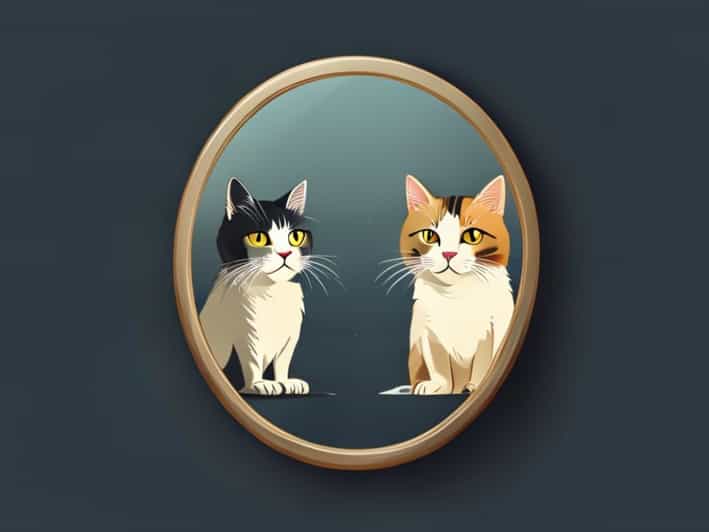
The question of whether cats can recognize themselves in a mirror has fascinated pet owners, animal behaviorists, and scientists for decades. Cats are known for their intelligence, curiosity, and complex social behaviors, but understanding how they perceive their own reflection is a challenging task. Unlike humans, who easily identify themselves in mirrors from an early age, cats do not seem to demonstrate self-recognition in a straightforward manner. Researchers use a variety of tests, including the famous mirror test, to explore how animals understand themselves and the world around them. Studying cats and their reactions to mirrors can reveal insights into feline cognition, perception, and consciousness.
The Mirror Test and Self-Recognition
The mirror test, also known as the mark test, was developed by psychologist Gordon Gallup in 1970 to assess self-recognition in animals. The test involves placing a mark on an animal’s body in a location they cannot see without a mirror. If the animal uses the mirror to investigate or touch the mark, it is considered evidence of self-recognition. Species such as chimpanzees, dolphins, elephants, and some birds have passed the mirror test, demonstrating a level of self-awareness. But the results for cats are less conclusive.
How Cats React to Mirrors
When presented with a mirror, most cats exhibit curiosity rather than recognition. Common behaviors include
- Staring at their reflection and approaching cautiously
- Pawing at the mirror as if trying to touch the other cat
- Hissing, growling, or arching their back as a defensive reaction
- Eventually losing interest and ignoring the mirror
These behaviors suggest that cats may perceive the reflection as another animal rather than as themselves. They often show aggression or playfulness toward their reflection, which indicates they do not initially recognize it as an image of themselves.
Cognitive and Sensory Factors
One reason cats may not recognize themselves in mirrors is that vision is not their primary sense. Cats rely heavily on smell and hearing to gather information about their environment. Unlike primates or humans, who rely primarily on vision, a reflection alone provides limited sensory input for a cat. Without olfactory cues or other sensory confirmation, cats may not associate the image in the mirror with their own body. This reliance on multiple senses could explain why cats often ignore or misinterpret reflections.
Mirror Exposure Over Time
Some studies suggest that repeated exposure to mirrors can lead to habituation, where cats gradually lose interest in their reflection. Over time, a cat may stop reacting aggressively or curiously, but this does not necessarily indicate self-recognition. Instead, it may reflect an understanding that the mirror image does not pose a threat or interact in meaningful ways. Habituation shows that cats can learn about objects and their environment, even if they do not recognize themselves visually.
Differences Between Cats and Other Animals
While some animals have demonstrated the ability to pass the mirror test, cats appear less inclined to show this type of self-awareness. For example
- Chimpanzees use mirrors to examine parts of their bodies they cannot normally see.
- Dolphins inspect marks placed on their bodies using underwater mirrors.
- Elephants use reflections to explore their trunks and ears.
Cats, in contrast, rarely use mirrors to investigate hidden marks or body parts. This difference may not indicate lower intelligence but rather reflects a distinct cognitive style and sensory priorities. Cats are hunters that rely on stealth, spatial awareness, and scent-marking rather than visual self-inspection.
Alternative Ways Cats Recognize Themselves
Although cats may not pass the mirror test, they can recognize themselves through scent and other environmental cues. For instance, cats can identify their own scent markings, body odor, and the sound of their own voice. They also demonstrate complex social behaviors that require awareness of their own position and actions relative to other animals. This suggests that cats possess a form of self-recognition, but it is expressed through non-visual channels that the mirror test does not measure.
Scientific Studies on Cats and Mirrors
Researchers have conducted multiple observational studies on how cats interact with mirrors. One study exposed domestic cats to mirrors and monitored their behaviors over time. Initially, most cats showed curiosity or aggression toward the reflection, but after repeated exposure, they largely ignored it. Few cats displayed behaviors consistent with self-examination, such as touching or grooming a marked area in response to seeing it in the mirror. The study concluded that cats do not typically pass the mirror test, but they do show learning and habituation that suggest cognitive flexibility.
Challenges in Testing Cats
Testing cats for self-recognition presents unique challenges. Cats are often independent and less motivated by social interaction compared to primates. Their reactions to mirrors may be influenced by fear, playfulness, or distraction rather than a lack of awareness. Additionally, standard mirror tests rely on visual cues, which may not align with a cat’s primary senses. Researchers have proposed using multisensory tests, combining scent, sound, and visual cues, to better assess feline self-awareness.
Implications for Understanding Cat Cognition
The question of whether cats recognize themselves in mirrors contributes to a broader understanding of animal cognition. It highlights the diversity of ways in which different species experience and interpret their environment. Cats demonstrate intelligence and problem-solving skills in other domains, such as hunting, navigating spaces, and interacting with humans. Their apparent inability to recognize themselves in mirrors does not diminish their cognitive abilities but rather emphasizes the importance of considering sensory and ecological context when assessing animal intelligence.
Practical Implications for Pet Owners
For cat owners, understanding a cat’s response to mirrors can help in managing behavior and enrichment. Mirrors may provide temporary stimulation or curiosity, but they should not be relied upon for social interaction or mental exercise. Instead, interactive toys, puzzle feeders, and play sessions that engage multiple senses are more effective ways to enrich a cat’s environment. Observing how a cat reacts to its reflection can also provide insight into its temperament, confidence, and comfort with unfamiliar stimuli.
cats generally do not recognize themselves in mirrors in the same way humans or some other animals do. They often interpret their reflection as another cat or show neutral reactions after becoming accustomed to it. However, this does not imply a lack of self-awareness. Cats use a range of sensory information, including scent, sound, and tactile cues, to understand themselves and their surroundings. The mirror test may not fully capture the way cats perceive their own bodies and actions. By considering the unique cognitive and sensory characteristics of cats, scientists and pet owners can appreciate the sophisticated ways in which these animals interact with their environment and demonstrate intelligence and awareness.