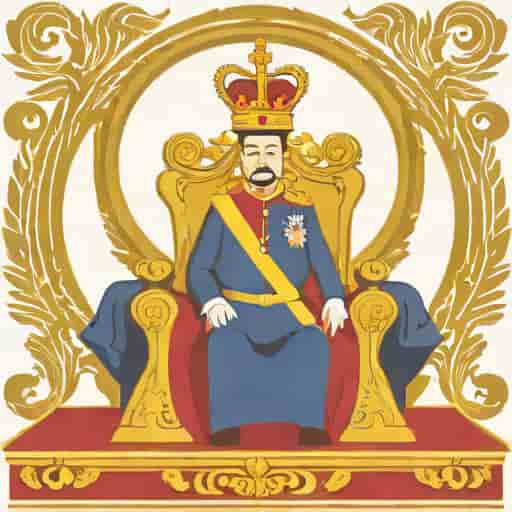
A constitutional monarchy with a ceremonial monarch is a fascinating form of government that blends tradition with modern democratic principles. In this system, the monarch often a king or queen serves primarily as a symbolic figurehead, while real political power is exercised by elected representatives. This arrangement allows a nation to retain its royal heritage and continuity, yet function as a democracy where the people’s voice determines laws and governance. The balance between symbolic monarchy and active democracy has made this model one of the most stable political systems in the world.
Understanding the Concept of a Constitutional Monarchy
A constitutional monarchy is a government system in which a monarch acts as the official head of state within the limits set by a constitution. This constitution may be written or unwritten, and it defines the powers of the monarch as well as those of the government. The essential idea is that the monarch does not rule by divine right or personal authority, but rather operates under the law and alongside a democratic framework.
In this setup, the monarch represents the unity and historical continuity of the state. However, their role is primarily ceremonial, meaning that they do not make or enforce policies. Instead, decisions are made by the parliament, prime minister, and other elected officials. This separation ensures that governance remains democratic while still maintaining the pageantry and tradition associated with monarchy.
The Role of the Ceremonial Monarch
A ceremonial monarch serves as a figure of national identity, stability, and tradition. While they hold the title of head of state, they do not interfere in day-to-day political matters. Their duties usually include opening and closing parliamentary sessions, approving laws passed by the legislature (as a formality), representing the country in diplomatic events, and performing cultural or charitable roles.
In modern times, ceremonial monarchs are seen as neutral and unifying figures who stay above political divisions. They embody the nation’s history and values while letting elected officials manage political decisions. This neutrality helps to promote a sense of continuity even during political changes or crises.
Examples of Ceremonial Monarchs
- United KingdomThe British monarchy is one of the most well-known examples. The monarch, currently King Charles III, serves as a constitutional monarch with no governing authority, while the prime minister leads the government.
- JapanThe Emperor of Japan is a purely ceremonial figurehead who symbolizes the unity of the Japanese people. The government is run by an elected parliament and prime minister.
- SwedenThe Swedish monarchy has no political power. The king’s duties are limited to ceremonial functions, including representing Sweden abroad and presiding over state events.
- Norway and DenmarkBoth countries maintain monarchies with constitutional limits, where the monarch performs symbolic duties and the elected parliament controls governance.
Historical Development of Constitutional Monarchies
The evolution of constitutional monarchy can be traced back to the gradual limitation of royal power in Europe. In the United Kingdom, this process began with the Magna Carta in 1215, which established that even the king was subject to the law. Over time, the Glorious Revolution of 1688 and the Bill of Rights of 1689 further restricted monarchical authority and solidified parliamentary supremacy.
Other European countries followed similar paths, transitioning from absolute monarchies to constitutional ones as democratic ideals spread. The French Revolution, for example, challenged the notion of divine kingship and inspired reforms across the continent. By the 19th and 20th centuries, many monarchies had adopted constitutional frameworks that balanced royal symbolism with democratic governance.
Advantages of a Constitutional Monarchy with a Ceremonial Monarch
This system offers several key benefits that contribute to political stability and national unity
- Stability and ContinuityA monarchy that transcends political cycles provides a sense of enduring stability. The monarch remains constant even when governments change, which can be reassuring during times of political turbulence.
- Non-Partisan LeadershipBecause the monarch does not participate in politics, they serve as a neutral figure who represents all citizens, regardless of political beliefs.
- Cultural IdentityMonarchies often embody a nation’s traditions, culture, and history. Ceremonial events, royal weddings, and national holidays reinforce national pride and identity.
- Tourism and DiplomacyRoyal families often attract tourism and serve as valuable diplomatic ambassadors, strengthening a nation’s international relationships.
Limitations and Criticisms
Despite its benefits, a constitutional monarchy with a ceremonial monarch is not without criticism. Some argue that maintaining a monarchy is outdated and expensive. Critics believe that modern societies should eliminate hereditary privilege and move toward fully elected systems. Others claim that monarchs, though symbolic, still represent historical inequalities and class divisions.
On the other hand, supporters argue that abolishing monarchy would erase a nation’s cultural heritage. They emphasize that constitutional monarchies have successfully adapted to democratic principles without hindering progress. In fact, many of the world’s most stable and prosperous democracies such as Norway, Sweden, and the United Kingdom operate under this system.
Comparison with Other Government Systems
It is useful to compare a constitutional monarchy with other forms of governance to understand its unique strengths. In arepublic, for example, the head of state is usually elected, often for a fixed term. This can make leadership more directly accountable but may also lead to political polarization. In contrast, the monarch’s lifelong and apolitical role offers continuity and neutrality.
Anabsolute monarchy, on the other hand, concentrates power in the hands of the monarch, often resulting in authoritarian rule. A constitutional monarchy avoids this risk by distributing authority between the monarch and democratic institutions. Thus, it combines the dignity of tradition with the accountability of democracy.
The Modern Relevance of Ceremonial Monarchies
In the 21st century, ceremonial monarchies remain relevant because they adapt to changing social and political expectations. Today’s monarchs often engage in charitable work, promote education and sustainability, and act as symbols of unity in an increasingly divided world. Their visibility and public service help maintain national morale while leaving policy-making to elected officials.
Countries with constitutional monarchies often rank high in global indices of happiness, freedom, and governance quality. This suggests that the model continues to serve as an effective framework that balances heritage and progress.
A constitutional monarchy with a ceremonial monarch represents a harmonious blend of history, tradition, and modern democracy. While the monarch serves as a unifying symbol, the real power lies in the hands of the people and their elected leaders. This system has proven remarkably resilient, allowing nations to evolve politically while preserving their cultural roots. By maintaining this balance, constitutional monarchies demonstrate that tradition and democracy can coexist successfully in the modern world.