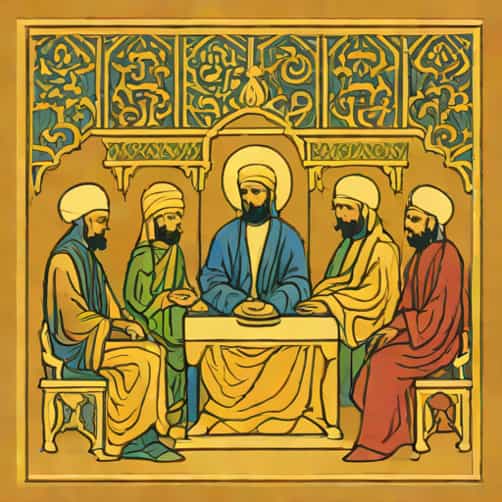
The Almoravid dynasty was a significant Berber empire that emerged in the 11th century, shaping the history of North Africa and the Iberian Peninsula. Originating among the Sanhaja Berber tribes in present-day Mauritania and Morocco, the Almoravids played a crucial role in spreading Islam, unifying tribes, and establishing political and military dominance across the western Maghreb. Their rule extended from the Sahara Desert to southern Spain, creating a transcontinental empire that influenced culture, religion, and trade. Understanding the Almoravid dynasty requires examining its origins, rise to power, governance, military conquests, and lasting impact on Islamic civilization and the history of North Africa and Al-Andalus.
Origins of the Almoravid Dynasty
The Almoravid movement began in the early 11th century as a religious reform movement among the Sanhaja Berbers. The founder, Abdallah ibn Yasin, was a scholar and theologian who sought to enforce a strict interpretation of Islamic law, purifying religious practices among the Berber tribes. Ibn Yasin’s teachings emphasized adherence to the Maliki school of Sunni Islamic jurisprudence and advocated moral discipline, social cohesion, and the unification of tribes under a common religious framework. This spiritual movement eventually evolved into a military-political entity as the Almoravids sought to expand their influence beyond the desert regions.
The Role of Abdallah ibn Yasin
Abdallah ibn Yasin is central to the Almoravid dynasty’s story. He established religious schools and organized tribes into a disciplined confederation. His leadership fostered a sense of unity and purpose, which allowed the Almoravids to mobilize for both spiritual and territorial campaigns. Although he died in battle in 1059, his doctrines and organizational structures continued to guide the Almoravid rulers, reinforcing the combination of religious fervor and military strategy that defined the dynasty.
Rise to Power
The Almoravid dynasty rose to prominence through a combination of military conquest, religious influence, and strategic alliances. Under the leadership of Abu Bakr ibn Umar and Yusuf ibn Tashfin, the Almoravids expanded their control over much of present-day Morocco, Mauritania, and western Algeria. They successfully subdued rival Berber tribes and established centralized authority, allowing them to consolidate power and extend their influence over trade routes and key urban centers. Their expansion was driven not only by political ambition but also by a desire to enforce orthodox Islamic practices and curb local deviations from religious law.
Consolidation of North Africa
By the late 11th century, the Almoravids had established firm control over Morocco, including important cities such as Marrakesh, which became the dynasty’s capital. Marrakesh served as both a political and religious center, facilitating administration, trade, and the dissemination of Islamic teachings. The Almoravids also extended their influence into the western Maghreb, unifying previously fragmented territories and creating a sense of political stability under strict Islamic law.
Expansion into Al-Andalus
One of the most notable aspects of the Almoravid dynasty was its intervention in Al-Andalus, the Muslim-ruled region of the Iberian Peninsula. By the late 11th century, the Christian Reconquista posed a significant threat to the fragmented Muslim taifas. Yusuf ibn Tashfin was invited to Al-Andalus to defend Muslim territories, leading to the famous Battle of Sagrajas in 1086, where the Almoravids defeated Alfonso VI of Castile. This victory not only halted the Christian advance temporarily but also allowed the Almoravids to consolidate power over the taifa kingdoms, bringing them under centralized Almoravid control.
Governance and Administration
The Almoravid dynasty implemented a highly structured administration that combined military oversight with religious authority. Governors were appointed to key regions to enforce Islamic law, collect taxes, and maintain order. The dynasty emphasized a centralized bureaucracy, with Marrakesh serving as the hub for governance and communication. This system allowed the Almoravids to maintain control over vast territories, despite cultural and linguistic differences among the populations they ruled.
Military Organization
The Almoravid military was instrumental in the dynasty’s expansion and consolidation of power. They relied on a combination of Berber warriors, disciplined cavalry, and religiously motivated fighters who were committed to the Almoravid cause. Military campaigns were carefully planned, and fortifications were established in strategic locations to secure borders and protect trade routes. The Almoravid army’s mobility and cohesion allowed them to respond quickly to threats, making them a formidable force in both North Africa and Al-Andalus.
Key Battles and Campaigns
- Battle of Sagrajas (1086)Defeated Christian forces in Al-Andalus, securing Muslim territories.
- Conquest of Marrakech (1070s)Established a central political and religious capital in Morocco.
- Expansion into the SaharaSecured trade routes and extended influence over Berber tribes.
Cultural and Religious Impact
The Almoravid dynasty played a crucial role in the cultural and religious life of North Africa and Al-Andalus. They promoted Maliki Sunni Islam, built mosques and educational institutions, and encouraged the study of Islamic jurisprudence. Almoravid architecture reflected a combination of Berber traditions and Andalusian influences, contributing to the distinctive aesthetic of the region. Their emphasis on religious orthodoxy shaped social norms and legal practices, leaving a lasting legacy in both North Africa and Muslim Spain.
Trade and Economic Influence
In addition to religious and military achievements, the Almoravids fostered economic development. They controlled trans-Saharan trade routes, facilitating the exchange of gold, salt, and other goods between sub-Saharan Africa and North Africa. Urban centers such as Marrakesh and Fez became hubs of commerce, attracting merchants, artisans, and scholars. The Almoravids’ economic policies reinforced their political power and supported the growth of prosperous cities under their rule.
Decline and Legacy
The Almoravid dynasty began to decline in the mid-12th century due to internal strife, succession disputes, and external pressures from emerging powers. The Almohad movement, another Berber dynasty, eventually overthrew the Almoravids, absorbing their territories and ending their rule. Despite their decline, the Almoravids left a profound legacy in North Africa and Al-Andalus. Their unification of Berber tribes, enforcement of Islamic law, architectural contributions, and military achievements influenced subsequent dynasties and shaped the region’s historical trajectory.
Lasting Influence
- Religious Spread of Maliki Sunni Islam and emphasis on orthodoxy.
- Cultural Development of distinctive Almoravid architecture and urban centers.
- Political Centralized governance model that influenced later North African dynasties.
- Economic Control and expansion of trade routes connecting North Africa and the Sahara.
The Almoravid dynasty was a transformative force in the history of North Africa and the Iberian Peninsula. From its origins as a religious reform movement among the Sanhaja Berbers to its expansion into Al-Andalus, the dynasty combined military prowess, religious zeal, and administrative skill to create a powerful and influential empire. While their rule eventually ended, the Almoravids’ contributions to governance, culture, religion, and trade left an enduring impact on the region. Studying the Almoravid dynasty provides valuable insight into the dynamics of medieval Islamic empires, the spread of Islam in North Africa, and the complex interactions between religion, politics, and culture in shaping history.