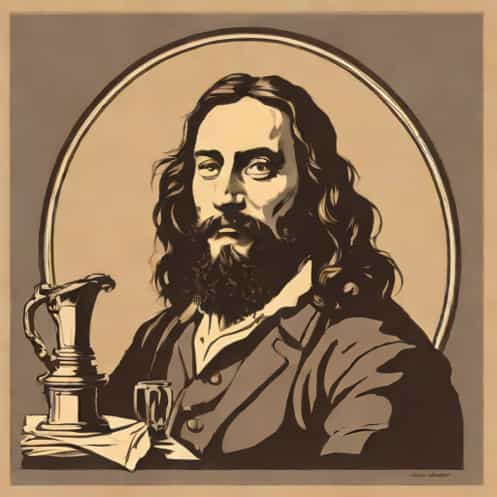
Gustave Courbet remains one of the most influential figures in 19th-century art, known for his bold approach to realism and his defiance of traditional artistic conventions. Born in a time of political and social upheaval, Courbet’s life was as dramatic and passionate as the works he created. His paintings often depicted ordinary people and everyday scenes, challenging the romanticized and idealized representations common in academic art of his era. Understanding the vita in breve, or brief life summary, of Gustave Courbet provides insight into how his personal experiences, political beliefs, and artistic philosophy shaped modern art.
Early Life and Background
Gustave Courbet was born on June 10, 1819, in Ornans, a small town in the Franche-Comté region of France. He grew up in a prosperous farming family, which provided him with a comfortable upbringing but also exposed him to the lives of common rural people. From a young age, Courbet displayed a strong interest in drawing and painting. His early environment greatly influenced his artistic vision, fostering a deep connection with nature and ordinary life, themes that would later dominate his work.
Education and Artistic Development
Courbet moved to Paris in 1839 to pursue formal art education. He initially studied under established artists but quickly became frustrated with the rigid academic approach, which emphasized historical and mythological subjects. Instead, Courbet was drawn to the depiction of real life, focusing on landscapes, laborers, and scenes from contemporary society. By the 1840s, he was already gaining recognition for his commitment to realism, emphasizing honesty, detail, and the unvarnished truth in his paintings.
Career Highlights
Throughout his career, Courbet produced several masterpieces that solidified his reputation as a pioneer of the realist movement. Some of his most famous works include
- A Burial at Ornans (1849-1850)This monumental painting depicted a provincial funeral scene with extraordinary realism, challenging traditional academic subjects and scales.
- The Stone Breakers (1849)Highlighting the harsh labor of ordinary workers, this painting brought attention to social realities often ignored by high art.
- Woman with a Parrot (1866)Demonstrating Courbet’s skill in portraying the human form and sensuality, this work pushed the boundaries of accepted artistic norms.
Courbet’s exhibitions were often controversial, as his works confronted the viewer with raw and sometimes uncomfortable truths. His refusal to idealize subjects and his focus on contemporary life became defining traits of the realist movement.
Political Involvement
Courbet’s life was not only dedicated to art but also deeply intertwined with politics. He was an active supporter of the Paris Commune in 1871, a radical socialist government that briefly controlled Paris. Courbet advocated for the dismantling of the Vendôme Column, a symbol of imperial power, as part of the Commune’s revolutionary agenda. This political activism led to his imprisonment and eventual exile to Switzerland. Despite these challenges, Courbet continued to paint, producing significant works during his later years that reflected both personal struggle and political conviction.
Personal Life and Character
Known for his strong personality, Gustave Courbet was often described as stubborn, passionate, and fiercely independent. He maintained a deep connection to his native Ornans and rural life, which continued to inspire his work. Courbet’s personal relationships, including his friendships with other artists and intellectuals, played a crucial role in his creative development. His character, marked by defiance of authority and commitment to social justice, resonated in both his art and public life.
Legacy and Influence
Gustave Courbet’s influence on the art world cannot be overstated. He paved the way for modern movements such as Impressionism and even contemporary realism. By rejecting the constraints of academic tradition, he empowered artists to explore everyday life, social issues, and personal expression. Courbet’s approach emphasized that art could be a reflection of reality, unfiltered and authentic, rather than a vehicle for idealized or romanticized visions.
- Impact on RealismCourbet’s dedication to depicting the ordinary inspired generations of artists to focus on real life rather than mythology or history.
- Political ArtHis willingness to intertwine social commentary with artistic expression demonstrated the power of art as a tool for political and cultural discourse.
- Modern InspirationMany contemporary artists cite Courbet’s bold approach and fearless exploration of truth as a source of inspiration.
Later Years and Death
After his political involvement with the Paris Commune, Courbet faced financial difficulties and legal troubles. Exiled in Switzerland, he continued to paint, but his health began to decline. Gustave Courbet died on December 31, 1877, in La Tour-de-Peilz, Switzerland, at the age of 58. Despite a life marked by controversy and struggle, his contributions to art remain enduring, and his works continue to be celebrated for their honesty, power, and beauty.
Gustave Courbet’s vita in breve encapsulates the journey of an artist who transformed the way the world perceives art. From his humble beginnings in Ornans to his political activism and groundbreaking realist paintings, Courbet’s life reflects a relentless pursuit of truth and authenticity. His legacy continues to inspire artists, scholars, and art enthusiasts, reminding us that the power of art lies not only in beauty but also in its ability to reflect the realities of the human experience. Courbet’s work, character, and vision ensure that he remains a seminal figure in the history of modern art.