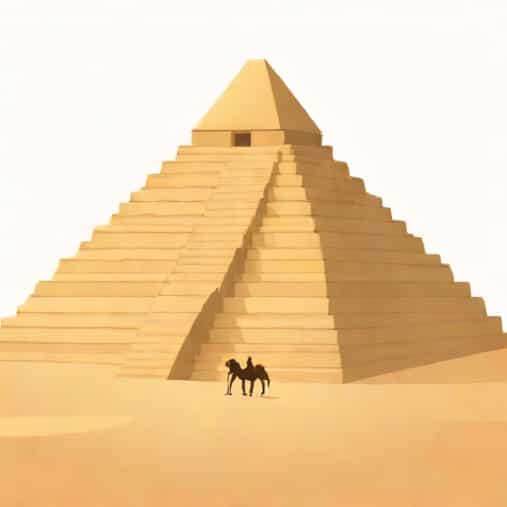
The Step Pyramid of Djoser and its surrounding funerary complex represent one of the most significant architectural achievements of ancient Egypt. Built during the Third Dynasty, around 2670-2650 BCE, this monumental structure marked a revolutionary shift in royal tomb construction, transitioning from traditional mastaba tombs to a multi-tiered pyramid design. Located in the ancient necropolis of Saqqara, the complex served not only as a burial site for Pharaoh Djoser but also as a symbol of divine kingship and the Pharaoh’s journey to the afterlife. The Step Pyramid and its funerary complex reflect the ingenuity, religious beliefs, and organizational capabilities of early Egyptian civilization.
The Step Pyramid Architectural Innovation
The Step Pyramid of Djoser is considered the earliest colossal stone building in Egypt and one of the first large-scale stone structures in human history. Unlike the smooth-sided pyramids that would later dominate the Giza Plateau, Djoser’s pyramid consists of six stacked mastabas, each successively smaller than the one below, forming a stepped appearance. This design not only served as a monumental tomb but also symbolized a stairway to the heavens, reflecting the Pharaoh’s divine status and his anticipated journey to join the gods in the afterlife.
Design and Construction
The pyramid rises approximately 62 meters in height and originally had a base measuring 109 by 125 meters. The core structure was constructed using locally quarried limestone blocks, showcasing early experimentation with large-scale stone masonry. Imhotep, the Pharaoh’s chief architect and vizier, is credited with designing and overseeing the construction. His innovative techniques in stone construction and spatial organization laid the groundwork for later pyramids, influencing generations of builders.
- Six mastaba layers stacked to create the stepped form
- Use of limestone blocks, an early adaptation from mudbrick constructions
- Internal corridors and chambers designed for burial and ritual purposes
- Alignment with cardinal points reflecting religious and symbolic significance
The Step Pyramid demonstrates a sophisticated understanding of structural stability, with careful planning of weight distribution and the integration of internal chambers to prevent collapse.
The Funerary Complex of Djoser
Surrounding the pyramid is an extensive funerary complex, which served both practical and ceremonial purposes. The complex included a series of courtyards, temples, shrines, and ceremonial structures designed to honor the Pharaoh and facilitate his transition into the afterlife. The layout reflects the early Egyptian emphasis on ritual, hierarchy, and the integration of architecture with religious practice.
Main Components of the Funerary Complex
- Enclosure WallA massive limestone wall encircled the complex, punctuated with twelve gateways, though only one served as the main entrance.
- Heb-Sed CourtAn open courtyard used for the Heb-Sed festival, a rejuvenation ceremony for the Pharaoh.
- South TombA subterranean structure with elaborate chambers, possibly symbolic or used for ritual purposes rather than as an actual burial site.
- Mortuary TempleConnected to the pyramid via a corridor, the temple facilitated offerings, ceremonies, and veneration of the deceased Pharaoh.
Each element of the complex was carefully designed to serve both practical functions related to burial rituals and symbolic functions representing the Pharaoh’s divine role and journey to the afterlife.
Religious and Symbolic Significance
The Step Pyramid and its funerary complex were imbued with profound religious and symbolic meaning. Ancient Egyptians believed that the Pharaoh was both a mortal ruler and a divine intermediary between gods and people. The pyramid’s stepped form symbolized a ladder to the sky, allowing Djoser’s soul to ascend to join the gods, particularly the sun god Ra. The orientation and layout of the complex were designed to reflect cosmic order, known as ma’at, which was central to Egyptian religious philosophy.
Ritual Functions
The complex hosted a variety of rituals essential for ensuring the Pharaoh’s successful journey to the afterlife. Priests performed offerings, recited prayers, and conducted ceremonies designed to maintain divine favor and sustain the Pharaoh’s spirit. The Heb-Sed festival, held in the open court, was particularly significant, symbolizing the renewal of the Pharaoh’s strength and authority.
- Offerings and prayers in the mortuary temple to honor Djoser
- Rituals in courtyards symbolizing purification and rejuvenation
- Use of symbolic architecture, such as false doors and shrines, to connect the living and the divine
Architectural Innovations and Legacy
The Step Pyramid of Djoser set a precedent for all subsequent pyramid constructions in Egypt. Imhotep’s innovative use of stone, the monumental scale, and the integration of ceremonial spaces influenced later builders who created the smooth-sided pyramids at Giza. This early experiment demonstrated that large stone structures could be built with precision and durability, marking a turning point in architectural history.
Influence on Later Pyramids
- Adoption of limestone masonry techniques in later pyramids
- Refinement of burial chambers and internal corridors for ritual purposes
- Integration of complex layouts combining temples, courtyards, and ceremonial structures
- Establishment of symbolic and religious motifs continued throughout the Old Kingdom
The Step Pyramid also reinforced the concept of monumental architecture as a reflection of political power and religious authority, a principle that continued throughout ancient Egyptian history.
Archaeological Discoveries
Excavations at Saqqara have revealed a wealth of information about the Step Pyramid and its funerary complex. Archaeologists have uncovered burial chambers, offering tables, statues, and inscriptions that provide insights into the religious practices and daily life of the Third Dynasty. These findings highlight the sophistication of early Egyptian society and the importance of the Pharaoh’s divine and political roles.
Restoration and Preservation
Over the centuries, the Step Pyramid has suffered from natural erosion and human activity. Restoration efforts have focused on stabilizing the structure, preserving internal chambers, and protecting the complex from further damage. These efforts ensure that the Step Pyramid remains an enduring symbol of ancient Egyptian ingenuity and spiritual belief.
The Step Pyramid of Djoser and its funerary complex at Saqqara represent a milestone in human architectural achievement and religious expression. As the first monumental stone structure in Egypt, it set the foundation for the iconic pyramids of the Old Kingdom. Beyond its architectural significance, the pyramid and its surrounding complex embody the ancient Egyptian belief in the Pharaoh’s divine role and the journey to the afterlife. Through innovative design, precise construction, and ceremonial integration, the Step Pyramid of Djoser continues to fascinate historians, archaeologists, and visitors, offering a timeless glimpse into the ingenuity and spirituality of early Egyptian civilization.