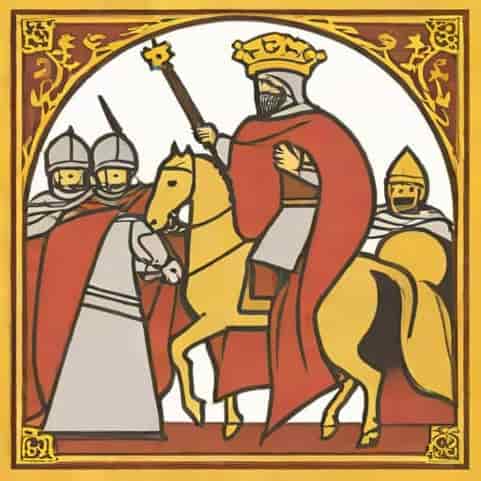
The Albigensian Crusade is often remembered as a long and brutal conflict rather than a single event. By the year 1255, the crusade itself was officially over, yet its consequences were still unfolding in southern France. What happened in the Albigensian Crusade in 1255 represents the final chapter of a campaign that had begun decades earlier, aimed at eliminating Cathar beliefs and consolidating royal and religious authority. Understanding this moment requires looking at the broader historical context and the lingering resistance that survived even after formal peace was declared.
The Background of the Albigensian Crusade
The Albigensian Crusade began in 1209 and was launched by the Catholic Church to suppress Catharism, a religious movement considered heretical. Cathars, also known as Albigensians, were concentrated in the region of Languedoc in southern France.
The movement rejected key Catholic doctrines and had gained significant support among local nobles and communities. This alarmed both the Church and the French crown, leading to a military campaign that blended religious zeal with political ambition.
The Official End of the Crusade
By 1229, the Treaty of Paris formally ended the Albigensian Crusade. The treaty forced Raymond VII of Toulouse to submit to the French king and accept the authority of the Church.
However, the end of the treaty did not mean the end of Cathar resistance. Small groups of believers continued to practice their faith in secrecy, often protected by remote castles in mountainous regions.
Shift from Warfare to Suppression
After the treaty, open warfare largely ceased, but suppression continued through the Inquisition. The Church established inquisitorial courts to identify, question, and punish suspected Cathars.
This period was marked by investigation rather than large-scale battles, yet it remained harsh and deeply disruptive.
The Situation in Southern France by 1255
By the mid-13th century, Catharism had been severely weakened. Many of its leaders had been executed, imprisoned, or forced into hiding. Support from local nobility had largely collapsed.
Still, a few strongholds remained. These isolated locations symbolized both spiritual resistance and defiance against royal authority.
The Importance of Remote Fortresses
Mountain castles in the Pyrenees became refuges for remaining Cathars. Their isolation made them difficult to capture and allowed the movement to survive longer than expected.
Among these fortresses, one stood out in 1255 as the final stronghold.
The Fall of Quéribus in 1255
What happened in the Albigensian Crusade in 1255 is most closely associated with the fall of the castle of Quéribus. This fortress, located high in the Corbières mountains, was the last Cathar stronghold to resist royal control.
In 1255, Quéribus was captured by forces loyal to the French crown. Unlike earlier sieges in the crusade, this event involved little large-scale violence.
A Strategic Surrender
The garrison at Quéribus surrendered rather than facing destruction. By this time, the Cathar movement was too weakened to mount serious resistance.
The capture marked the symbolic end of Cathar military defiance.
Why Quéribus Mattered
Quéribus was not just a military site. It had become a refuge for Cathar clergy and believers who sought safety from the Inquisition.
Its fall signaled that there were no longer any places where Cathars could openly resist Church and royal authority.
Symbolic End of Cathar Power
Although Cathar beliefs did not disappear overnight, the loss of Quéribus ended organized protection for the movement.
From this point forward, Catharism existed only in secrecy and quickly faded.
The Role of the French Crown
By 1255, the Albigensian Crusade had transformed southern France politically. The French monarchy had significantly expanded its control over the region.
The capture of Quéribus reinforced royal authority and integrated Languedoc more firmly into the kingdom of France.
Centralization of Power
The elimination of independent noble power in the south allowed the king to impose laws, taxes, and administration more directly.
This shift laid the groundwork for a more unified French state.
The Continuing Inquisition After 1255
Although the fall of Quéribus ended military resistance, the Inquisition continued its work. Suspected Cathars were still pursued, questioned, and punished.
Records from the late 13th century show ongoing investigations into heresy, though on a much smaller scale.
Gradual Disappearance of Catharism
Without leadership, protection, or open communities, Catharism gradually vanished.
By the early 14th century, the movement had effectively disappeared as an organized faith.
Human Impact of the Final Suppression
The events leading up to and including 1255 had a profound impact on local populations. Families were divided, properties confiscated, and communities reshaped by fear and surveillance.
The memory of persecution lingered long after the last stronghold fell.
- Loss of local autonomy
- Displacement of families
- Confiscation of lands
- End of religious diversity in the region
These consequences shaped southern French society for generations.
Historical Significance of 1255
While the Albigensian Crusade is usually associated with its violent early years, 1255 represents its quiet but decisive conclusion.
The fall of Quéribus confirmed that resistance was no longer possible and that both Church and crown had achieved their objectives.
A Turning Point in Medieval Europe
The crusade set important precedents for how heresy would be handled in medieval Europe.
It demonstrated the close cooperation between religious and political power.
How Historians View the Events of 1255
Modern historians see 1255 as a symbolic endpoint rather than a dramatic climax. There were no mass battles, but the meaning was profound.
The disappearance of Cathar strongholds marked the success of long-term suppression strategies.
What happened in the Albigensian Crusade in 1255 was not a new beginning, but a final closure. The capture of Quéribus ended the last organized resistance of the Cathars and confirmed the dominance of the Catholic Church and the French crown in southern France.
This moment closed a dark chapter of medieval history, leaving behind lessons about power, belief, and the consequences of intolerance. Though quiet compared to earlier violence, the events of 1255 carried lasting historical significance that shaped France and Europe for centuries to come.